
Every September and October, Ontario homeowners start noticing the same thing: more spiders, more webs, and more eight-legged surprises crossing the living room floor. This is not a coincidence, and it is not because your house is suddenly dirtier. Spider control in Ontario’s fall season is a distinct challenge because autumn triggers a biological surge in spider activity that sends dozens of mature spiders into your home all at once. Understanding why it happens, which species you’re dealing with, and how to stop it before egg sacs are established in your eaves and window frames is the difference between a manageable fall cleanup and a spider problem that carries through into winter.
Table of Contents
- Quick Takeaways
- Why Fall Is Peak Spider Season in Ontario
- Common Spider Species Ontario Homeowners Encounter in Fall
- Where Spiders Hide Around Your Home in Autumn
- Spider Web Removal in Fall: Why Timing Matters
- DIY Prevention vs. Professional Spider Control: A Direct Comparison
- Bug Extermination for Ontario Residential Properties: The Bigger Picture
- Frequently Asked Questions
- References
Quick Takeaways
| Key Insight | Explanation |
|---|---|
| Fall is mating season, not invasion season | Male spiders reach sexual maturity in late summer and move into the open searching for females, which is why sightings spike sharply in September and October. |
| Egg sacs are the real long-term threat | A single undetected female common house spider can produce multiple egg sacs, each holding up to 400 eggs. Removing webs in fall prevents this population surge. |
| Gutters and eaves are prime nesting zones | Clogged gutters create the damp, sheltered, insect-rich environment spiders need. Eavestrough cleaning in fall directly reduces spider habitat. |
| Light fixtures attract insects which attract spiders | Standard white exterior bulbs draw insects at night. Switching to yellow or sodium-vapour bulbs reduces the insect prey that keeps spiders around your entryways. |
| Sealing entry points is your most durable prevention step | Gaps around window frames, door sweeps, and foundation cracks are the primary routes spiders use to get indoors as temperatures drop. |
| Web removal without treatment is only half the job | Physically removing webs clears the visible problem, but a residual exterior barrier treatment is what stops new spiders from setting up in the same spots within days. |
| Ontario’s climate makes fall treatment the most impactful timing | Cooler temperatures in Oakville, Burlington, Hamilton, and the Niagara region from September onward compress spider movement into a short window, making a single well-timed treatment highly effective. |
Why Fall Is Peak Spider Season in Ontario
The spike in spider sightings every autumn in Ontario follows a predictable biological pattern. It is not that new spiders have arrived from somewhere else. Most of the spiders you see in September have been living in or around your home since spring. What changes in fall is that male spiders reach sexual maturity and begin actively moving in search of females, bringing them out of corners, crawl spaces, and wall voids and into visible areas of the home.
At the same time, dropping temperatures push spiders that have been living outdoors to seek more stable, warmer environments. Your home offers exactly that, and so do the gaps in your soffits, the cavities behind your exterior shutters, and the sheltered angles beneath window sills.
A sudden spike in spider sightings in fall does not mean more spiders have arrived. It means the males are out on the move, which makes them visible in ways they simply were not before.
Ontario’s fall season, roughly September through November, compresses this biological activity into a short, intense period. Cooler nights arrive quickly in communities like Hamilton, St. Catharines, and Burlington, which pushes the timeline faster than homeowners often expect. By the time you notice the first few webs across your front entry, females may already be laying egg sacs in your eaves and window tracks.
Pro tip: Pro tip: Do not wait until you see large webs to act. The first cool nights in early September are your cue to schedule exterior spider web removal and barrier treatment, before the bulk of the mating migration begins.


Common Spider Species Ontario Homeowners Encounter in Fall
Knowing which spider you are dealing with helps you understand where to focus prevention efforts. In Ontario, three species account for the vast majority of fall residential encounters.
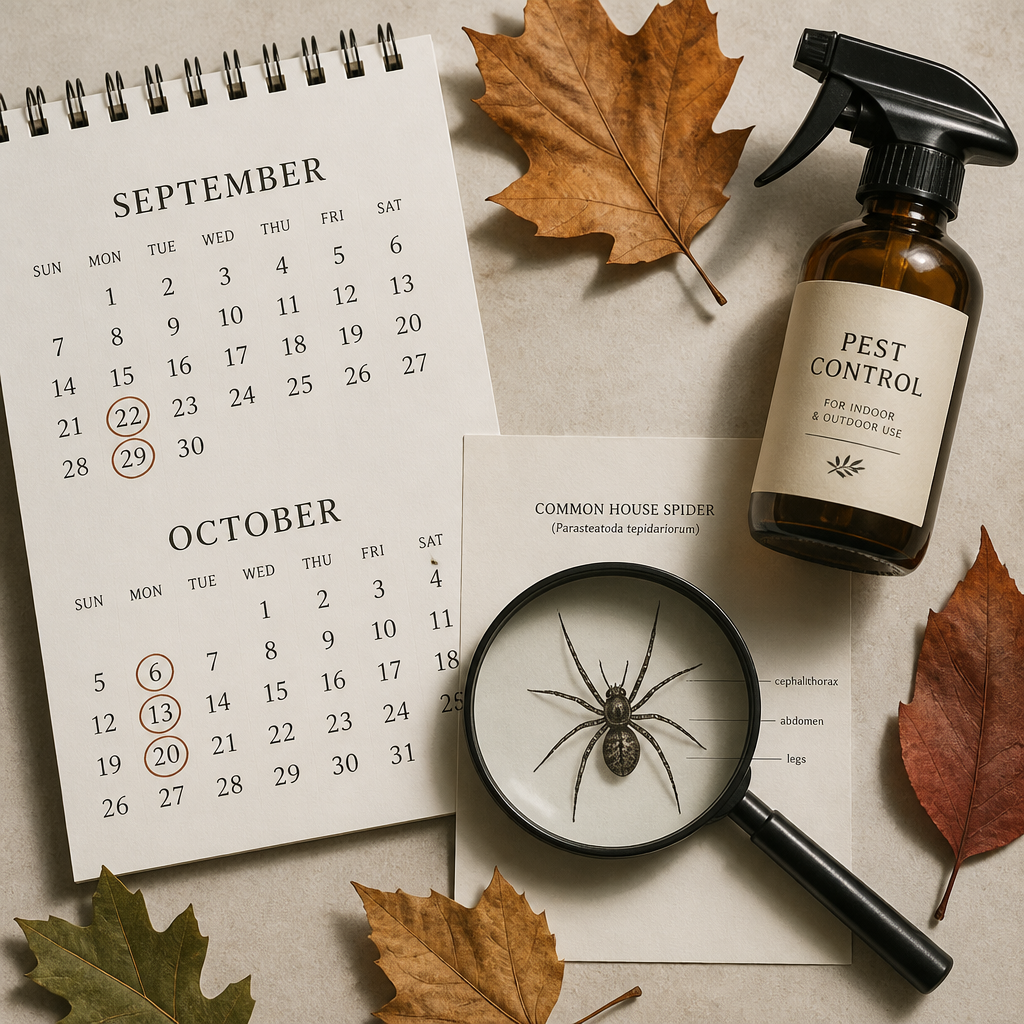
Common House Spider (Parasteatoda tepidariorum)
This is the brown cobweb spinner most commonly found in corners, ceiling junctions, and window frames. Females can produce multiple egg sacs per season, with each sac containing up to 400 eggs. A single undetected female that establishes herself in August can create a significant population by October, which is why early fall web removal is so much more effective than waiting until webs are widespread.
Wolf Spider (Lycosidae)
Wolf spiders are large, fast-moving hunters that do not build webs. They hunt on the ground and are most frequently found crossing floors, entering through gaps in door sweeps, and sheltering behind appliances. Their size and speed make them the most alarming of Ontario’s common fall invaders, though they are not aggressive and pose no significant threat to people. They enter homes as temperatures drop, seeking warmth rather than food sources inside.
Cellar Spider (Pholcus phalangioides)
The long-legged “daddy long-legs” spider that builds loose, irregular webs in basement corners, crawl spaces, and beneath decks. Cellar spiders are year-round residents in Ontario homes but become more visible in fall as outdoor populations move inward. Their webs accumulate quickly and are a common complaint in homes with attached garages, unfinished basements, or wood decks.
All three species are essentially harmless to people. That does not make them welcome houseguests, and it does not mean ignoring them is a reasonable strategy. A fall infestation left untreated rarely resolves itself before spring.
Where Spiders Hide Around Your Home in Autumn
Spiders do not pick random locations. They establish themselves in spots that offer shelter, minimal disturbance, and reliable access to prey insects. In the fall, these zones concentrate around the exterior of the home before spiders find their way inside.
Eaves, Soffits, and Gutters
This is the single most productive spider habitat on a typical Ontario home. Clogged gutters create the damp, decomposing-leaf environment that breeds small flies, fungus gnats, and other insects. Those insects are exactly what spiders eat, so where clogged gutters go, spider populations follow. Eavestrough cleaning in fall eliminates this habitat and is one of the most underrated spider prevention steps a homeowner can take.
Window Frames, Tracks, and Screens
Spiders exploit the gaps around poorly sealed window frames and damaged screens. Window tracks in particular accumulate debris that shelters both insects and the spiders that prey on them. Cleaning window sills and tracks in fall removes both the habitat and the entry points spiders use to get from the exterior frame into the interior wall cavity.
Exterior Entrances, Porches, and Lighting
Front and back entries are high-traffic spider zones in fall because exterior lights draw moths and insects at night, creating a reliable food source. Spiders build webs across entry frames, in the angles between pillars and ceilings, and behind outdoor fixtures. These are the webs most homeowners see first, and they are an early indicator that a larger population is developing in less visible areas above and around the home.
Pro tip: Replace standard white exterior bulbs with yellow or sodium-vapour bulbs before fall sets in. These wavelengths attract far fewer insects, which removes the food source that keeps spiders active around your entry points all season.
Spider Web Removal in Fall: Why Timing Matters
Physically removing spider webs from the exterior of your home is necessary, but the timing and completeness of that removal determines whether it actually solves the problem or just clears the visible surface for a week before webs return.
The critical window for spider web removal in fall is early September, before egg sacs are established in sheltered exterior locations. Once egg sacs are in place behind fascia boards, inside gutter joints, or in window frame recesses, web removal alone does not address next year’s population. A thorough job means clearing webs and egg sacs from eaves, window frames, entry features, under decks, and around foundation vents, not just the webs you can see from the ground.
Exterior barrier treatment applied after web removal is what prevents the same spots from being recolonized within days. A residual barrier treatment applied around the full foundation perimeter, window and door frames, eaves, and soffits disrupts the chemical trails spiders use to navigate and discourages re-establishment. Without this step, web removal is largely cosmetic.
What Professional Web Removal Actually Covers
A professional spider web removal service for an Ontario home in fall should include: removal of all accessible webs and egg sacs from the exterior, treatment of the foundation perimeter and all entry point zones, cleaning of window tracks and sills where webs and debris accumulate, and inspection of gutters and eaves where spider habitat is most concentrated. This is not a job where speed is a virtue. Rushing through web removal leaves egg sacs and recolonization points that guarantee a repeat call within weeks.
DIY Prevention vs. Professional Spider Control: A Direct Comparison
Ontario homeowners have real options here, and the right choice depends on the scale of the problem and how much time you want to invest. The comparison below is honest about what each approach delivers.
| Approach | What It Does Well | Where It Falls Short |
|---|---|---|
| DIY sealing and exclusion | Weatherstripping, caulking gaps around windows and foundations, repairing screens, replacing exterior bulbs. These are durable prevention steps that reduce entry points over the long term. | Does not address existing webs, egg sacs, or active populations already on the exterior. Has no effect on spiders already inside the wall cavities. |
| DIY store-bought spider spray | Can knock down visible spiders on contact. Quick to apply around baseboards and entry points. | Most consumer products have very short residual life outdoors. Does not include web or egg sac removal. Requires correct identification of active zones to have any real effect. |
| Professional exterior spider control service | Removes webs and egg sacs thoroughly, applies residual barrier treatment to all active zones, identifies and addresses high-risk areas like gutters and soffits that DIY approaches miss. Treatment typically provides 60 to 90 days of residual protection. | Requires scheduling and involves a service cost. Exterior reapplication may be needed sooner after heavy rainfall common in Ontario’s fall. |
In practice, the most effective approach for Ontario homeowners dealing with a genuine fall spider problem is to combine professional exterior treatment with the DIY exclusion steps: seal the gaps so treated spiders cannot be replaced immediately by new ones entering through the same routes.
Bug Extermination for Ontario Residential Properties: The Bigger Picture
Spider control does not exist in isolation. Spiders are predators, and their presence in and around your home is a direct response to the insect populations already living there. Addressing bug extermination for Ontario residential properties in fall means looking at the full exterior environment, not just the spiders you can see.
Exterior surfaces, window tracks, and gutters accumulate organic debris throughout summer that harbors the small insects spiders depend on. Power washing decks, driveways, and exterior walls in fall removes this debris layer and eliminates the micro-habitats that sustain insect populations through the cooler months. A clean exterior surface is dramatically less hospitable to the insects that sustain spider activity, which means spider populations decline naturally when the food source is removed.
Tick and mosquito control is part of this same exterior pest management picture. Ontario’s fall season is also when ticks remain active well into October, particularly in areas with significant tree cover and leaf litter, which describes most residential properties in communities like Fenwick, Oakville, and the Hamilton escarpment area. Treating the exterior perimeter for ticks and mosquitoes in fall, alongside spider control, provides comprehensive outdoor pest reduction during a period when multiple species are at peak activity.
The sequence that works for a complete fall exterior treatment in Ontario: start with gutter and eavestrough cleaning to remove spider habitat, follow with exterior power washing to clear debris and insect harbourage, then complete spider web removal with barrier treatment, and finish with perimeter pest spray if tick or mosquito control is needed. Each step in that order makes the next one more effective.
Frequently Asked Questions
Why do I suddenly see so many spiders in my Ontario home every September?
The September surge is driven by spider mating season. Male spiders reach sexual maturity in late summer and begin actively moving through your home in search of females. This movement brings them out of the wall voids, crawl spaces, and exterior hiding spots where they spent the summer, making them suddenly visible. At the same time, falling temperatures push outdoor spiders to seek shelter closer to your home. The combination creates the concentrated spike in sightings that Ontario homeowners experience every fall.
Are the spiders I see in fall dangerous to my family or pets?
The vast majority of spiders found in Ontario homes in fall are harmless. The common house spider, wolf spider, and cellar spider, which are the three species most frequently encountered indoors in this region, do not pose a meaningful threat to people or pets. Wolf spiders look alarming because of their size and speed, but they are not aggressive. That said, “harmless” and “welcome” are not the same thing. A large fall population that goes unaddressed will remain active indoors through winter.
What is the most effective time to schedule spider web removal in Ontario?
Early September is the optimal time. This is before the main mating migration pushes spiders into the open and before females establish egg sacs in your eaves, window frames, and exterior crevices. Scheduling web removal in late September or October is still worthwhile, but you are more likely to be dealing with established egg sacs at that point, which requires more thorough attention to remove properly. Waiting until you see heavy webbing means the population is already well established.
Does cleaning gutters really help with spider control?
Yes, directly and significantly. Clogged gutters filled with decomposing leaves create a damp, warm environment that breeds the small insects spiders eat. That insect population is what attracts and sustains spider colonies around your eaves and roofline. Cleaning eavestroughs in fall removes this habitat, which is one of the most productive spider nesting zones on an Ontario home. Eavestrough cleaning alone will not eliminate all spider activity, but it removes the primary food-source habitat that makes the problem grow through the season.
Can power washing help reduce spider populations on my property?
Power washing the exterior of your home, including decks, driveways, siding, and walkways, physically removes the organic debris, insect eggs, and larval habitats that sustain the insect populations spiders depend on. It also dislodges webs and egg sacs from surfaces that are difficult to reach by hand. Power washing works best as part of a broader fall exterior cleaning that also includes gutter clearing and direct spider barrier treatment. On its own, it reduces the conditions that support spider populations rather than eliminating existing ones.
Why do spiders keep coming back to the same spots even after I remove their webs?
Spiders use chemical signals to navigate and recognize territory. When you remove a web without treating the surface, the chemical markers remain, and the same spider, or another spider following the same trail, will reconstruct a web in the same location within days. This is the most common reason DIY web removal feels ineffective. A residual exterior barrier treatment applied after physical web removal disrupts these chemical signals and prevents rapid recolonization. That is why professional spider control services treat the surface, not just clear it.
Have you noticed a particular area around your home where spiders seem to return every fall no matter what you do? Share your experience in the comments, because the answer might help another Ontario homeowner facing the same issue.
References
- Ontario fall spider species identification and activity patterns by season
- When spider season occurs and why fall sightings spike indoors
- Professional spider barrier treatment protocols and seasonal timing for Ontario homes
- Why spiders become more visible and active inside homes during autumn
- Common spider species found in Ontario homes and how to identify them