
If you live on a rural lot near Fenwick, October probably looks different from the city. The spider problem on your porch, eavestroughs, and outbuildings starts in the fields and tree lines behind your property, and it builds quickly once nights turn cold. Most homeowners who search for spider spraying in Fenwick are really dealing with a steady migration into the structures they use every day. This guide explains why rural properties see a different pest pattern in October, what actually works, and where cobweb removal fits into the plan.
Table of Contents
- Quick Takeaways
- Why October Hits Rural Properties Differently
- Where the Spiders Come From on a Rural Lot
- Cobweb Buildup on Eavestroughs, Screens, and Siding
- Spider Spraying Versus Cobweb Removal
- Timing a Fall Treatment in Fenwick
- Clearing Gutters and Power Washing Before Treatment
- Preparing Your Rural Property Before a Visit
- Frequently Asked Questions
- References
Quick Takeaways
| Key Insight | Explanation |
|---|---|
| Rural webs start at the perimeter | Hedgerows, field edges, and brush piles push spiders toward your walls each fall, so treating only the front door rarely holds. |
| October is a shelter problem | Cooling nights drive insects and spiders into sheds, garages, and eavestrough corners that stay warmer and drier. |
| Stack firewood away from walls | Woodpiles against the house create dark, dry harborage. Leave a gap so you can inspect and clean behind them. |
| Clean before you spray | Silk loaded with dust and moisture shields spiders and wastes treatment. Remove heavy webs first, then treat the cleaned surfaces. |
| Clear eavestroughs early | Leaf debris holds moisture and gives spiders shelter. A clean trough is easier to inspect and collects fewer webs by late fall. |
| Book the visit in early October | Waiting for the first hard frost means spiders have already moved in. Schedule while surfaces are dry and days are mild. |
Why October Hits Rural Properties Differently
In town, a spider has to cross a lot of pavement, fences, and neighbouring walls before it reaches your house. On a rural lot, the nearest source may be a hedgerow or a patch of brush a few steps from the foundation. That shorter distance changes the math for the whole season.
Why the Cold Snap Starts the Migration
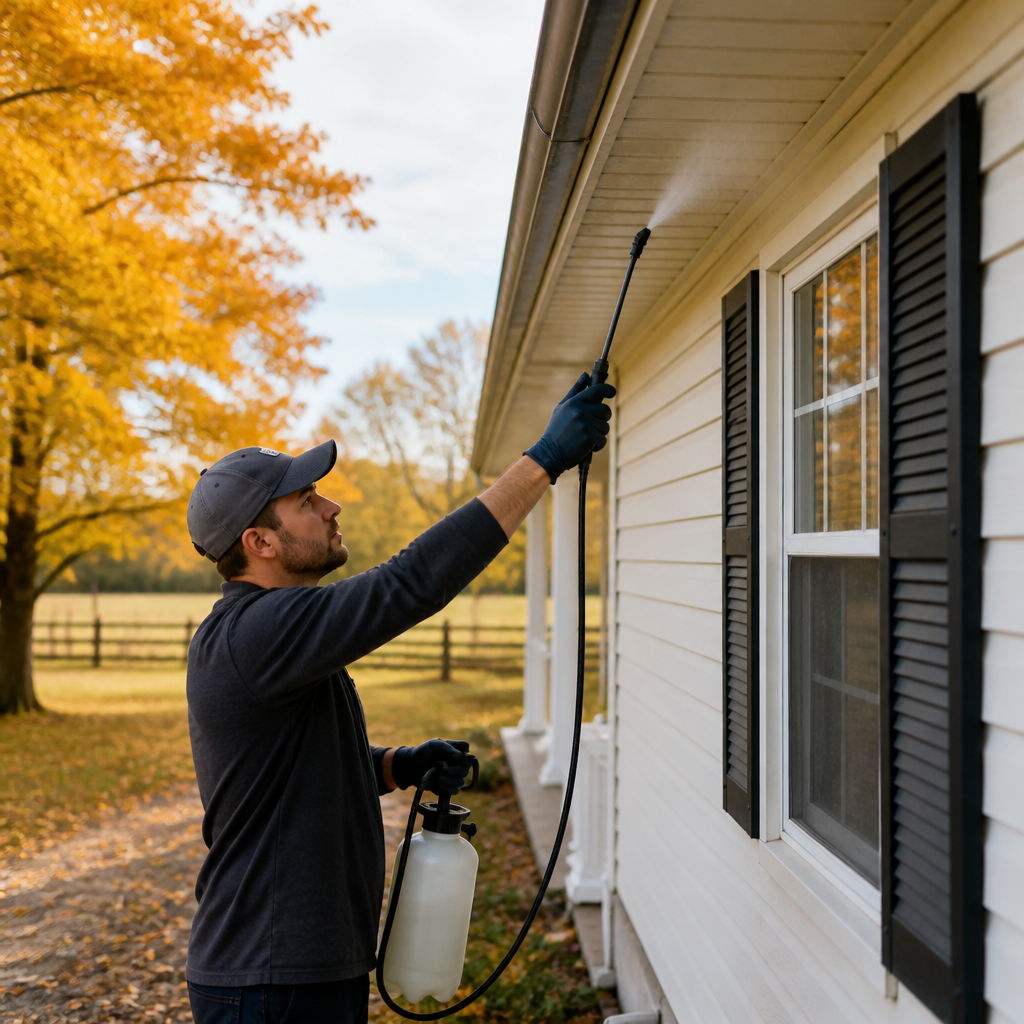
Once nights turn cold in October, insects and spiders living in grass, crops, and brush start looking for shelter. Your garage, shed, and siding become the warmest and driest structures nearby, and they are usually the first ones reached. In practice, a property that looked clean in August can show heavy buildup within a few weeks of the first cold stretch.
Porch Lights and the Front Door Problem
Porch lights make things worse. Moths and other insects gather under them, and spiders follow the meal, building webs around fixtures, door frames, and railings. The web on the front door is often the last step of a process that started at the property’s edge.
Most fall spider complaints on rural lots are really perimeter complaints. The web on the front door is the last step of a problem that began at the tree line.
Rural properties also offer more surface area for webs to hold. Long runs of siding, deep eavestroughs, several outbuildings, and stacked firewood give spiders more anchor points than a typical town yard, and each one collects silk and dust across the season. A common mistake is spraying only the house and then wondering why the webs return within weeks.
Where the Spiders Come From on a Rural Lot
Tree Lines, Hedgerows, and Field Edges
Field edges and hedgerows are the nursery for many of the spiders that show up at rural homes. They offer leaf litter, low vegetation, and steady insect traffic, so populations build through the summer before pushing toward buildings. Cooler weather changes the picture because the structures near these edges become more attractive than the vegetation the spiders came from.
Brush piles and old fence lines work as staging areas. When the weather shifts, spiders move from these spots to whichever structure sits closest, which on many rural lots is a shed or the side of the house nearest the garden. Clearing tall weeds and debris from the foundation takes pressure off the walls and gives any treatment a cleaner perimeter to work with.
Woodpiles, Sheds, and Outbuildings
Firewood is one of the most overlooked attractions on rural property. A stack against the house or garage gives spiders and their prey a dry, dark shelter with many gaps, and the wall behind it becomes a web site. We recommend stacking wood away from the foundation and off the siding, which leaves room to inspect and clean behind it.
Sheds and detached garages tend to get less attention than the house, with cracked corners, open vents, and window frames that rarely get cleaned. Spiders settle into these spots and build webs that look like a few strands from the driveway but connect dozens of anchor points. An arachnologist interviewed by Apartment Therapy makes a useful distinction: indoor spiders can often be moved to a less annoying spot, but cob, funnel, and sheet web spiders are the exception. Relocation is only a partial answer when a spider keeps building in the same corner.
Pro tip: Walk the perimeter with a flashlight after dark in early October. Webs are easier to spot in low light, and you will see where buildup concentrates before it spreads across the rest of the wall.
Cobweb Buildup on Eavestroughs, Screens, and Siding
Cobwebs are more than an eyesore. On exterior surfaces, silk catches dust, pollen, and moisture, so a few strands turn into grey mats that cling to the surface. Once that happens, the web looks heavier than it is, and rain rarely clears it on its own.
Eavestroughs and Fascia Corners
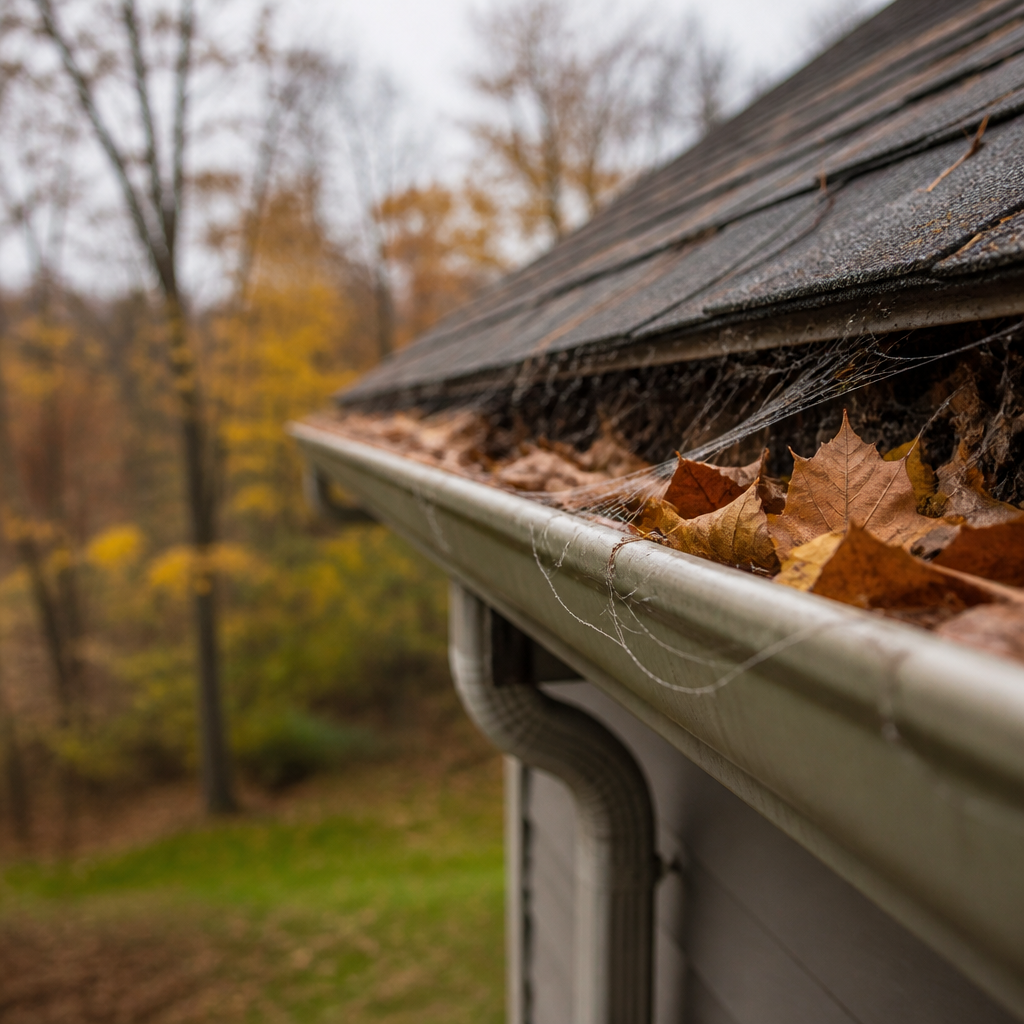
Eavestroughs are the most frequent problem we see on rural homes. Leaves and seed debris sit in the trough, hold moisture, and give spiders a sheltered place to anchor webs right under the roofline. The corner where the fascia meets the trough is where silk accumulates fastest.
Clearing debris first changes what you can see. A clean trough makes it easier to find web sites and judge how much buildup remains, and it means any treatment reaches the actual harborage instead of sitting on top of a leaf mat.
Screens, Window Frames, and Siding
Window screens and frames collect silk in their corners and tracks. On a screen, the web traps dust that makes the mesh look dirty even after a rinse, so gentle cleaning of the screen itself usually helps more than any spray. For most homeowners searching for cobweb removal in rural Ontario, the job comes down to these small corners rather than the big open walls.
Siding is trickier. Hand-washing the lower courses and corners lifts the silk and the dust that feeds it. Power washing can do the job faster on sturdy surfaces, but it needs care around older siding, vents, and window seals.
Spider Spraying Versus Cobweb Removal
Cleaning and spraying solve different problems. Removal takes away the visible silk and the dust it holds, while spraying targets the spiders and insects that keep a web site active. Treating a surface without removing the silk underneath often leaves a barrier that reduces how well the treatment reaches the area.
Why Removal Alone Does Not Solve It
Knocking down webs every week feels productive but stays temporary. Spiders rebuild in the same corners, and the dust problem continues. Removal is useful for appearance and for getting a clear view of the buildup, but it does not address the spiders arriving from the surrounding property.
Why Spraying Alone Often Disappoints
Spraying a dusty, heavily webbed wall is a common disappointment. The silk and grime act as a shield, and leftover webs make it look as though the treatment failed even when the spiders are gone. We see the same pattern on eavestroughs, where a treatment applied over leaf debris struggles to reach the places spiders actually use.
The table below compares the three approaches we use most often on rural properties.
| Approach | Works Best On | Main Limitation |
|---|---|---|
| Cobweb removal only | Screens, window frames, and short-term appearance | Webs and spiders return within weeks when active harborage remains nearby. |
| Spider spraying only | Clean, lightly webbed perimeters and entry points | Heavy silk and dust block contact, and visible buildup still looks poor until it is cleared. |
| Clean first, then spray | Rural lots with heavy buildup at eavestroughs, siding, and outbuildings | Takes a longer visit than either service alone, but targets both the visible mess and the source. |
The combined visit is what we recommend for most rural properties in the fall. We clean webs and debris first, then treat the perimeter and entry points on dry surfaces, so the treatment has something solid to work on.
Timing a Fall Treatment in Fenwick
Timing matters more than most homeowners expect. The spiders that cause the most trouble in late fall are the ones that already moved into structures, so the best window for a perimeter-focused visit comes before they settle in for winter.
Why Waiting for the First Hard Frost Backfires
Many homeowners wait for the first hard frost before they think about exterior pests. By then, the migration is usually finished, and spiders have moved into wall voids, under siding, or into garage corners. A visit at that point can still help with exterior webs, but it reaches fewer entry points than an earlier visit would.
A seasonal post from a regional social media page describes October as the last full month for fall spider and outdoor insect treatments. The same logic applies in Fenwick, where the useful window narrows as the weather turns.
Working Around Dew, Rain, and Short Days
Timing also depends on conditions on the day. Dew and rain keep surfaces wet, and wet surfaces dilute and slow the work. Short October days leave less daylight to clean and treat, so a morning appointment on a dry day is usually more productive than a rushed late afternoon.
We schedule exterior work for dry, mild days and try to avoid booking right before a forecast of heavy rain. If the weather turns, a short delay is better than a rushed application that has to be repeated.
Clearing Gutters and Power Washing Before Treatment
Preparation makes the treatment work. Before a fall visit, we recommend clearing eavestroughs, removing heavy silk from the walls, and power washing surfaces where dust and webs have bonded to paint, vinyl, or stone.
Eavestrough Debris as Spider Habitat
Packed leaves and seed heads in an eavestrough hold moisture for weeks. That moisture draws insects, and insects draw spiders to the brackets and corners nearby. A clean trough reduces that habitat and shows you where the web sites are.
Clearing gutters is also the time to check downspouts and brackets. Loose or sagging sections collect debris faster and need attention before the wet season arrives.
Soft Washing Versus High Pressure
Power washing helps on driveways, decks, and walkways, but high pressure on siding, old paint, or window seals can cause real damage. For most homes with vinyl or painted wood, a gentler approach with lower pressure and a proper rinse removes silk and dust without forcing water into gaps.
Pro tip: Ask for a wet-surface check before any treatment. If a surface is still dripping, let it dry first, because a rushed application on a wet wall is wasted effort.
Preparing Your Rural Property Before a Visit
A short prep list makes a real difference. Most of it takes an hour or two, and it helps the crew focus on the spots that matter most.
Clearing the Perimeter and Outbuildings
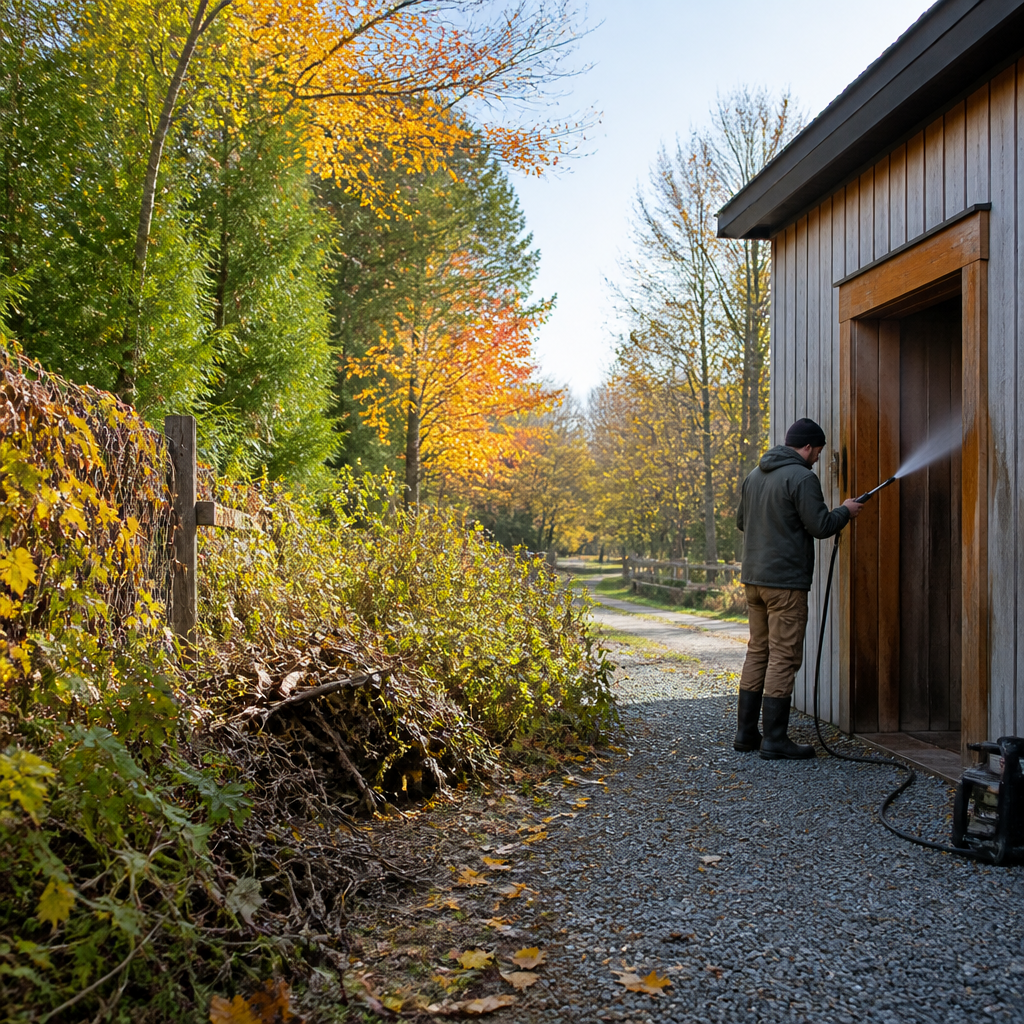
Cut back tall grass and brush within a short distance of the foundation, and move stored items away from walls. Open shed and garage doors, if it is safe to do so, so the team can see corners and vents. Clear loose items from the porch and steps so the treatment can reach railings and entry points.
Ticks, Mosquitoes, and Other Rural Concerns
Rural lots often have more tick and mosquito activity near brush, long grass, and wet ditches. Our bug and spider removal services include tick and mosquito control, so mention those areas when you book. Tell us which parts of the property get the most traffic from pets, children, or visitors, so we can plan around them.
Frequently Asked Questions
Is spider spraying safe for pets and children on a rural property?
Ask the technician which products will be used and how long surfaces should stay dry. Keep pets and children away from treated areas until the application has dried, and follow any instructions you receive. If dogs roam the yard, mention it at booking so the crew can plan around the areas they use most.
Can I remove cobwebs myself between visits?
Yes, and it helps. A soft brush or gentle rinse on eavestroughs, screens, and window frames removes loose silk before it collects dust. Avoid high pressure on older siding, and use a stable ladder on dry ground.
How often should a rural home get exterior cobweb removal?
Most rural lots benefit from cleaning in late summer and again in early fall, with a quick look in spring. The exact schedule depends on how close the property sits to brush and fields. A woodpile against the house usually means the cleaning needs to happen sooner.
Does spider spraying also cover ticks and mosquitoes?
Our bug and spider removal services include tick and mosquito control. Ask about combining these when you book, since rural properties with brush and long grass often need attention in more than one area.
Do you serve Fenwick and the nearby communities?
Yes. We serve Fenwick, along with Burlington, Hamilton, Mississauga, Niagara Falls, Oakville, and St. Catharines. If your property sits outside those areas, contact us first so we can confirm availability before you plan around a visit.
What has your rural property’s fall spider problem looked like so far, and what have you tried to stop it?