
Every November, Mississauga homeowners ask the same question: the spiders were sprayed in October, so why are there still webs on the porch light and spiders crawling along the basement wall? Spider spraying in Mississauga stays busy right up until the first hard freeze, and many people book a late-season treatment expecting it to finish the job. Sometimes it will. Often, a November visit does less than the sales pitch suggests, and the difference comes down to timing, where the product goes, and whether the entry points were closed first. Here is how we approach late-fall spider control, and what we tell customers before they spend a dollar.
Table of Contents
- Quick Takeaways
- Why Spiders Show Up in November
- Do November Treatments Still Work?
- Spider Spraying in Mississauga Homes: Where to Focus
- Spider Web Removal That Actually Holds
- Comparing Your November Options
- Gutters, Eavestroughs, and Hidden Egg Sacs
- Timing Your Plan for Mississauga Winters
- Frequently Asked Questions
- References
Quick Takeaways
| Key Insight | Explanation |
|---|---|
| A November spray is a cleanup, not a cure | It can knock down spiders already on the foundation or under decks, but it will not stop new arrivals if the gaps are still open. |
| Check the label temperature before booking | Residual products perform poorly on cold, damp surfaces. A grey, windy afternoon is a reason to reschedule, not a reason to spray anyway. |
| Seal before you spray | Worn garage door seals, gaps around dryer vents, and damaged weatherstripping on patio doors are common entry points that no treatment fixes. |
| Webs above the front door are a light problem | An exterior fixture left on all night draws insects, and insects draw spiders. Changing the bulb or adding a motion sensor cuts the supply. |
| Clean eavestroughs before the freeze | Debris and egg sacs left in eavestroughs over winter become the source of the webs you see on the porch in spring. |
| Remove webs with a vacuum, not a broom | Brushing smears silk across siding and glass and leaves egg sacs behind. Vacuuming pulls the web, the sacs, and often the spider with it. |
Why Spiders Show Up in November
Most spiders you see in November did not arrive in November. They hatched in spring or early summer, grew through August, and reached full size in late summer or early fall. Adult males in particular stop sitting in webs once they mature and start wandering in search of mates. That movement is why a cold week in October can suddenly put spiders on a living room floor.
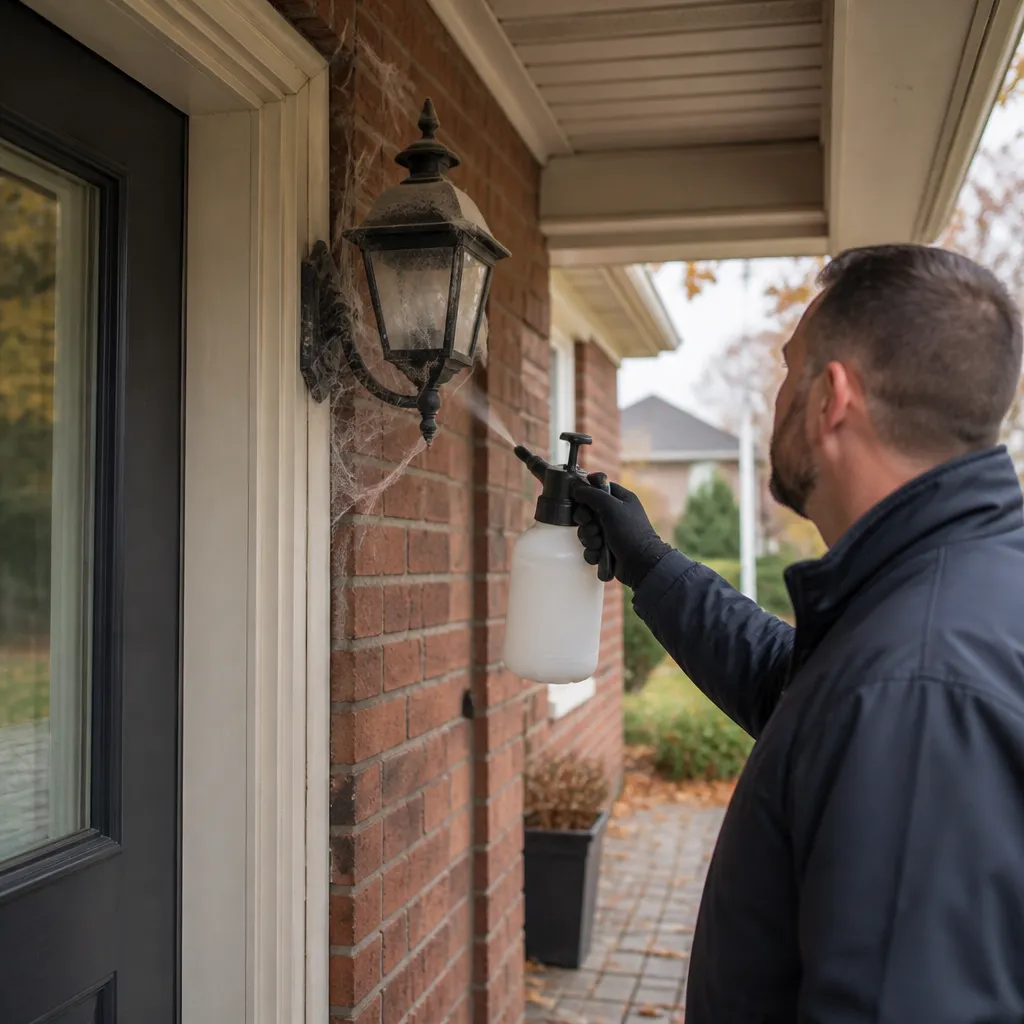
Cooling nights push the same behaviour toward buildings. As temperatures drop, insects such as flies, moths, and gnats look for shelter against warm walls and near lights. Spiders follow them. If you see a heavy crop of webs around a front entry, the insects near that light are usually the real problem, and the spiders are only the visible result.
The Food Supply Around Your Porch Light
A porch light left on all night works as a feeding station. Insects circle it after dark, and the spiders that build webs around the fixture stay close to that supply. Switching to a warmer bulb or adding a motion sensor usually reduces the insect count, and the web count follows it over a few weeks.
Indoor Spiders Have a Stable Climate
Spiders that get inside stop facing the cold. A heated basement or an attached garage gives them stable temperatures and a steady stream of small insects, which is why an indoor spider can stay active well into January. Outdoor spraying cannot reach what is living inside wall voids or behind stored boxes, so the indoor side of the job matters just as much.
In practice, a late-fall spider complaint is usually two problems at once: spiders that are already inside, and new arrivals still finding gaps. Treating only one of them almost guarantees a callback.
Do November Treatments Still Work?
The short answer is yes, sometimes, and it depends on what you are actually buying. A November visit is worth paying for when it targets a specific problem and is done in conditions where the product can do its job. It is a poor purchase when it is booked as a calendar item and sprayed onto dry, cold siding on a windy day.
Where a Late-Season Spray Still Helps
A treatment in early November can clear spiders that have already moved onto the foundation, under decks, and around garage doors. Those are the places where spiders wait and where prey gathers. If the webs keep returning to the same corners after a heavy summer, a late visit can break that pattern, especially when it is paired with a web clearance so you start winter with a clean baseline.
Where It Wastes Your Money
Spraying does not fix open gaps, and it does not reach spiders sheltering deep inside the house. A common mistake is paying for a full exterior treatment when the real entry points are a gap around the dryer vent and a split weatherstrip on a side door. Product labels set a minimum application temperature, and a provider who sprays below it is spending your money on a product that may not hold.
A spray can kill what it touches, but it cannot close a gap. Most late-fall spider complaints are really entry problems wearing the costume of a pest problem.
What a Good November Visit Looks Like
A November visit should begin with an inspection, not a spray. The technician should show you where webs are concentrated, which entry points are open, and which surfaces are dry enough to treat safely. If a provider sprays first and asks questions later, consider another provider.
Pro tip: Ask whether the application follows the label temperature range for the day you are booked. If the answer is vague, reschedule for a milder afternoon rather than paying for a treatment that may wash off or fail to set.
Spider Spraying in Mississauga Homes: Where to Focus
The spider activity we see on Mississauga homes clusters in the same places: the foundation line, the garage, the entry doors, and anywhere a light or vent draws insects. A good spraying plan follows those hot spots instead of coating every surface equally. Homes here are built from a mix of brick, vinyl, and stucco, so the approach shifts a little from one property to the next.
Foundation and Lower Walls
The foundation line is where spiders hide during the day and where insects crawl up from the soil. Treat the lower section of the exterior wall, paying close attention to cracks, weep holes, and gaps where siding meets the foundation. Spray only where the label allows, because overspraying wastes product and increases drift onto plants and neighbouring property.
Garage Doors and Entry Doors
Garage doors are one of the biggest spider entry points we see. The rubber seal along the bottom wears out, and the gap at the side tracks lets spiders walk straight in. Replacing a worn seal costs far less than a second treatment, and unlike a spray, it keeps working after the product has faded. Entry doors and sidelights need the same check.
Basements and Crawl Spaces
Basements are where a spider problem stops being a nuisance and becomes a cleanup job. Look at window wells, the rim joist, and the points where cables or pipes pass through the wall. Basement spiders often connect to a crawl space or an open window well, so the exterior plan should cover those access points, not just the front door.
Pro tip: Walk the exterior with a flashlight at dusk. Webs and insects are easier to spot once your lights are on, and the spots that are busiest after dark are the ones that need attention first.
Spider Web Removal That Actually Holds
Removing webs is the cheapest part of spider control, and it is also the part homeowners most often do wrong. The usual approach is a broom and a quick swipe, which smears silk across siding and glass and leaves egg sacs behind. Doing it properly takes about the same time and gives a result that lasts longer.
Vacuum First, Then Rinse
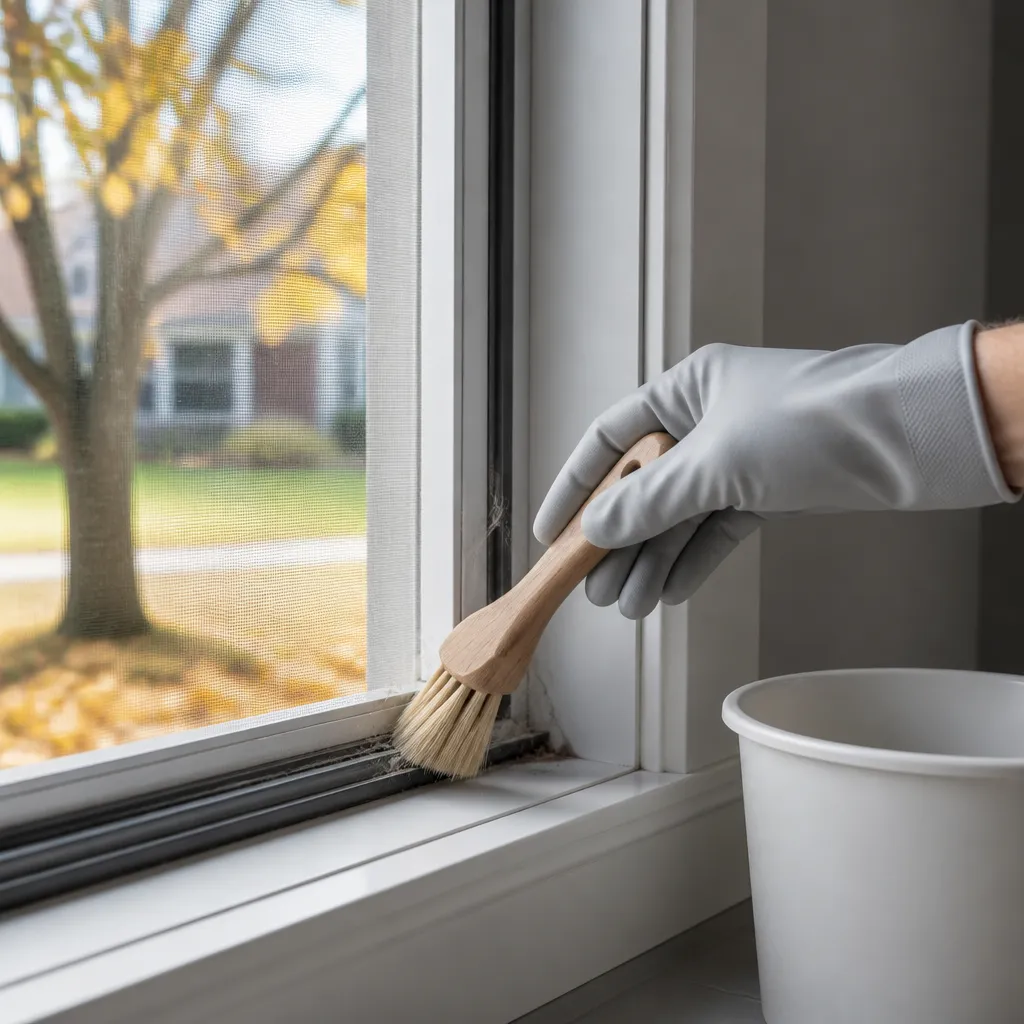
Use a vacuum with a hose attachment to pull webs and sacs off soffits, corners, and window frames. Follow up with a gentle rinse from a garden hose, or a soft brush on painted wood. Keep pressure low on vinyl siding and window seals, because a high-pressure jet can lift the edges of both.
Windows, Screens, and Sills
Webs on screens and sills are the most visible reason people call us. Remove them from both sides of the glass, and check the window tracks, where spiders build in the corners. Screens hold webs well because the mesh gives them anchor points, so vacuum first and then clean the screen itself. Our window cleaning crews handle sills and tracks, which is often where webs can be cleared during the same visit.
Why Re-Webbing Happens Within Days
Spiders rebuild in the same corners because those corners still have light, prey, and anchor points. Removing webs without changing those conditions buys a few days at most. Adjust the lighting, close the gaps, and the cycle slows down. Clearing webs is maintenance, and it works best as part of a plan.
Comparing Your November Options
Most homeowners in Mississauga have three realistic choices in November. Each one solves a different problem, and comparing invoices alone is misleading if you ignore what each option actually changes.
| Option | Best For | Limitations |
|---|---|---|
| Late-season exterior spider spraying | Spiders on the foundation, under decks, and around lights | Performs poorly in cold or wet conditions, does not close gaps, and does not reach spiders sheltering indoors |
| Web removal and window cleaning | Visible webs on glass, screens, sills, tracks, and soffits | Temporary if lights and entry points are not addressed, since spiders rebuild in the same corners |
| Sealing and exclusion (door seals, vents, weatherstripping) | Long-term reduction in indoor spiders and the insects they feed on | Does not kill spiders already inside, and requires a visit to find and fix every gap |
Where DIY Sprays Fall Short
Store-bought sprays are sold for small areas, and they often land where they do the least good, which is high up and tucked away. Following the label is hard when the surface is cold, damp, or in a space you cannot ventilate. For a single indoor corner, a vacuum does more. For a whole house, a professional can apply product where it matters and stop there.
Choosing the Right Mix for Your Property
For a detached house with a deck and a porch light, we usually recommend web removal, sealing the garage door and vents, and a late spray limited to the foundation. For a townhouse with shared walls, the focus shifts toward entry doors and the exterior perimeter. The right mix depends on where the webs keep coming back, not on a package name.
Gutters, Eavestroughs, and Hidden Egg Sacs
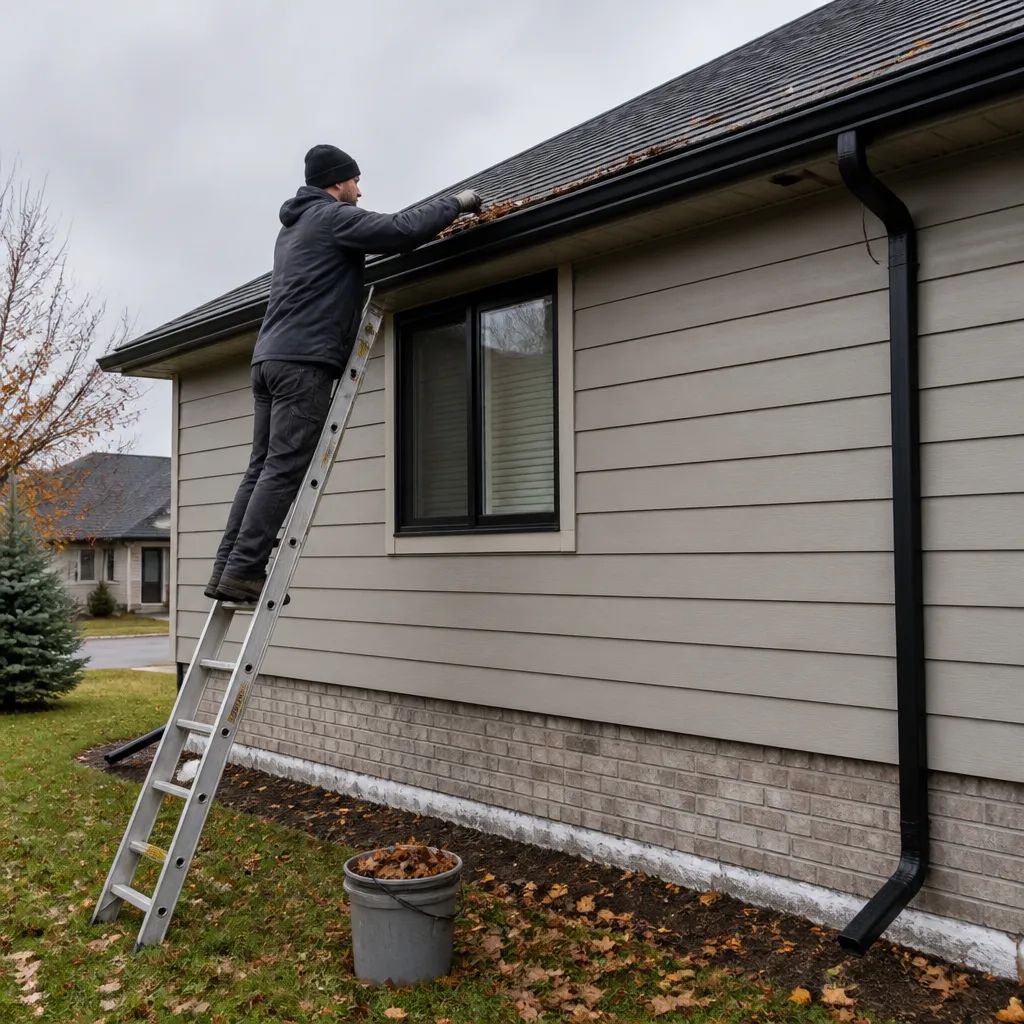
Eavestroughs are one of the most overlooked spider habitats. Debris collects in them through the fall, and damp leaves give insects a place to gather while the space behind the fascia gives spiders shelter. An egg sac tucked into an eavestrough in November can be the source of the webs you see by the front door in March.
Why Eavestroughs Hold Webs
Spiders anchor webs wherever there is a gap and a flat surface, and the lip of an eavestrough is a perfect anchor. Egg sacs often stay put through winter in the corners where the trough meets the fascia. Clearing them in late fall, before the first freeze, removes a spring problem before it starts.
Power Washing Siding and Soffits Safely
Power washing removes egg sacs and webs from siding, soffits, and fascia effectively, but pressure has to match the surface. Vinyl siding and soft wood are easy to damage with a narrow nozzle held too close. We use lower pressure on those surfaces and rinse thoroughly so debris does not dry back onto the wall. Late-fall washing should also avoid freezing temperatures, since wet surfaces can ice over.
Sequencing Gutter Work With Spider Control
Clean the eavestroughs before you spray. Otherwise, debris washes down onto the treated foundation and carries the product away with it. A simple order works well: clear the gutters, rinse the soffits and siding, then treat the foundation if conditions allow.
Pro tip: Check for sagging sections of eavestrough while you are up there. Low spots hold water, and standing water attracts insects, which in turn attracts spiders. A sag that holds water should be repaired before the freeze.
Timing Your Plan for Mississauga Winters
The best window for spider control in this area runs from late summer through the first half of fall. Spraying in August and early September, followed by sealing and web removal in October, gives the treatment time to work before the cold arrives. November is still usable, but it is a second chance rather than the main event.
A Simple Fall Sequence
Start with web removal and gutter cleaning in early October. Seal gaps and replace worn door seals as soon as you find them. Treat the foundation in late October if the forecast shows mild, dry days, and then schedule a check-in for early spring. If you want help building that sequence around your home, the team at Performance Window Cleaning can walk the property with you.
Weather Windows in November
Mississauga Novembers tend to swing between mild, wet days and cold snaps. Plan any spray for a dry afternoon when the surface is not frozen and rain is not forecast during the drying period. Hold off if the wind is strong enough to carry product onto vehicles, plants, or a neighbour’s property.
What to Expect in Early Spring
Some spiders will still appear in March and April as the weather warms and webs that were missed begin to rebuild. That is normal. What matters is that the number of webs drops across the season and that the entry points stay closed through the next fall.
Frequently Asked Questions
Can I still get spider spraying done in Mississauga in November?
Yes, as long as the surfaces are dry and the temperature falls within the product’s label range for application. A provider who checks conditions before spraying is more likely to deliver a treatment that holds.
Will a November spray stop spiders from coming back in the spring?
Not on its own. A spray knocks down the spiders that are present, while sealing entry points and removing egg sacs reduce what arrives next. The combination is what changes the spring count.
How often should spider webs be removed from the outside of a house?
During fall, a monthly sweep of entry doors, windows, and light fixtures keeps webs from building up. Before the first freeze, do a full clean of soffits, corners, and eavestroughs so that winter starts with a clear baseline.
Are spider webs in the eavestroughs a sign of a bigger problem?
They often are. Webs in eavestroughs usually mean insects and debris are collecting there, and egg sacs may be sheltering in the corners. Clean the eavestroughs, check for sagging sections that hold water, and look for the insect source nearby.
Does spider web removal count as part of window cleaning?
It often does. Webs on sills, tracks, and screens are usually cleared during window cleaning, but you should confirm what is included in your quote before booking.
Is spider spray safe to use around kids and pets?
It can be, when the product is applied according to the label and treated surfaces are allowed to dry before anyone touches them. Ask your provider which products they use, how the applicators are licensed under Ontario’s pesticide rules, and how long you should keep pets off treated areas.
Has a November treatment or a sealing job changed how many spiders you see around your Mississauga home each fall, and what would you like us to cover in the next article?