
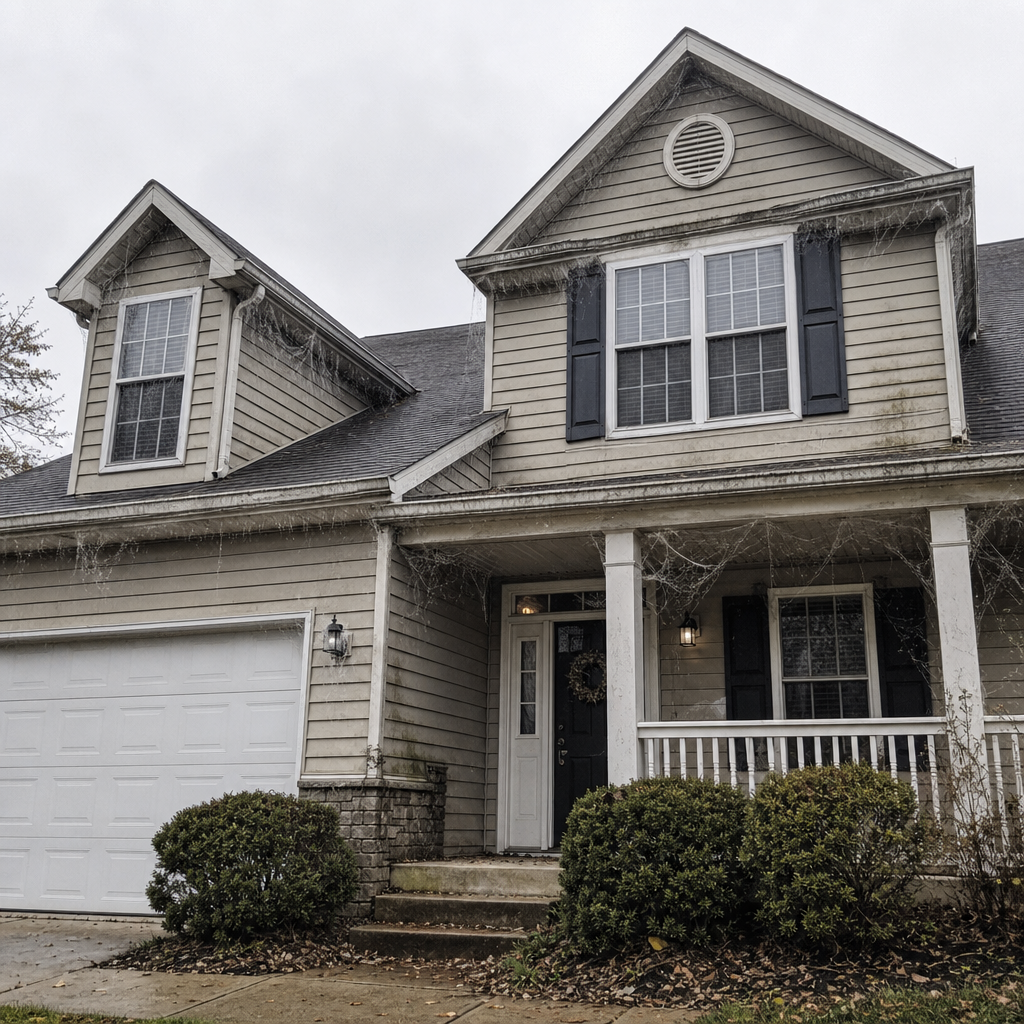
If you have ever walked up to your front door and walked face-first into a spider web, you already understand the problem. Spider webs on eaves, window frames, siding, and corners are not just unsightly. They are active signs that your property has become a habitat for insects and the spiders that hunt them. Spider web removal done properly is not just cosmetic cleaning. It is the first line of pest prevention for any home or commercial property. Here is what professional exterior cleaning actually does to keep bugs away, and why DIY attempts consistently fall short.
Table of Contents
- Quick Takeaways
- Why Spider Webs Keep Coming Back
- How Professional Cleaning Breaks the Pest Cycle
- Spider Spraying vs. Removal vs. Full Pest Prevention
- Where Spiders and Bugs Actually Hide on Your Property
- How Often Should You Schedule Pest Prevention Cleaning
- What a Professional Spider Web Removal Service Actually Does
- Frequently Asked Questions
- References
Quick Takeaways
| Key Insight | Explanation |
|---|---|
| Webs return within days if not treated at the source | Removing the web without addressing the insect food supply or applying a deterrent means spiders rebuild in the same spot within 48 to 72 hours. |
| Dirty siding and eaves attract insects that attract spiders | Mold, algae, and organic debris on exterior surfaces draw small insects. Spiders follow the food. Regular hand-washing of siding removes this attractant at the root. |
| Gutters are the most overlooked spider habitat on a home | Clogged gutters hold standing water and decomposing debris, which creates ideal nesting conditions for multiple pest species including mosquitoes and spiders. |
| Spider spraying is a complement to cleaning, not a replacement | Chemical deterrents applied to a dirty surface are significantly less effective. Professional cleaning first, then spraying, produces measurably longer-lasting results. |
| Window frames and tracks are primary entry points for bugs | Bugs enter through gaps around dirty, poorly-sealed window frames. Professional window cleaning includes inspecting and clearing these zones. |
| Consistent scheduling outperforms one-time deep cleans | A single annual clean resets the surface. Quarterly or seasonal service keeps pest populations from re-establishing between visits. |
| Commercial properties face higher pest pressure than residential | High foot traffic, outdoor lighting, and adjacent vegetation make commercial entrances and facades significantly more attractive to insects and spiders year-round. |
Why Spider Webs Keep Coming Back
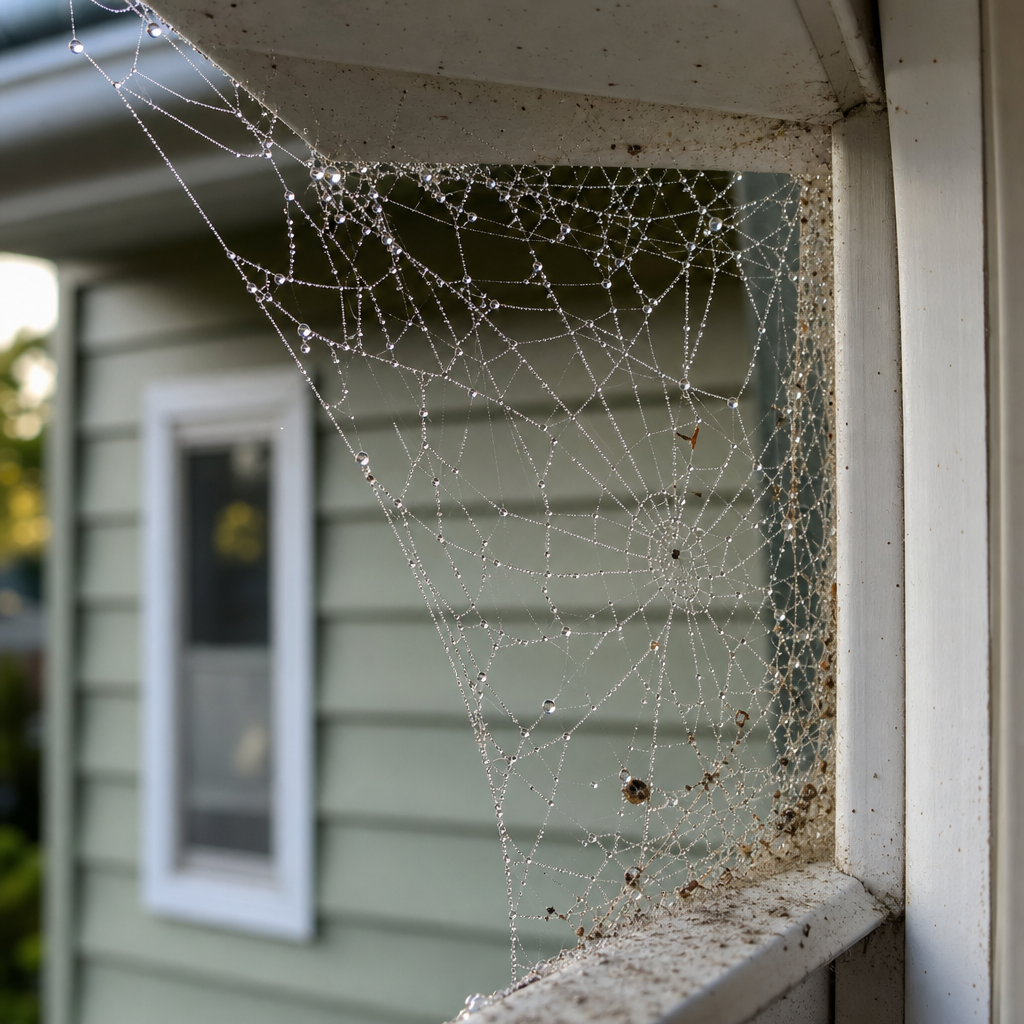
Most homeowners brush down a web with a broom and consider the job done. Within three days, a new web appears in the exact same spot. This is not bad luck. It is predictable spider behavior driven by environmental conditions that the broom does nothing to change.
Spiders are not random in where they build. They select locations based on two factors: protection from the elements and proximity to prey. A sheltered corner under an eave or beside a window frame that catches light at night is prime real estate. Light attracts flying insects, flying insects attract spiders, and spiders build webs in the spot that keeps producing results. Until you change those conditions, the cycle repeats.
In practice, the surfaces themselves also play a role. Rough, dirty, or textured surfaces give spider silk better anchor points. Algae-covered siding, oxidized window frames, and debris-filled corners are structurally superior web-building sites compared to clean, smooth surfaces. This is a critical point that most pest-control conversations skip entirely.
Pro tip: Before any spider spraying or deterrent application, the surface must be clean. Spraying a treatment onto a dirty wall dramatically reduces adhesion and effectiveness. Professional cleaning before treatment is not optional. It is the step that determines whether the treatment lasts weeks or months.
How Professional Cleaning Breaks the Pest Cycle
Professional exterior cleaning does something that targeted pest control products alone cannot do. It eliminates the environmental conditions that make your property attractive to insects and spiders in the first place. This is the difference between treating a symptom and addressing the cause.
Removing Organic Matter That Feeds Insect Populations
Mold, algae, pollen, and decomposing plant matter on exterior surfaces are food sources for small insects like midges, gnats, and springtails. These insects are the primary diet of the spiders building webs on your eaves and window frames. Hand-washing siding and eaves, the kind of detailed work that Performance Window Cleaning has provided since 2008, removes this food source directly. Fewer small insects means fewer spiders with a reason to set up camp on your property.
Clearing Clogged Gutters and Eliminating Standing Water
Gutters clogged with leaves and debris do more than cause water damage. They create warm, moist, sheltered habitats that attract a wide range of pests including earwigs, centipedes, mosquitoes, and spiders. According to the University of California Agriculture and Natural Resources, moisture and organic debris are the two most consistent attractants for household pests on residential properties.
Professional gutter and eavestrough cleaning removes this habitat entirely. When gutters flow freely and dry out between rain events, they stop functioning as a pest hotel attached to the roof of your home.
Cleaning Window Frames and Tracks
Dirty window tracks accumulate dead insects, debris, and moisture. This draws more insects and signals to spiders that the area is productive. Professional window cleaning that goes beyond the glass to include frames and sills disrupts this micro-habitat. It also allows for close inspection of weatherstripping and seal integrity, two factors that directly affect whether insects can enter the building.
Spider Spraying vs. Removal vs. Full Pest Prevention
Not all pest-related services deliver the same results. Understanding the difference between basic spider web removal, targeted spider spraying, and comprehensive pest prevention through exterior cleaning helps you make informed decisions about what your property actually needs.
| Approach | What It Does | How Long Results Last |
|---|---|---|
| Basic Spider Web Removal | Physically removes existing webs from eaves, windows, and entrances using extension tools and brushes. No treatment applied to surfaces. | 3 to 7 days before spiders rebuild in the same location if conditions are unchanged. |
| Spider Spraying (Treatment) | Applies a chemical or natural deterrent to surfaces where spiders build. Most effective on clean surfaces. Does not remove existing webs or address the root insect food supply. | 4 to 12 weeks depending on weather exposure and surface cleanliness at time of application. |
| Professional Exterior Cleaning with Pest Prevention | Combines physical web removal, surface washing, gutter cleaning, and window servicing to eliminate the environmental conditions that attract insects and spiders. Optionally paired with deterrent application. | Seasonal. Repeated quarterly or semi-annually maintains the effect and prevents re-establishment. |
The data consistently shows that the combined approach outperforms any single service. A professional cleaning that removes the food supply, eliminates nesting habitats, and prepares surfaces for deterrent application produces results that last significantly longer than spraying alone.
“Integrated pest management is most effective when it combines habitat modification, sanitation, and targeted treatments. Sanitation and habitat reduction should always come first.” – University of California Statewide Integrated Pest Management Program
Where Spiders and Bugs Actually Hide on Your Property
A common mistake is focusing pest prevention efforts only on the areas that are immediately visible. Spiders and insects exploit the zones that get the least attention, which is exactly why they establish there undisturbed.
Eaves and Overhangs
Eaves are the single most productive spider habitat on a residential property. They provide shelter from rain, proximity to artificial lighting, and a constant stream of flying insects drawn to windows and entrance lights below. Hand-washing eaves as part of an exterior cleaning service removes egg sacs, debris, and the organic buildup that sustains the insect populations spiders depend on.
Entrances and Door Frames
Entrance areas accumulate webs faster than any other part of a building because foot traffic disturbs and destroys webs repeatedly, which encourages spiders to rebuild more aggressively in the same sheltered zone. Entrance lighting makes the problem worse by attracting moths and flies around the clock. Professional cleaning of entrance areas, including door frames, light fixtures surrounds, and adjacent siding, directly reduces this pressure.
Window Frames, Weep Holes, and Sills
Weep holes in window frames exist for drainage but also function as insect entry points and spider nesting sites. Sills accumulate dead insects and debris that attract further activity. These are details that a standard window wipe-down misses entirely but that a professional exterior cleaning service addresses as part of a complete window service.
How Often Should You Schedule Pest Prevention Cleaning
Frequency depends on the property type, surrounding vegetation, and local pest pressure. A general rule that works in practice is this: once a year is maintenance, twice a year is management, and quarterly is prevention.
Residential Homes in Treed or Garden-Heavy Properties
Properties with significant tree canopy, garden beds close to the foundation, or adjacent green space face higher insect pressure year-round. For these homes, a minimum of two professional exterior cleans per year is realistic. Spring cleaning removes overwintering egg sacs and debris accumulated over winter. Fall cleaning removes the buildup that would otherwise sit through winter and hatch in spring.
Commercial Properties and Storefronts
Commercial properties have different demands. Outdoor lighting running through the night, high volumes of doors opening and closing, and proximity to parking lots and vegetation all accelerate pest activity on facades and entrances. A bug extermination service paired with monthly or quarterly exterior cleaning keeps commercial entrances presentable and professionally maintained year-round, which directly affects customer first impressions.
Pro tip: Schedule your spring exterior cleaning to coincide with the period just before spider egg sacs hatch, typically late April through May in most Canadian climates. Removing webs and egg sacs at this point prevents an entire generation of spiders from establishing on your property for the summer season.
Rental Properties and Homes Being Prepared for Sale
Real estate agents and property managers have a specific and urgent need here. A property showing visible spider webs, dirty eaves, and stained siding communicates neglect to buyers and tenants. A single professional exterior clean before listing or between tenancies can meaningfully affect perceived property value and leasing speed. This is not speculation. It is a consistent pattern observed by property professionals who use exterior cleaning as a standard part of property turnover preparation.
What a Professional Spider Web Removal Service Actually Does
There is a significant gap between what homeowners imagine a professional spider web removal service involves and what it actually delivers when performed by an experienced team. Understanding this gap helps you evaluate whether a service provider is actually addressing the problem or just brushing webs off the surface.
Assessment Before Cleaning
A professional service starts with a walk-around assessment of the property to identify active infestation zones, nesting sites, and the conditions driving the problem. This means looking at eave conditions, gutter status, window frame integrity, siding cleanliness, and lighting placement. Without this step, a technician is cleaning blind.
Extension Pole and Soft Brush Removal
Physical removal of webs uses soft-bristle extension tools that reach second and third-story eaves without ladders in most cases. The technique matters. Aggressive brushing can leave web residue on porous siding that anchors new webs faster. Proper technique removes the web cleanly and prepares the surface for washing.
Surface Washing to Remove Insect Attractants
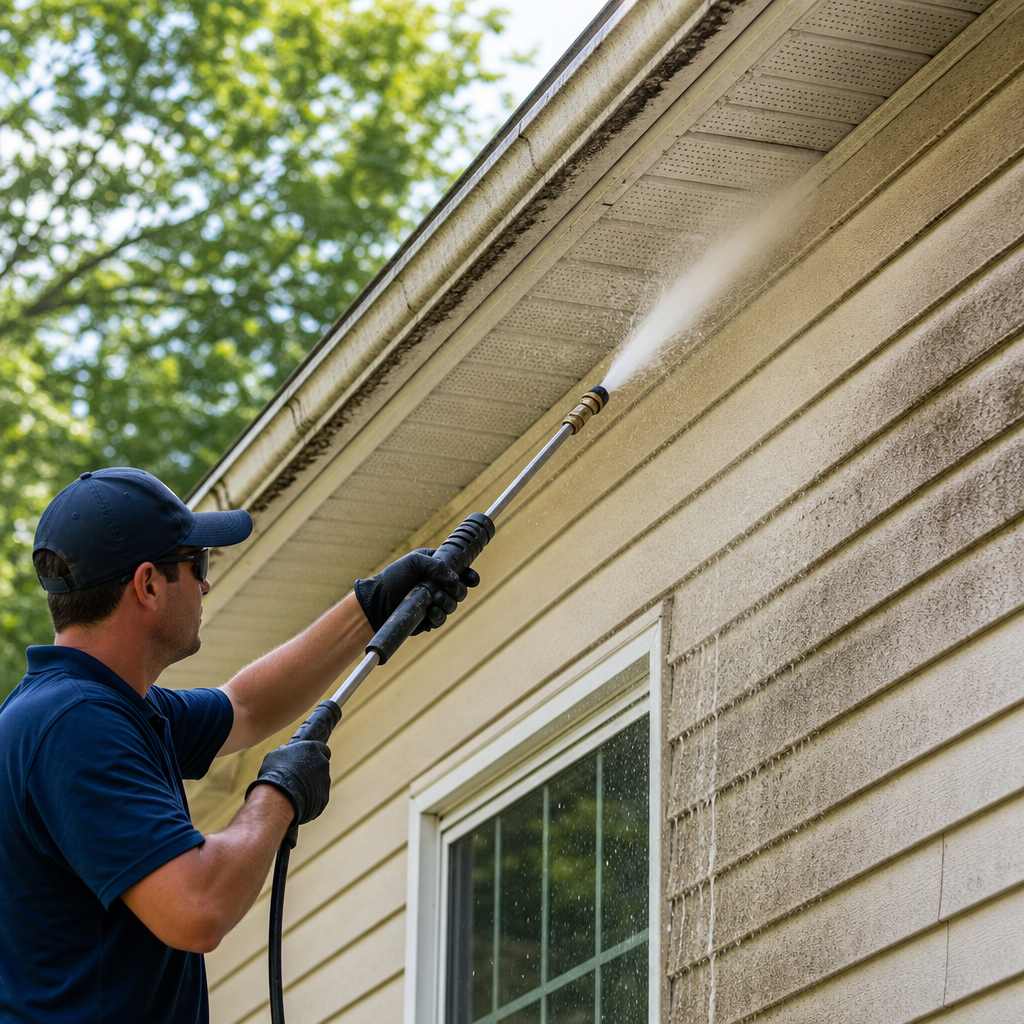
Pest prevention that lasts requires washing the surfaces after web removal. This removes the pheromone traces, egg case residue, and organic debris that signal to other spiders that this location is suitable for web-building. Hand-washing of siding, eaves, and window surrounds accomplishes this in a way that pressure washing alone often cannot, since pressure washing can miss sheltered corners and force water into areas that should stay dry.
Gutter and Eavestrough Clearing
Every professional exterior pest prevention clean should include gutter and eavestrough inspection and clearing. Blocked gutters sitting above freshly cleaned siding will immediately begin re-infesting the area with the insects and moisture they harbor. The work is wasted if the gutters are left unaddressed.
Performance Window Cleaning has delivered this integrated approach to residential and commercial clients since 2008, combining window cleaning, gutter cleaning, siding washing, and pest removal into customized packages rather than selling each service as a disconnected one-off treatment. That bundled approach is exactly what integrated pest management theory recommends and what the field results support.
Frequently Asked Questions
Does spider web removal alone keep spiders from coming back?
No. Removing the web without changing the conditions that attracted the spider in the first place results in a new web within days. Effective spider management requires removing the web, washing the surface to eliminate residue and attractants, and reducing the insect population that serves as the food supply. Spider spraying applied after a professional clean extends the protection window significantly.
Is spider spraying safe for children and pets?
The safety profile depends entirely on the specific product used and the application method. Professional services use products formulated for residential use that are safe once dried. The key variable is allowing adequate drying time before children and pets access treated areas. A reputable service provider will give you specific guidance on re-entry timing for each product they use. Always ask before the service begins, not after.
How is professional spider web removal different from what I can do myself?
The equipment reach, the surface washing that follows removal, the assessment of egg sacs versus active webs, and the ability to safely access high eaves and second-story overhangs are the primary differences. A homeowner with a broom can clear ground-level webs. A professional team clears the areas that are actually driving the problem, which are almost always the high, sheltered zones that are difficult or unsafe to reach without proper equipment.
What is the relationship between clean gutters and pest prevention?
Clogged gutters are one of the most consistently overlooked pest attractants on a residential property. Decomposing organic matter and standing water in gutters support mosquito breeding, attract earwigs and centipedes, and provide sheltered nesting sites for spiders. Professional eavestrough cleaning as part of a pest prevention program removes this habitat. Properties with clean, free-flowing gutters consistently show lower pest pressure on adjacent eaves and siding.
How do I know if my property needs a bug extermination service versus professional cleaning?
If the infestation has moved indoors or involves stinging insects such as wasps or hornets nesting in structural voids, a licensed pest control operator is the correct first call. For exterior pest pressure including spiders, ants along siding, flies around entrances, and similar problems that are driven by exterior conditions, professional exterior cleaning is the appropriate and highly effective first response. The two services are not competitors. They address different stages of the same problem. Start with cleaning to eliminate the environmental drivers, and escalate to licensed extermination only if interior infestation is present.
Can exterior cleaning actually reduce the number of insects entering my home?
Yes, and the mechanism is direct. Insects enter homes through gaps around window frames, door thresholds, weep holes, and utility penetrations. Dirty window frames and tracks accumulate debris that physically holds these openings wider and signals to insects that the area is already inhabited. Professional window cleaning and frame servicing removes this material, improves the seal at the frame perimeter, and reduces the micro-habitat that draws insects to these entry points. It is a meaningful reduction, not a complete elimination, but it is measurable and consistent.
Have you noticed spider webs returning to the same spots on your property year after year? Share what has worked for you or what questions you still have about exterior pest prevention.
References
- Health Canada guidance on safe and effective pest control practices for residential properties
- United States Environmental Protection Agency resources on integrated pest management and safer pest control methods
- University of California Agriculture and Natural Resources Statewide Integrated Pest Management Program research and guidelines
- Statista data and statistics on the pest control services industry, market size, and consumer trends
- Forbes coverage of home maintenance best practices and the financial impact of preventive property care