
Most GTA homeowners underestimate how much damage a single summer can do to their home’s exterior. Between June and September, UV exposure, humidity, and heavy rainfall combine to degrade siding, clog gutters, and accelerate mould growth on surfaces that were already stressed by a long Ontario winter. According to the Canada Mortgage and Housing Corporation, deferred exterior maintenance is one of the top contributors to premature structural deterioration in residential properties. If you want to protect your investment, a structured home exterior maintenance GTA plan is not optional. This checklist is built specifically for homeowners in the Greater Toronto Area, where the climate swings hard in both directions.
Table of Contents
- Why Summer Is the Most Critical Season for GTA Exterior Maintenance
- Quick Takeaways
- Window Cleaning: The Most Visible and Most Neglected Task
- Gutter and Eavestrough Maintenance Before the August Storms
- Power Washing Siding, Driveways, and Walkways
- Pest Removal and Spider Spraying: The GTA Summer Reality
- Entrance and Eave Hand-Washing for Lasting Curb Appeal
- DIY vs. Professional Exterior Cleaning: A Practical Comparison
- How to Schedule Your Summer Exterior Maintenance Without Stress
- Frequently Asked Questions
- References
Why Summer Is the Most Critical Season for GTA Exterior Maintenance
The GTA’s climate creates a specific problem for home exteriors: winters deposit road salt, grime, and biological debris on every surface, and summer’s heat then bakes that contamination in. If you wait until fall to address it, you are giving mould, algae, and moisture six months to work against your siding, fascia, and window frames.
In practice, the homeowners who schedule exterior cleaning in late May or early June consistently see better outcomes than those who push it to September. Surfaces cleaned early in the summer season are exposed to fewer humidity cycles, which means less chance of mould re-establishing between cleans. The window for preventive maintenance is genuinely narrow in the GTA, and it opens right now.
Quick Takeaways
| Key Insight | Explanation |
|---|---|
| Clean gutters before July, not after | GTA summer storms peak in July and August. Blocked eavestroughs during these storms cause water to back up behind fascia boards, leading to rot and interior water damage. |
| Window cleaning improves more than aesthetics | Mineral deposits from hard water and oxidation from UV exposure can permanently etch glass if left more than one season. Professional hand cleaning removes this before it becomes structural. |
| Power washing requires the right PSI for each surface | Using high-pressure washing on vinyl siding without adjusting settings forces water behind cladding panels, promoting hidden mould growth. Surface-specific pressure settings are non-negotiable. |
| Spider spraying is a summer-specific necessity in the GTA | Warm weather drives spider and insect populations to eaves, window frames, and entrances. Preventive spraying in June dramatically reduces re-infestation rates through August. |
| Bundled exterior packages save 20-30% over individual services | Booking window cleaning, gutter cleaning, and power washing together with one provider typically costs significantly less than scheduling each separately and reduces total disruption to your schedule. |
| Real estate value is directly tied to exterior condition | According to a HomeLight survey, curb appeal improvements including professional exterior cleaning can increase a home’s perceived value by up to 7 percent before a listing. |
| Skipping annual maintenance accelerates repair costs | The average cost to replace a section of rotted fascia board in Ontario is $400 to $900. Annual gutter and eave cleaning that prevents that rot costs a fraction of that amount. |
Window Cleaning: The Most Visible and Most Neglected Task
Windows are the first thing visitors, buyers, and neighbours notice about your home’s exterior. Yet most GTA homeowners clean them once every two to three years at best, which is long enough for hard water mineral deposits to begin etching the glass surface permanently. The summer exterior cleaning checklist starts here.

Interior vs. Exterior Window Cleaning Timing
Exterior windows in the GTA accumulate pollution residue, pollen, and oxidation from spring. Cleaning them in late May or early June captures the worst of that winter-spring buildup before summer UV heat bakes it further into the glass. Interior windows can follow in June or July when the home is naturally ventilated and drying times are faster.
A common mistake is cleaning exterior windows on hot, direct-sun days. The cleaning solution dries too quickly and leaves streaks. Professional window cleaners working in the GTA know to schedule exterior work in early morning or on overcast days for streak-free results, which is one of the reasons professional window cleaning consistently outperforms DIY attempts on two-storey homes.
What to Include in the Window Cleaning Checklist
The checklist should cover all glass panes, window frames, sills, and tracks. Dirty tracks accumulate moisture and organic debris that feeds mould, and that mould eventually migrates to interior surfaces. Screens should be removed, hand-washed, and allowed to dry before reinstalling. For homes with storm windows or specialty coatings, always confirm that the cleaning products being used are compatible with those surfaces.
Pro tip: If your windows have not been professionally cleaned in more than 18 months, book an initial deep clean first. Once the mineral deposits and oxidation are removed by a professional, your own maintenance cleaning between annual visits becomes dramatically easier and more effective.
Gutter and Eavestrough Maintenance Before the August Storms
The GTA receives an average of 791 millimetres of precipitation annually, with a significant portion concentrated in summer thunderstorm events. A blocked eavestrough during a 40-millimetre-per-hour storm event does not just overflow. It forces water behind the fascia, into the soffit, and in many cases directly into the wall cavity. That is a moisture intrusion problem that costs thousands to remediate.
The correct approach is to clean eavestroughs in late April or early May after the last of the maple keys and spring blossom debris have fallen, and then again in November after leaf drop. For homes with large overhanging trees, a mid-July inspection is also worth scheduling to check for mid-season blockages from summer seed pods and debris.
Signs Your Gutters Need Immediate Attention
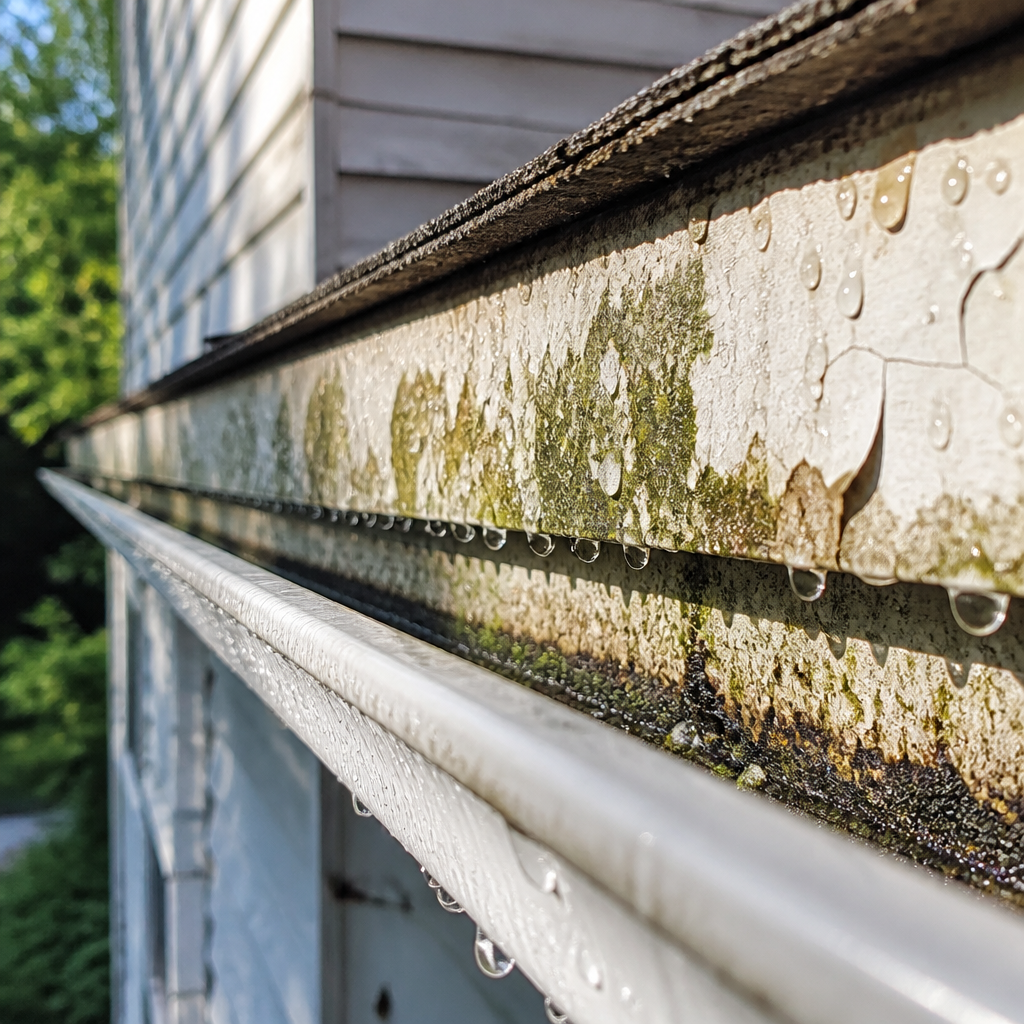
Water spilling over the front lip during rain, streaks of dirt running down the exterior siding, and sagging gutter sections are all signals that cleaning is overdue. Plants growing in your gutters, which is more common than people expect, indicate a significant organic buildup that may have been accumulating for multiple seasons.
Do not ignore downspout blockages. A clear gutter trough that drains into a blocked downspout will still cause overflow damage. Proper eavestrough cleaning includes flushing the full downspout run to confirm clear drainage to the ground-level extension or the storm drain connection.
“Homeowners who proactively maintain their gutters and drainage systems avoid the majority of preventable water damage claims. The math is simple: annual maintenance costs far less than a single remediation event.” – Canada Mortgage and Housing Corporation, Homeowner Maintenance Guidelines
Power Washing Siding, Driveways, and Walkways
Power washing is one of the highest-impact tasks on a summer exterior maintenance checklist, and it is also the task most likely to cause accidental damage when done incorrectly. The goal is to remove biological growth, pollution staining, mildew, and winter salt residue without forcing water into substrates or damaging surface coatings.
Pressure Settings by Surface Type
Vinyl siding should be washed at 1,200 to 1,500 PSI using a 40-degree nozzle, working top to bottom and never directing the stream upward into panel seams. Concrete driveways and walkways can handle 2,500 to 3,000 PSI with a 25-degree nozzle and benefit from a pre-treatment with a surfactant to lift embedded oil and tyre rubber. Painted wood surfaces require low-pressure soft washing in the 500 to 800 PSI range combined with appropriate cleaning agents to avoid paint lifting.
Brick and interlocking stone are more sensitive than most homeowners expect. High-pressure washing on unsealed brick erodes the mortar joint surface over time. For these surfaces, a soft-wash approach with appropriate alkaline cleaning solutions produces far better long-term results without structural risk.
What Gets Missed in a DIY Power Wash
Most homeowners with a rental pressure washer focus on the obvious flat surfaces. The areas that actually harbour the most biological growth are the ones hardest to reach: behind downspouts, along the base of siding at grade level, under deck ledgers, and in the corners of entryways. Professional exterior cleaning services address all of these zones systematically, which is why the results last longer between cleanings.
Pro tip: Always seal concrete driveways and interlocking stone within 48 hours of power washing while the surface is clean and fully dry. A penetrating concrete sealer applied post-wash extends the clean appearance by two to three times compared to unsealed surfaces and dramatically reduces the effort required for next season’s cleaning.

Pest Removal and Spider Spraying: The GTA Summer Reality
Spider webs on eaves, window frames, and entrances are not just an aesthetic issue. Dense webbing traps moisture and debris against surfaces, which accelerates mould growth and staining. In the GTA, spider populations peak in July through September, and homes that do not address them during the summer maintenance window end up with visible staining on siding and fascia that requires additional cleaning to remove.
Preventive spider spraying applied in June creates a barrier on exterior surfaces that significantly reduces re-infestation rates. The timing matters. Applying the treatment too early in the season, before temperatures consistently exceed 15 degrees Celsius, reduces effectiveness because spider activity has not yet reached its seasonal peak. June is the right window for the GTA climate specifically.
What Pest Removal Covers Beyond Spiders
A thorough summer pest removal service also addresses wasp nests in eaves and soffits, mud dauber nests on window frames and under deck boards, and ground-level ant activity near foundation lines. These are not separate concerns. They are all part of a complete exterior cleaning checklist that any professional exterior maintenance provider should be equipped to handle in a single visit.
Entrance and Eave Hand-Washing for Lasting Curb Appeal
Power washing handles large flat surfaces efficiently, but it is not the right tool for everything. Entrance areas with detailed millwork, painted decorative trim, light fixtures, and door hardware require hand-washing with appropriate soft-bristle tools and ph-neutral cleaning solutions. The same applies to eaves, soffits, and fascia where painted surfaces and wood grain details can be damaged by high-pressure spray.
Hand-washing these surfaces once per summer removes the specific contamination that drives long-term discolouration: exhaust deposits, airborne pollen, insect waste, and the residue left by spider web removal. This type of detail work is what separates a home that looks clean from a distance from one that holds up to close inspection, which matters significantly for resale value and rental appeal.
Focusing on High-Traffic Exterior Zones
The front entrance, garage door surround, and main patio or deck area see the most daily contact and show wear fastest. Hand-washing the garage door panels, including the horizontal recesses where dirt accumulates, removes staining that power washing alone cannot fully address. Door surrounds with painted millwork should be brushed and wiped rather than sprayed, protecting the paint surface while removing biological growth from every crevice.
DIY vs. Professional Exterior Cleaning: A Practical Comparison
The decision between doing exterior maintenance yourself and hiring a professional is not really about cost in isolation. It is about time, equipment, risk, and the quality of outcome. The following table compares both approaches honestly across the tasks that matter most for a summer exterior maintenance checklist in the GTA.
| Maintenance Task | DIY Approach | Professional Service (e.g., Performance Window Cleaning) |
|---|---|---|
| Exterior window cleaning | Achievable on ground floor. Upper storeys require ladders and squeegee technique that takes years to develop. Streak-free results on second-storey windows are rare without training. | Safe access to all storeys. Professional technique eliminates streaks and mineral deposit buildup. Takes 2 to 4 hours vs. a full day for DIY on a two-storey home. |
| Gutter and eavestrough cleaning | Requires ladder confidence and a helper for safety. Most homeowners miss downspout blockages and do not flush the full drainage line. Risk of gutter damage from improper ladder placement. | Full inspection, debris removal, and downspout flushing included. Professionals identify early signs of gutter damage, sag, or improper slope during the clean. |
| Power washing siding and driveways | Rental units are available but often under-powered for concrete or require technique to avoid siding damage. Most rentals do not include surface-appropriate nozzles or soft-wash attachments. | Commercial-grade equipment with correct PSI for every surface. Soft-wash capability for delicate areas. Insurance coverage for any accidental damage. |
| Spider and pest removal | Retail sprays are available but typically lack residual effectiveness beyond two to three weeks. Web removal on upper eaves is not safely achievable without elevated access equipment. | Professional-grade treatments with 8 to 12 week residual effectiveness. Full coverage of upper eaves, soffits, and window frames in a single visit. |
How to Schedule Your Summer Exterior Maintenance Without Stress
The single biggest scheduling mistake GTA homeowners make is waiting until a problem is visible before booking maintenance. Professional exterior cleaning services in the GTA book up quickly from late April through June, which means homeowners who call in July are often looking at four to six week wait times. The solution is to book in February or March for May and June service windows.
The Optimal Summer Maintenance Sequence
The most effective sequence for a complete summer exterior maintenance program is to start with gutter and eavestrough cleaning in late April or early May, then move to power washing siding and hardscaping in May, followed by window cleaning and hand-washing of entrances and eaves in late May or early June, and finishing with spider spraying in June once temperatures are consistently warm. This sequence ensures that the dirtiest work, gutter cleaning, does not contaminate freshly cleaned windows or siding below.
For homeowners who want one call and one visit to handle everything, bundled exterior packages from a provider like Performance Window Cleaning cover the full sequence in a coordinated visit, which is more efficient than managing multiple separate bookings with different contractors.
Annual vs. Twice-Annual Service Scheduling
For most GTA homes, twice-annual exterior cleaning produces significantly better outcomes than once-annual service. A spring clean removes winter accumulation. A fall clean removes summer biological growth and prepares surfaces for the coming freeze-thaw cycle. Homes with large deciduous trees overhead or near a busy road with significant exhaust exposure may benefit from a third visit mid-summer for gutters and spot surface cleaning. The data consistently shows that homes on a twice-annual maintenance schedule have lower long-term exterior repair costs than those serviced once per year or less.
Frequently Asked Questions
When is the best time to start summer exterior maintenance in the GTA?
The optimal window is late April to mid-June. This captures the period after spring pollen and blossom debris have settled and before the July-August storm season. Booking early also ensures you get your preferred scheduling window, as professional exterior cleaning services in the GTA fill up quickly once the weather stabilizes.
How often should GTA homeowners clean their eavestroughs?
Twice per year is the minimum for most GTA homes: once in late spring after seed and blossom drop, and once in November after leaf fall. Homes with mature trees directly overhead should add a mid-summer inspection to check for debris accumulation from summer storm activity. Skipping even one annual clean significantly increases the risk of water damage to fascia and soffits.
Is power washing safe for all types of siding?
No, and this is where DIY power washing causes the most accidental damage. Vinyl siding, wood siding, painted brick, and stucco all require different pressure settings and nozzle types. Using high-pressure washing incorrectly on vinyl forces water behind panels, creating hidden moisture problems. Stucco can crack under excess pressure. A professional exterior cleaning service selects the correct approach for each specific surface material on your home.
What is included in a professional spider spraying service?
A professional spider and pest removal service for a residential GTA home typically includes removal of all existing webs from eaves, soffits, window frames, and entrances, followed by application of a residual treatment to those same surfaces. The treatment creates a barrier that discourages re-infestation for eight to twelve weeks depending on the product used and weather conditions. It is most effective when applied in June as spider populations are becoming active.
Can I book window cleaning, gutter cleaning, and power washing together?
Yes, and bundling these services is strongly recommended. Booking them together with a single provider means the work is sequenced correctly, with gutter cleaning and power washing completed before the final window clean so that runoff from higher tasks does not dirty freshly cleaned glass. It also typically costs less than booking each service separately and requires only one scheduling conversation and one day of access to your property.
How does regular exterior maintenance affect home resale value in the GTA?
Significantly. A well-maintained exterior signals to buyers that the home has been cared for overall, which supports higher appraisal values and faster sale timelines. According to HomeLight’s research on curb appeal, professional exterior cleaning and maintenance can increase a home’s perceived value by up to seven percent. In the GTA market, where average detached home prices exceed one million dollars, that is a substantial return on a few hundred dollars of annual maintenance investment.
What should I look for when choosing an exterior cleaning company in the GTA?
Look for a company with documented experience, clear liability insurance, and the ability to handle multiple exterior cleaning services rather than just one. Ask specifically about their approach to different siding materials, whether they include downspout flushing in gutter cleans, and what products they use for pest and spider treatments. A company that has been operating in the GTA since 2008, like Performance Window Cleaning, has direct experience with the specific seasonal conditions and surface types common in this region, which matters more than you might expect.
What does your summer exterior maintenance routine look like, and which task do you find hardest to stay on top of? Share your experience below.
References
- Canada Mortgage and Housing Corporation: homeowner maintenance and moisture damage prevention guidelines
- Environment and Climate Change Canada: GTA seasonal precipitation and storm event data
- Forbes Real Estate: research on curb appeal improvements and home resale value impact
- Statista: home improvement and exterior maintenance spending statistics for Canadian homeowners
- International Association of Certified Home Inspectors: exterior maintenance inspection standards and best practices