
Homeowners across our service areas often ask the same question in November: the mosquitoes seem gone and the spiders are slowing down, but ticks are still out there in the leaf litter, so is one more treatment worth booking? Effective tick control Ontario homeowners can still get before winter depends on the calendar, the thermometer, and what happens in the yard before the ground freezes. The honest answer is that the window has narrowed a lot. The work that counts now is less about the sprayer and more about leaves, standing water, and the edges of your lot.
Table of Contents
- Quick Takeaways
- Why Ticks and Mosquitoes Still Matter in November
- Blacklegged Ticks in Ontario Autumn
- Mosquitoes After the First Hard Frost
- What a Late Treatment Can and Cannot Do
- Comparing Late-Season Options
- Yard Prep That Beats a Spray
- How Performance Window Cleaning Handles Tick and Mosquito Work
- Frequently Asked Questions
- References
Quick Takeaways
| Key Insight | Explanation |
|---|---|
| Mid-November is the tail end for mosquito spraying | Adult mosquitoes are largely gone after a hard freeze, so your effort is better spent on standing water than on an open-yard spray. |
| Ticks stay active on mild autumn days | Blacklegged ticks wait in leaf litter and lawn edges on warm afternoons, so one frost does not end the risk. |
| Spray only on dry, above-freezing ground | Residual product binds poorly to cold, wet, or frozen surfaces, so a damp grey afternoon is a reason to reschedule. |
| Rake leaves before any surface treatment | Product sits on top of a wet leaf mat and never reaches the soil where ticks are waiting. |
| Empty containers and tarps after every rain | Culex larvae need still water, and a bucket or tarp that pools is a ready-made breeding site. |
| Book your spring program before the calendar fills | An early-season treatment timed to returning ticks and mosquitoes carries more weight than a late-fall spray. |
Why Ticks and Mosquitoes Still Matter in November
The risk is not static. Blacklegged ticks are now established across the Niagara, Halton, and Hamilton regions, and their range has been expanding year over year. Our own tick and mosquito page notes that confirmed Canadian Lyme disease cases rose from 266 in 2011 to over 3,000 by 2021, which is a reason to take even modest tick pressure seriously.
Most homeowners picture ticks in deep woods, but the yards we see with the most pressure sit right at the edge of a wooded lot, a ravine, or an overgrown hedge. Ticks wait low on grass, shrubs, and leaf litter rather than in the canopy, ready to grab a passing pet or a person walking the fence line. That boundary zone is where a late-season decision actually matters.
Mosquitoes follow a different logic. Culex mosquitoes, the primary carriers of West Nile virus, breed in standing water, and the most common breeding site is rarely a pond. It is something on your own property, such as a clogged eavestrough, a sagging tarp, a plant saucer, or a child’s wading pool left in the wrong place. The most effective mosquito work in November is often work you can do with a bucket and a ladder.
Blacklegged Ticks in Ontario Autumn
Why Fall Does Not Automatically End Tick Season
A common mistake is assuming the first cold snap shuts ticks down for the season. Ticks slow down as temperatures drop, but they do not switch off the first time it frosts. On a mild autumn afternoon, with damp leaves and some sun, questing ticks can still be found at the edge of the lawn, so a single hard frost in late October does not settle the question.
A 2025 review of hard tick management published in the journal Veterinary Sciences covers chemical, biological, physical, and integrated approaches, and its framing points toward combining methods rather than relying on one application. That matches what we see on the ground. A spray alone rarely fixes a habitat that is still full of leaves and tall grass.
Where Ticks Wait in Your Yard
Ticks wait on the tips of vegetation along the boundary between maintained lawn and rough cover. They gather where tall grass, leaf litter, shaded ground under shrubs, and woodpiles meet the lawn. A lawn mowed short right up to the bush edge carries much less risk than one with a neglected strip along the fence, which is why we tell clients to inspect the edges first.
Pro tip: Walk the perimeter of your yard on a dry, mild afternoon and look at the strip where the lawn meets the fence, shrubs, or bush. That strip is the first area to clear, and the first area to treat if you decide to spray.
Mosquitoes After the First Hard Frost
Why Adult Mosquitoes Stop Being a Spray Target
Adult mosquitoes that were active outdoors in summer are largely gone once nights settle into a hard freeze. The few that survive tend to shelter in spots such as sheds, garages, and crawl spaces, not on your open lawn. Spraying an exposed yard in mid-November therefore hits very few targets, and the treatment becomes a cost with little return.
Standing Water Is the Real Late-Season Target
Culex larvae need water that stays still, and a yard in November is full of it. Check eavestroughs where leaves trap water, tarps that pool after rain, planters and plant saucers, rain barrels, and the low corner of a patio where puddles form. Water cleared now cannot breed during the milder spells that still come through late autumn.
In practice, the advice we give most often is simple. Walk the property after each rain and tip out anything that holds water. An overturned bucket left for the winter costs nothing and removes a breeding site that a spray cannot reliably reach.
What a Late Treatment Can and Cannot Do
Residual Products on Cold and Damp Ground
A late-season treatment is a cleanup, not a shield. It can knock down ticks already present in the vegetation you treat, and it can reduce the adults resting on a shaded foundation or under a deck. It will not stop ticks arriving from a neighbouring property, and it will not stop a breeding site from refilling with rain next week.
Residual products are the part most people misunderstand. They are designed to stay on a surface and keep working for a period after application, but they bind poorly to cold, wet, or frozen ground. A grey, windy afternoon with soaked grass is a reason to reschedule, not a reason to spray anyway.

Reaching Ticks in Thick Leaf Litter
Product cannot penetrate a deep, wet mat of leaves. When you spray over that layer, most of the material sits on top of the leaves and never reaches the soil surface where ticks are waiting. The rake comes first, and the spray follows only when the ground underneath is clear and dry.
A late-season treatment resets the yard for a short period. Its value depends on what you clear, drain, and repair before and after it.
Comparing Late-Season Options
A 2025 mini-review of tick control in parks and gardens lists acaricides, fungi, pheromones, and other tools among the methods used to reduce tick-borne disease risk. For a residential yard in November, only some of those options make sense. The table below compares the three approaches we would actually recommend, along with the limits that come with each.
| Approach | Best Use | Main Limitation |
|---|---|---|
| Barrier spray on lawn edges and foundations | Ticks in edge vegetation and mosquitoes resting in shaded areas, applied on a dry day above freezing | Short-lived, performs poorly on wet or frozen ground, and does not stop new arrivals |
| Leaf clearing and standing water removal | Tick habitat and Culex breeding sites | Labour-intensive, leaves no residual protection, and needs repeating after rain and leaf drop |
| Early-season spring program | Ticks emerging and mosquitoes returning in warmer weather | Requires booking ahead and does nothing for ticks already active this fall |
In our view, the first two options are worth doing in November, and the third is worth booking before the spring calendar fills. Clearing debris and draining water cost little and address the conditions that make the yard attractive in the first place.
Yard Prep That Beats a Spray
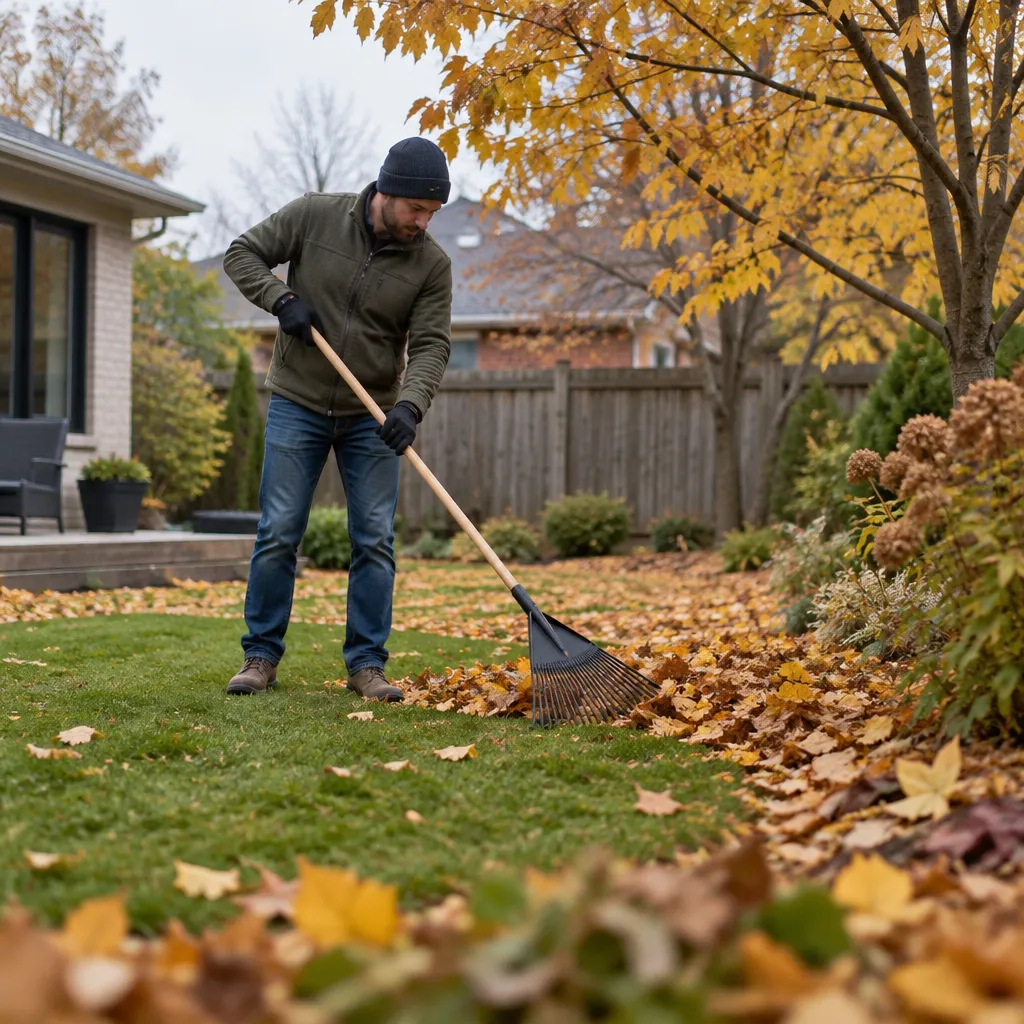
Habitat modification is the step most homeowners skip, and it is the one with the biggest effect on tick and mosquito pressure. Removing leaves from the lawn edge, trimming shrubs so sunlight reaches the ground underneath, and moving woodpiles away from the house all make the yard less hospitable to ticks. None of this requires a product, only time on a dry day.
Leaf Litter and the Tree Line Edge
Rake, bag, and remove leaves rather than piling them at the edge of the yard, where they become tick habitat. If you mulch, keep the mulch off the lawn and out of the strip along the fence line. Mowing a narrow strip along the bush edge is a simple way to make that boundary less attractive to ticks.
Gutters, Woodpiles and Shaded Corners
Clear eavestroughs so they drain properly, because the same blockage that holds leaves also holds water that feeds mosquito larvae. Stack firewood on a rack away from the wall, and check shaded corners under decks and porches where leaves and damp soil collect. A tidy perimeter helps with both pests and protects the fascia behind your gutters.
Pro tip: Do the leaf and gutter work before you book any surface treatment. Product applied over a clogged eavestrough line and a pile of wet leaves is money spent on the wrong surface.
How Performance Window Cleaning Handles Tick and Mosquito Work
Our bug removal service covers tick and mosquito control, and we are licensed for pest removal. In practice, that means we look at the property before recommending a treatment, and we will tell you when the right answer is to clear debris or skip a spray for the day. We serve Oakville, Burlington, Mississauga, Hamilton, Niagara Falls, St. Catharines, and Fenwick.
Pesticide use in Ontario is governed by provincial rules, and O. Reg. 63/09 is one of the regulations that sets out definitions and general requirements for pesticide use. Treatment decisions should follow the product label and the conditions it allows, especially on cold or wet days. A reputable provider should explain those conditions before booking, not after the crew arrives.
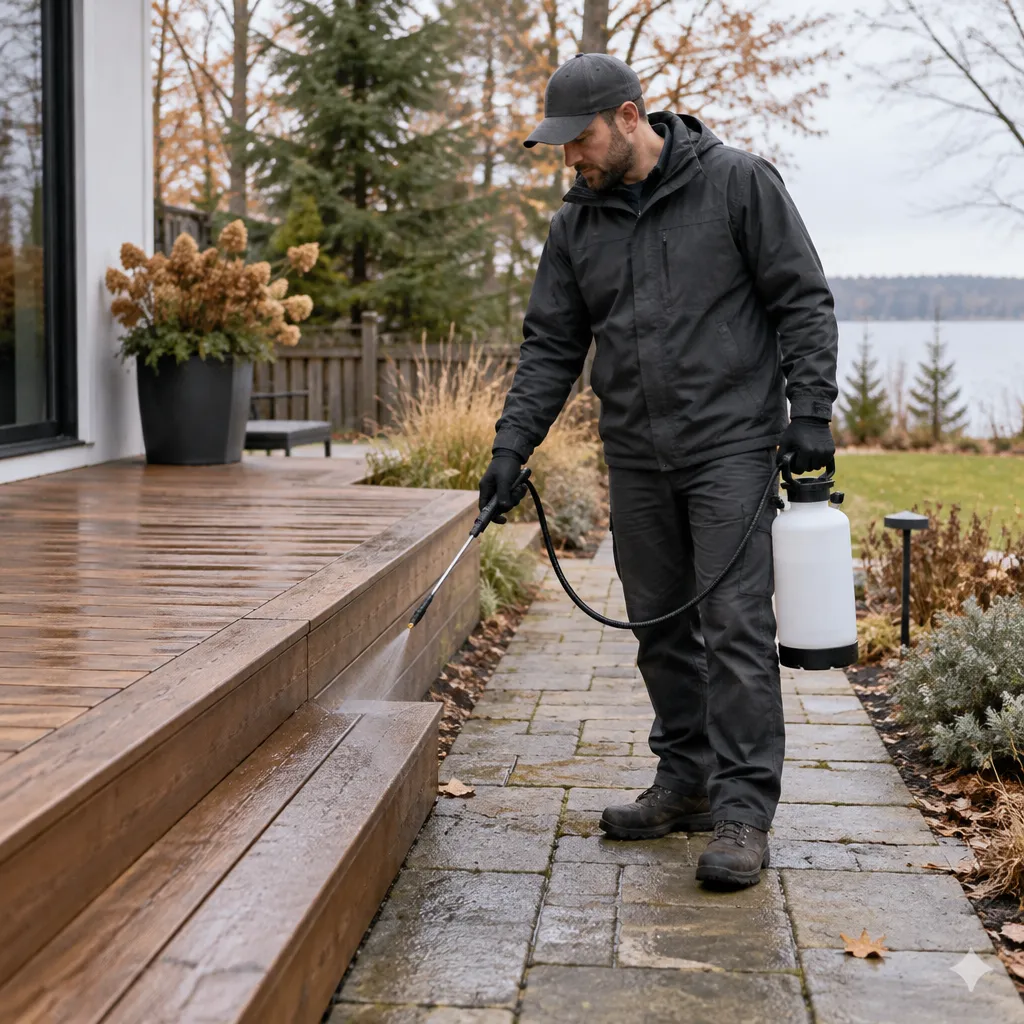
Our Home Detailing package includes eavestrough debris removal, eavestrough whitening, cleaning of siding, stone, and stucco, and a spider spray that should be done once a year. Rinsing off dirt and leftover spray is part of the package, so the yard is left clean after the work. Home Detailing and gutter cleaning are priced by estimate, so request a free quote for your property.
Pro tip: Ask for a dry, above-freezing day and confirm the forecast the morning of the visit. Wet ground is the most common reason a late treatment underperforms.
Visiting hours are 9:00 AM to 5:00 PM Monday to Friday, with weekends by appointment. To book, use the Request a Quote form on our website or call 1-905-401-3793.
Frequently Asked Questions
Can I still treat for ticks in mid-November in Ontario?
You can, but only on a dry day when the ground and air are above freezing and the product label allows application at that temperature. Expect limited benefit, and put most of your effort into clearing leaf litter and the lawn edge first.
Do mosquitoes disappear after the first hard frost?
Most adults that were active outdoors are gone after a hard freeze, but standing water can still hold larvae during milder spells. Emptying containers, clearing eavestroughs, and tipping out tarps remains worthwhile through late autumn.
Is tick control in Ontario the same as mosquito control?
No. Ticks wait in leaf litter and lawn edges, while mosquitoes depend on standing water and sheltered resting spots. A good late-season plan addresses both, which is why the two problems need separate checks.
Will a fall treatment protect my yard next spring?
Not reliably. A late-season spray is short-lived, so the stronger case for protection is an early-season program timed to when ticks and mosquitoes return, booked before the spring calendar fills.
Does a spider spray also control ticks?
A spider spray targets spiders and their webs, and it does not replace a dedicated tick and mosquito treatment. Our Home Detailing package includes a spider spray once a year, and tick and mosquito control is a separate bug removal service you can ask about when you request a quote.
How do I book a late-season assessment?
Use the Request a Quote form on our website or call 1-905-401-3793. Visiting hours are 9:00 AM to 5:00 PM Monday to Friday, and weekends are available by appointment.
Have you seen ticks or mosquitoes still active in your yard after a hard frost, and what did you try that actually worked?