
Most Ontario homeowners treat fall exterior home cleaning as optional. It is not. When you skip it, you do not just carry a bit of grime into winter. You set up a chain of damage that plays out across gutters, siding, windows, foundations, and driveways. By spring, what started as leaf debris and spider webs has quietly turned into rotting fascia, cracked concrete, and a basement that smells faintly of mold. Understanding exactly what happens, step by step, is the strongest argument for booking that fall exterior clean before the first hard frost arrives.
Table of Contents
- Quick Takeaways
- Gutters and Eavestroughs: The First Domino
- Siding and Fascia Rot: A Slow Burn
- Windows and Tracks: What One Wet Winter Does
- Driveways, Walkways, and Decks: Freeze-Thaw Cracking
- Pest Overwintering and Spider Webs
- Comparing Fall Cleaning Approaches
- Frequently Asked Questions
- References
Quick Takeaways
| Key Insight | Explanation |
|---|---|
| Clogged gutters are the root of most exterior winter damage | Blocked eavestroughs cause water to back up against fascia, siding, and foundations, creating rot and ice dams once temperatures drop below zero. |
| Ontario freeze-thaw cycles are especially destructive | Ontario temperatures swing repeatedly around 0°C through winter, meaning every crack and gap that holds moisture will be expanded and re-expanded throughout the season. |
| Siding and window tracks accumulate organic matter that holds moisture | Leaf debris, dirt, and mold spores trapped in siding seams and window tracks stay wet under snow all winter, accelerating rot and seal failure. |
| Driveways and walkways crack faster when dirty | Grime and organic debris in concrete pores hold water that freezes and expands, widening hairline cracks into serious structural splits by spring. |
| Overwintering pests move in through dirty, webbedexteriors | Spider webs, wasp nests, and insect debris at eaves and window frames signal and create entry points for pests looking for shelter before winter. |
| Mold growth from one missed fall can persist for years | Once mold establishes on siding or fascia over winter, it does not self-correct in spring. It spreads and requires treatment before repainting or re-caulking. |
| A professional fall exterior clean costs a fraction of one repair call | Eavestrough cleaning, power washing, and window cleaning combined cost far less than fascia replacement, foundation waterproofing, or concrete crack repair. |
Gutters and Eavestroughs: The First Domino
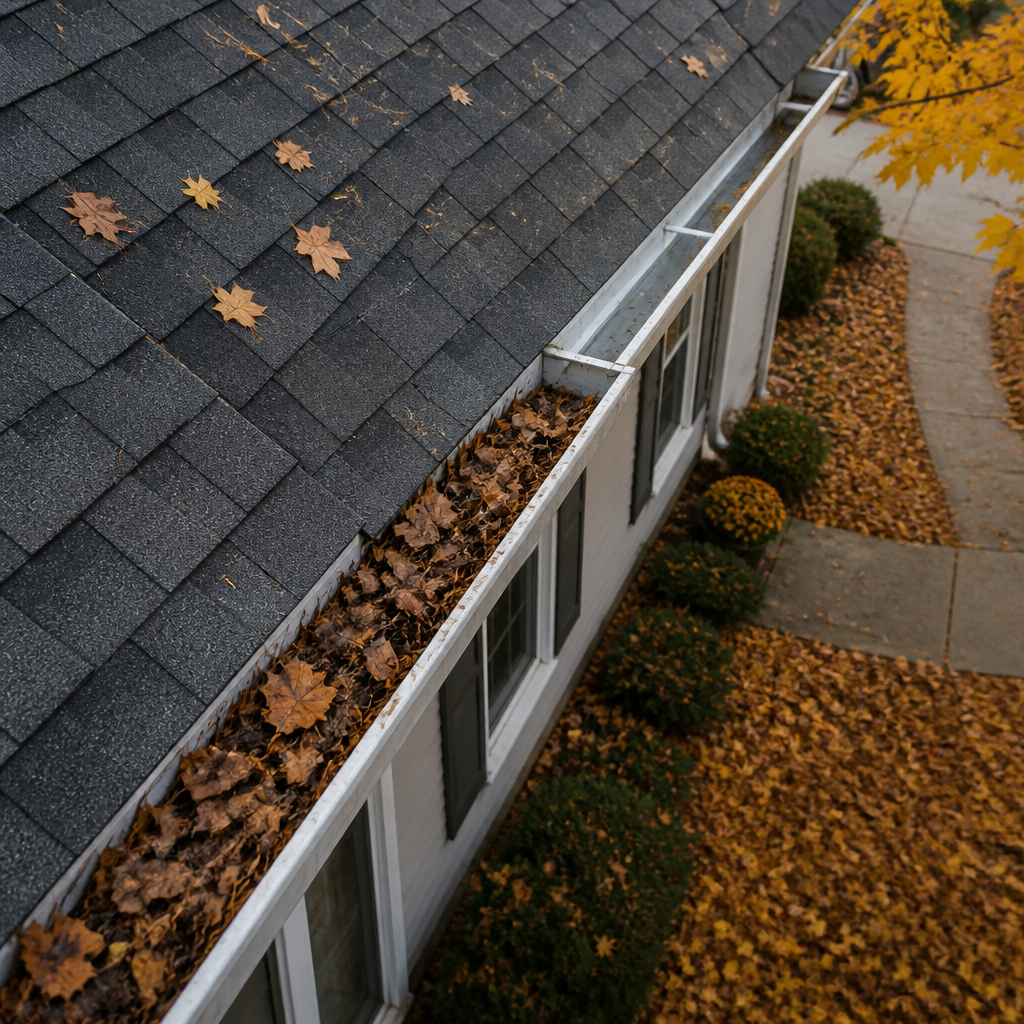
If you only do one thing to your home exterior in fall, clean the eavestroughs. Everything else on this list gets worse because clogged gutters exist. When leaves, seed pods, and shingle grit pack into the eavestrough channel, water has nowhere to go. It overflows, and it overflows in the same spot every single rain event and every snow melt.
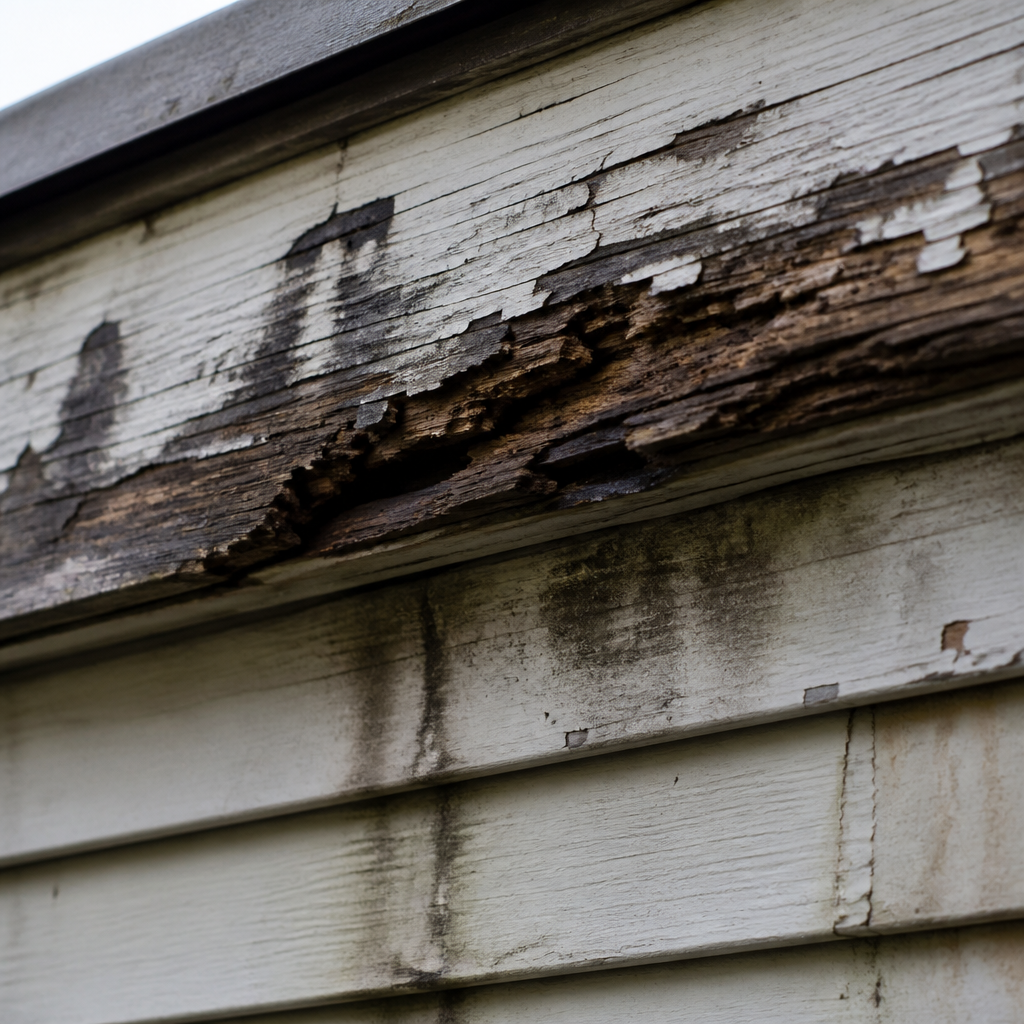
That overflow lands on your fascia board first. Fascia rot is almost always traceable to a blocked eavestrough that sat that way through an Ontario winter. Once the fascia softens, the gutter bracket loses its anchor, the gutter sags, and now water is also spilling toward the foundation rather than away from it.
Ice Dams Form Directly Above Blocked Eavestroughs
Here is the mechanics: heat escaping through the roof melts snow on the upper surface, and that meltwater runs down toward the eave. When the eavestrough is packed with frozen debris, the water has nowhere to drain. It refreezes at the roof edge and builds into an ice dam. As more meltwater backs up behind the dam, it finds its way under shingles and into the attic or ceiling cavity below.
Ice dam damage shows up as ceiling stains, damaged insulation, and eventually structural rot in the roof sheathing. Ontario homeowners are particularly exposed because the province experiences frequent temperature swings around 0°C rather than a single deep freeze. Every mild day creates meltwater; every cold night refreezes it.
The fix for an ice dam after it forms is expensive and disruptive. The prevention is eavestrough cleaning before freeze-up, combined with ensuring downspouts are clear and extended away from the foundation.
Pro tip: In Oakville, Burlington, Hamilton, and St. Catharines, the best window for eavestrough cleaning is late October through early November, after most leaves have fallen but before the ground freezes. Booking a professional service at this point takes the guesswork out of timing and ensures downspouts are flushed, not just the channel.
Foundation Damage Is the Expensive Downstream Consequence
When eavestrough overflow consistently runs toward the foundation rather than away from it, the soil saturates and hydrostatic pressure builds against the foundation wall. In Ontario winters, water in foundation cracks freezes, expands, and widens those cracks with every freeze-thaw cycle. What looks like a minor parging crack in October can become a serious structural defect by April.
Basement water intrusion and foundation repairs are among the most expensive exterior issues a homeowner can face. A single fall of neglected eavestroughs can be the starting point. That is not an exaggeration. It is the documented chain of cause and effect that exterior cleaning professionals see repeatedly.
Siding and Fascia Rot: A Slow Burn
Siding does not look dirty after one fall of neglect. It looks dirty after two or three, which is exactly why the problem escalates before most homeowners act. The damage, however, is happening from the first winter the siding goes uncleaned.
Leaf tannins stain siding permanently. A wet leaf pressed against vinyl or wood siding for several months under snow leaves a mark that power washing cannot fully remove after it has set. Mold and algae spores that arrive in summer and fall find purchase in the surface biofilm and establish colonies over winter when conditions under snow are dark, damp, and still.
Mold Does Not Wait for Spring to Spread
A common assumption is that mold goes dormant in winter. Many mold species that colonize exterior surfaces are cold-tolerant. They slow down but do not stop. By the time you see visible green or black streaking on north-facing siding in spring, the colony has already spent months embedding into the surface material. On wood siding, that means structural fiber degradation. On vinyl, it means a stained surface that becomes harder to restore with each passing season.
Hand-washing siding in fall, the way a professional home detailing service does it, removes the biofilm layer before it becomes established. It also allows a thorough inspection of caulking joints, where gaps invite moisture entry all winter. Once caulk is compromised and a gap sits wet and frozen repeatedly, the interior framing behind the siding begins to absorb moisture.
Exterior surfaces that go into winter carrying organic debris, mold spores, and accumulated grime do not reset in spring. They continue the deterioration that started the previous fall, at a pace that compounds season over season.
Window Sills, Frames, and Screens Suffer the Same Way
Window tracks and sills are collection points for dead insects, leaf fragments, and grit. That debris holds moisture against the frame seal and the sill surface through winter. On wood frames, the result is paint failure and eventual rot at the sill joint. On vinyl frames, the debris compresses the track seal and allows drafts and water infiltration. Screens with debris ground into the mesh hold moisture against the frame where it meets the window, accelerating frame corrosion on aluminum units.
Professional window cleaning that includes sills, tracks, and screens removes this threat entirely. It also allows the technician to spot failed seals and cracked glazing compound before winter makes them worse.
Windows and Tracks: What One Wet Winter Does
Window cleaning is often thought of as a cosmetic service. In fall, it is structural maintenance. The grease, grit, and biological debris in window tracks acts as an abrasive against the weather-seal gaskets every time the window operates. It also holds standing water at the lowest point of the track, where it freezes and can crack the frame or shatter a double-pane seal.
A blown double-pane seal is visible as fogging between the panes. It cannot be fixed by cleaning. The glass unit must be replaced. Replacement is avoidable when track debris is removed before it creates the conditions for seal failure.
Interior window cleaning matters in fall too. Condensation on interior glass is amplified when the exterior pane is insulated by a film of grime, reducing the thermal barrier effect of the glass. Cleaning both surfaces restores the thermal performance the window was designed to deliver.
Pro tip: When booking fall window cleaning for your home in Mississauga, Niagara Falls, or Fenwick, ask the service to include track vacuuming and wipe-down, not just glass cleaning. A clean track prevents the abrasion and water retention that cause seal and frame damage over winter.
Driveways, Walkways, and Decks: Freeze-Thaw Cracking
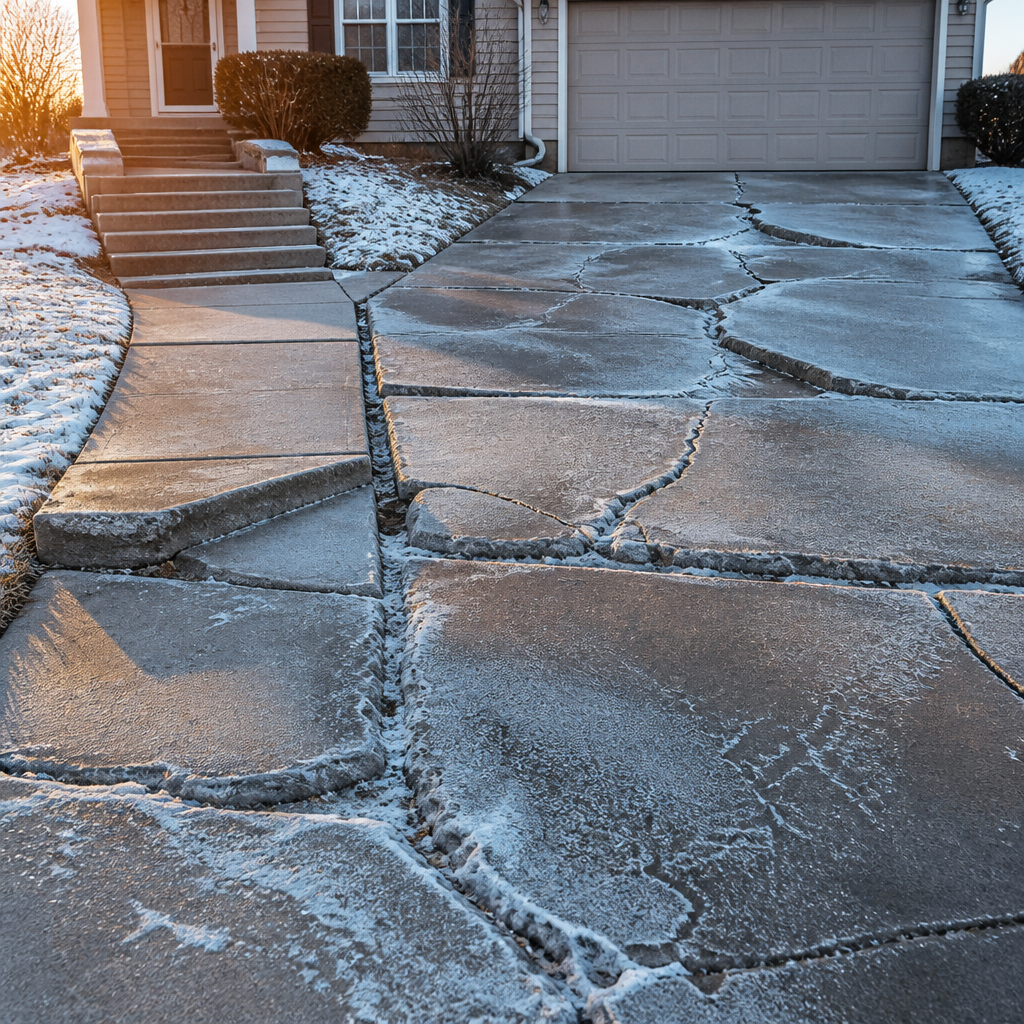
Concrete and asphalt surfaces are porous. When they are coated in fall with accumulated oil, leaf matter, and grime, that organic material traps moisture in the surface pores. As Ontario temperatures drop, that moisture freezes and expands. The expansion does not just push against the surface. It widens any existing microcrack into a structural crack.
By spring, driveways that went into winter dirty and unmaintained often show new cracking that did not exist in October. The homeowner assumes winter weather caused the damage. Winter weather did. But the moisture that did the damage was held in place by the grime that was never removed.
Deck Boards and Deck Structures
Wood deck boards that carry leaf debris, dirt, and organic matter into winter face the most aggressive version of this problem. Wood fiber is more vulnerable than concrete. The freeze-thaw cycle breaks down wood fiber more aggressively than moisture alone. Deck posts at ground level, rail bases, and board ends where water sits are the first places to show rot.
Power washing a deck in fall removes the organic load before it becomes part of the moisture-retention problem. It also restores the surface condition needed for applying a preservative sealant, which should be done before winter if the deck is due for it. A dirty deck surface cannot properly absorb sealant, so cleaning is a prerequisite, not an optional step.
Pest Overwintering and Spider Webs
An exterior covered in spider webs, wasp nest remnants, and insect debris at the eaves and around window frames is not just unsightly. It signals a pest pathway problem. Spider webs at exterior entry points indicate active insect traffic through those areas, which means gaps and cracks are present and being used.
Several pest species common to Ontario homes, including cluster flies, overwintering wasps, boxelder bugs, and spiders, actively seek protected exterior locations in late fall. They enter through cracks and crevices in the home’s exterior, particularly around window frames, door frames, and foundation vents. An exterior that has not been cleaned and inspected in fall gives these pests maximum opportunity to establish themselves before temperatures drop.
Why Professional Bug and Spider Web Removal Matters
Removing spider webs and bug debris from eaves, window frames, entrances, and siding is not something a garden hose accomplishes. The webs are sticky and anchor to rough siding textures. Egg sacs attached to web strands carry the next generation of the problem. A professional exterior cleaning service that includes bug and spider web removal as a specific treatment addresses this at the source rather than just dislodging the visible surface.
Tick and mosquito control treatments applied in fall also reduce the overwintering population in yard debris and ground cover near the home. Skipping this step means starting next season with a higher baseline pest population than you would otherwise have.
Comparing Fall Cleaning Approaches
Not all approaches to fall exterior cleaning deliver the same protection. Here is how the three main options stack up for Ontario homeowners.
| Approach | What It Covers | Realistic Outcome |
|---|---|---|
| DIY cleaning (garden hose and ladder) | Partial gutter clearing, surface rinse of siding, basic window exterior. No track cleaning, no pest treatment, no downspout flush. | Reduces visible debris but misses the moisture-retaining biofilm, blocked downspouts, and pest entry points that cause the worst damage. Ice dam risk remains. Safety risk on ladders is significant. |
| Single-service professional (gutters only or windows only) | One aspect of the exterior addressed professionally. Other surfaces go untreated. | Better than nothing, but siding, tracks, driveways, and pest entry points remain as risk factors. Often the right start if budget is limited, but full protection requires more. |
| Full-service professional exterior clean (Performance Window Cleaning approach) | Eavestrough and gutter cleaning with downspout flush, interior and exterior window cleaning with sills and tracks, siding hand-wash and home detailing, power washing of driveways, decks and walkways, bug and spider web removal, tick and mosquito control. | Addresses every moisture-retention and pest-entry risk before freeze-up. Provides a professional inspection of surface conditions at each area. Protects the full exterior asset, not just one component. |
The full-service approach is not the same as upselling. Each service in that list addresses a specific damage mechanism that the others do not. A clean eavestrough does not protect your deck. A power-washed driveway does not remove the spider webs at your door frames. The exterior of a home is a system, and fall cleaning needs to treat it as one.
Frequently Asked Questions
How late in fall can I schedule exterior cleaning in Ontario?
For most of the areas Performance Window Cleaning serves, including Oakville, Burlington, Hamilton, and St. Catharines, the practical window is mid-October through mid-November. You want most leaves to have fallen so the eavestrough cleaning is not repeated, but you need temperatures above freezing for water-based services to be safe and effective. Waiting until December in Ontario risks frozen equipment, frozen surfaces, and incomplete cleaning results.
Does power washing damage vinyl siding or concrete if done in fall?
Done correctly, power washing does not damage vinyl siding or concrete in fall temperatures. The key is not applying high-pressure water when temperatures are expected to drop below zero within a few hours of cleaning. Water trapped in gaps or surface pores before a hard freeze can cause surface cracking. A professional service schedules around forecasted temperatures and uses the appropriate pressure for each surface type.
Why clean windows in fall if they will just get dirty from winter weather?
Fall window cleaning is not about keeping glass looking pristine through January. It is about removing the grime and debris from tracks, sills, and frames that cause seal failure and frame deterioration over winter. Clean tracks do not hold water. Clean seals perform as designed. The glass itself also has a cleaner optical surface that reduces winter condensation build-up on the interior. It is a maintenance service with structural outcomes, not just a cosmetic one.
Can I skip gutter cleaning if I have gutter guards installed?
Gutter guards reduce debris accumulation but do not eliminate it. Seed pods, fine organic matter, and shingle grit still get through many guard systems. More importantly, downspouts can still block regardless of what guard system is on the eavestrough channel. An annual professional inspection and cleaning, even with guards, is the only way to confirm the system is actually directing water away from the home as it should be.
What makes Ontario specifically hard on home exteriors in winter?
Ontario homes face more freeze-thaw cycles than climates where winter temperatures stay consistently below freezing all season. Because Ontario temperatures often fluctuate around 0°C, exterior materials, concrete, wood, siding, and window frames expand and contract repeatedly throughout the winter. Every gap and crack that holds moisture participates in this cycle. An exterior that goes into winter clean and sealed gives the freeze-thaw cycle less to work with. An exterior carrying moisture-retaining grime gives it maximum destructive opportunity.
Does bug and spider web removal in fall actually make a difference for pest control?
It does, for two reasons. First, removing webs and nest remnants eliminates the overwintering habitat those structures provide for egg sacs and sheltering insects. Second, the inspection that accompanies professional web removal identifies the cracks and entry points pests are using, so they can be sealed before winter locks them open. Skipping fall pest-web removal means those populations carry over into spring at a higher starting level than they need to.
Have you noticed specific exterior damage after a winter of skipping fall cleaning? Share what you found in the comments, as your experience may help other Ontario homeowners catch problems before they escalate.
References
- Fall exterior home prep checklist for Canadian homeowners covering gutters, siding, windows, and foundations
- How Ontario freeze-thaw cycles damage home exteriors and what to do before winter
- The real cost of neglected gutters including fascia rot, foundation damage, and mold growth
- How winter conditions cause ice dams, wood rot, and freeze-thaw damage to home exteriors
- Fall pest guide covering overwintering insects and pest prevention for Ontario homes