
Most homeowners think spring is the obvious time to book a professional window cleaning. And while spring has its merits, late summer is actually the smarter window. By August and early September, the pollen has settled, the peak heat of July has passed, and you still have weeks of good weather ahead before fall rain and debris hit. If your windows have been collecting dust, insect residue, hard water spots, and sunscreen smudges all season, late summer is the point where that buildup has fully matured and where a thorough window cleaning will make the biggest visible difference. Here is why timing your professional clean for late summer pays off more than any other season.
Table of Contents
- Quick Takeaways
- Why Late Summer Timing Matters for Window Cleaning
- What Summer Does to Your Windows
- Weather Conditions That Make Late Summer Ideal
- Comparing Seasons for Professional Window Cleaning
- Why Professional Window Cleaning Beats DIY in Late Summer
- Late Summer Home Maintenance: Window Cleaning as Part of the Bigger Picture
- Frequently Asked Questions
- References
Quick Takeaways
| Key Insight | Explanation |
|---|---|
| Pollen season is over by late summer | Spring and early summer coat windows in fine pollen dust that recontaminates glass quickly. Late summer air is cleaner, so results last longer. |
| Temperatures are ideal for streak-free cleaning | Mild late-summer temperatures keep glass from overheating, which prevents cleaning solution from evaporating before it can be properly wiped away. |
| Summer grime has fully accumulated | Insects, hard water spray, sunscreen handprints, and BBQ smoke all build up across the season. Late summer is when a deep clean makes the most dramatic difference. |
| You protect your windows before fall debris arrives | Leaves, wet debris, and early frost can trap contaminants against glass. Cleaning now removes acidic buildup before it causes etching or seal damage. |
| Natural light is still strong and long | Clean windows in late summer let in maximum natural light during long days, improving interior brightness before shorter fall days begin. |
| Booking availability is better than spring | Spring is the busiest season for exterior cleaning services. Late summer typically offers more flexible scheduling and faster appointment times. |
| Pairs well with other exterior maintenance | Late summer is a natural time to combine window cleaning with gutter cleaning, power washing, and siding maintenance before the fall season. |
Why Late Summer Timing Matters for Window Cleaning
Timing a professional window cleaning is not just about convenience. The season affects how well the clean actually goes, how long the results last, and how much grime needs to be removed in the first place. Late summer hits a sweet spot that very few homeowners think to target.
By late August, most of Canada’s pollen season has wound down. This matters more than most people realize. During spring and early summer, windows cleaned in the morning can be lightly dusted with fresh pollen by afternoon. Cleaning glass during active pollen season means your results degrade faster than they should. Late summer air carries significantly less of this airborne contamination, so a professional clean done now will stay cleaner for longer.
The other factor is temperature. According to professional guidance from window cleaning experts, the ideal temperature range for cleaning glass is roughly between 45 and 75 degrees Fahrenheit (7 to 24 degrees Celsius). Peak summer in July and August can push exterior glass surfaces well above that range under direct sun, causing cleaning solutions to evaporate before they can be properly worked and wiped off, which leaves streaks and residue. By late August and into September, ambient temperatures drop back into that effective working range during morning and midday hours, giving professionals the conditions they need to deliver streak-free results.

Pro tip: If you are booking a professional window cleaning for late summer, aim for a date after the long civic holiday weekend and before the third week of September. This window gives you mild temperatures, lower pollen counts, and enough dry weather to make the clean worthwhile before fall rain sets in.
What Summer Does to Your Windows
A full summer season is genuinely hard on exterior glass. Understanding exactly what has built up by late summer helps you appreciate why this is the right moment for a thorough professional clean, not a quick wipe-down.
Hard Water and Sprinkler Deposits
If you run lawn irrigation or have sprinklers near your home, summer is when hard water mineral deposits accumulate most aggressively on exterior glass. Each spray cycle leaves behind a thin layer of calcium and magnesium as the water evaporates. Over weeks and months, these deposits become visible white haze that DIY cleaning rarely removes completely. Professional-grade solutions and technique are built to address this specific problem.
Insect Activity and Residue
Summer insect activity leaves behind debris that is surprisingly difficult to remove. Spider webs, fly spots, and insect impacts on glass all contribute to a film that reduces transparency. By late summer, this accumulation is at its highest point of the year. A professional exterior window cleaning done now removes all of it before insects begin to retreat in the fall and leave behind dried, harder-to-shift residue.
Sunscreen, Dust, and Handling
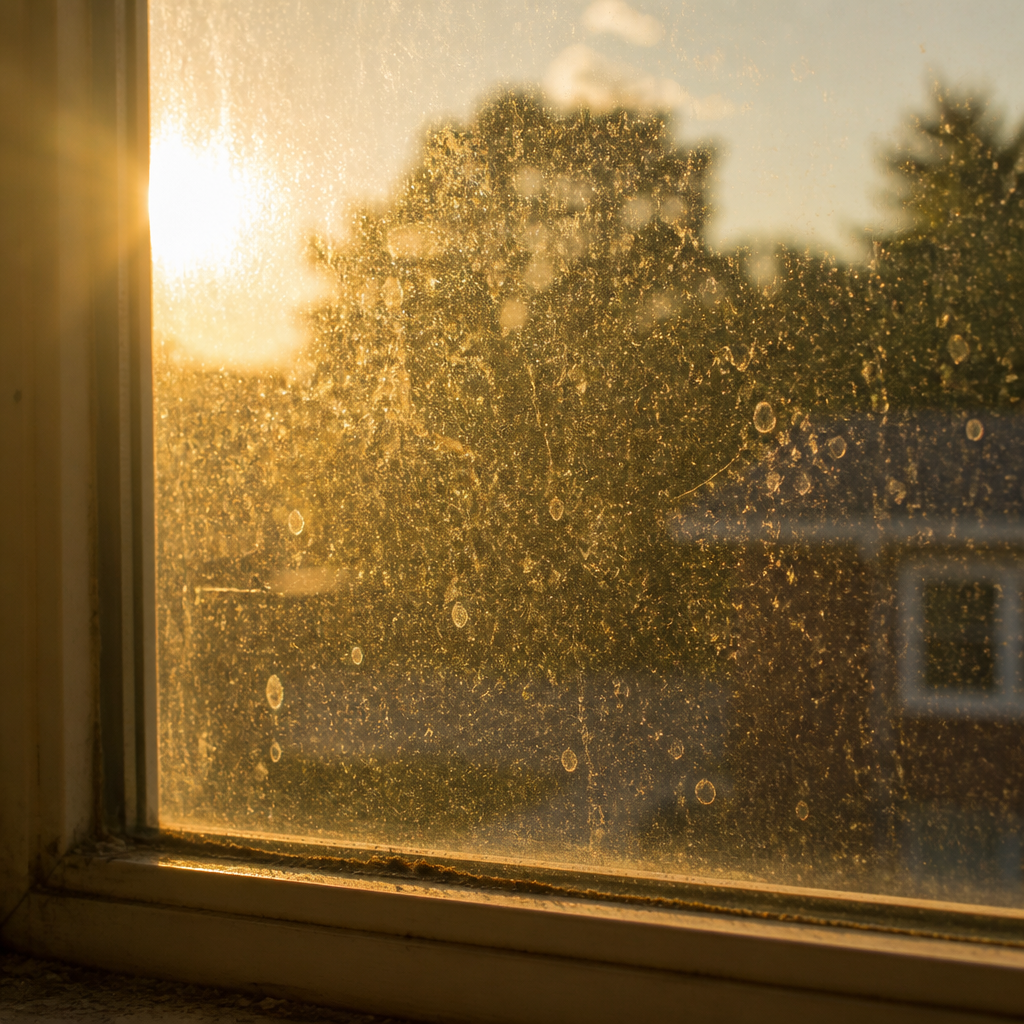
Summer living means more time near windows, sliding doors, and glass entryways. Sunscreen residue from hands, dust from dried-out landscaping, and smoke from outdoor cooking all transfer to glass surfaces more in summer than any other season. This is not dirt you can see clearly from a distance, but it is the layer that most noticeably dulls the clarity of your windows and reduces how much natural light gets through.
Clean windows improve curb appeal, let in more natural light, and extend the life of window components. Timing matters: temperature, sunlight, pollen season, and nearby landscaping all affect how quickly glass soils after cleaning.
Weather Conditions That Make Late Summer Ideal
Professional window cleaners do not work in all weather equally. The conditions that produce streak-free, lasting results are specific, and late summer delivers more of those days in a row than any other season.
Overcast Days Are the Professional’s Preference
One of the most consistent pieces of advice from experienced window cleaning professionals is to avoid cleaning glass under direct, harsh sunlight. Direct sun heats the glass surface and causes cleaning solution to evaporate faster than it can be worked properly, which leaves streaks locked into the surface. Late summer, particularly in the mornings and on lightly overcast days, provides the diffused light conditions that allow solutions to dwell on the surface long enough to break down grime effectively before being wiped clear.
This is not an argument against sunny days entirely. Early morning in late summer, before the sun reaches its full angle, is an excellent window for residential window cleaning. Glass is not yet heated, the air is calm, and visibility is good enough to catch every smudge and streak before calling the job done.
Lower Wind Reduces Recontamination
Late summer tends to bring calmer wind conditions compared to spring, which is often gusty and unpredictable. High winds during a window clean blow dust, debris, and pollen directly onto freshly cleaned glass, undoing work almost immediately. The calmer air of late August and early September gives cleaned surfaces time to dry cleanly without collecting new airborne particles.
Pro tip: A professional cleaning company will typically schedule exterior work earlier in the day during late summer to take advantage of calm morning air and avoid afternoon heat buildup on south-facing windows. Ask about morning scheduling when you book.

Comparing Seasons for Professional Window Cleaning
Not every season offers the same results for exterior window cleaning. Here is a direct comparison of the three most common seasons homeowners consider for professional cleaning.
| Season | Conditions and Advantages | Key Limitations |
|---|---|---|
| Spring | Fresh start after winter, high motivation from homeowners, good light | Active pollen season reduces how long results last; high demand means booking backlogs; unpredictable cold snaps and rain |
| Late Summer | Pollen season over, mild temperatures, calmer wind, accumulated summer grime fully built up, easier to book, pairs well with full exterior maintenance | Midday heat on south-facing glass requires morning scheduling; early booking needed before fall season demand picks up |
| Fall | Good for a final clean before winter; removes leaf tannin stains before they etch glass | Shorter working days, more rain interruptions, falling leaves recontaminate cleaned glass quickly, cold temperatures limit cleaning solution effectiveness |
The comparison makes a clear case. Late summer avoids the two biggest problems with spring (active pollen, booking backlogs) while also avoiding the weather limitations of fall. For homeowners who want the best possible results that last as long as possible, late summer is the right call.
Why Professional Window Cleaning Beats DIY in Late Summer
Late summer brings a specific set of cleaning challenges that DIY approaches consistently underperform on. The mineral deposits, insect residue, and hard water staining that accumulate over a full summer require more than a spray bottle and a squeegee from the hardware store.
Equipment That Actually Reaches Every Window
A common mistake homeowners make is attempting to clean second-story or high windows with an extension pole and a consumer-grade squeegee. The technique required to produce a streak-free result at height is significantly more difficult than it looks, and working from a ladder without proper fall protection is genuinely dangerous. Professional crews arrive with commercial-grade extension equipment, proper stabilizers, and the experience to work efficiently and safely at every height on your home.
Solutions Built for Summer Buildup
Professional window cleaning solutions are formulated to handle the specific contaminants that summer produces. Hard water mineral deposits, oxidized insect residue, and UV-baked-on dust all respond differently to treatment than fresh dirt does. A professional residential window cleaning service uses the right chemistry for each type of buildup, producing results that last significantly longer than a DIY clean done with dish soap and vinegar.
The Streak-Free Standard
Every homeowner who has attempted window cleaning on a warm day knows the frustration of finishing a pane only to watch streaks appear as it dries. Professional window cleaners manage glass temperature, solution dwell time, squeegee angle, and cloth quality simultaneously to prevent exactly this outcome. In practice, the difference between a professional result and a DIY result is most visible in late summer, when the glass is dirtiest and the conditions for streaking are most present.
For homeowners in the area, Performance Window Cleaning has been delivering professional exterior window cleaning since 2008. Their residential packages are designed to cover the full scope of late summer buildup, including hard water deposits, insect residue, and frame and sill cleaning, so the entire window assembly is addressed, not just the glass surface. You can review their full range of exterior cleaning services to find the right package for your property.
Late Summer Home Maintenance: Window Cleaning as Part of the Bigger Picture
One of the practical advantages of scheduling your professional window cleaning in late summer is that it fits naturally into a broader exterior maintenance cycle. Most professional exterior cleaning companies, including Performance Window Cleaning, offer services that work well together at this time of year.
Gutter and eavestrough cleaning is worth scheduling alongside your window clean in late summer. Gutters fill with debris over the summer and benefit from a clear-out before fall leaves begin to fall. Doing this at the same time as your window cleaning means a single visit from the crew covers both, reducing disruption to your schedule. You can learn more about professional gutter cleaning services and what a full late-summer maintenance visit looks like.
Power washing is another service that pairs directly with window cleaning in late summer. Driveways, patios, and siding collect a season’s worth of algae, mildew, and ground-in dirt by August. Washing these surfaces at the same time as your windows ensures that the pressure washing overspray does not dirty freshly cleaned glass, since the professionals sequence the work correctly when it is booked together. The power washing service from Performance Window Cleaning covers siding, entrances, and hard surfaces to complement a full exterior clean.
For homeowners who deal with spider activity around windows, eaves, and entryways, late summer is also peak season. Spiders are most active in late summer and early fall, and their webs collect dust and debris that settle onto adjacent glass surfaces. Pest removal and spider spraying as part of a home detailing visit removes this source of recontamination immediately after your windows are cleaned, extending how long the results stay visible. Performance Window Cleaning offers this as part of their home detailing packages.
Frequently Asked Questions
How often should I have my windows professionally cleaned?
For most residential properties, twice a year is the standard recommendation: once in late spring after pollen season peaks, and once in late summer before fall debris begins. Homes near busy roads, construction, or with heavy landscaping nearby may benefit from three times per year. Commercial properties with high visibility typically clean more frequently to maintain a professional appearance.
Is late summer actually better than spring for window cleaning?
For most homeowners, yes. Spring carries active pollen that recontaminates glass quickly and creates high demand for cleaning services, which means longer waits to book. Late summer avoids both of those problems. The accumulated summer grime also means the visual improvement after a late summer clean is more dramatic than a spring clean done before heavy buildup has set in.
What temperature is too hot for professional exterior window cleaning?
Professional window cleaners work best when glass surface temperatures are in the moderate range, roughly between 45 and 75 degrees Fahrenheit (7 to 24 degrees Celsius). In mid-summer, south-facing windows can exceed this range during midday hours, causing solutions to evaporate too quickly and leave streaks. Late summer mornings typically fall within the ideal range, which is why experienced crews often schedule exterior work for the first half of the day.
Can I combine window cleaning with other exterior services in one visit?
Yes, and it is generally the most efficient approach. Scheduling window cleaning alongside gutter cleaning, power washing, and siding maintenance in a single visit saves time and ensures the work is sequenced correctly. For example, power washing should happen before window cleaning so that overspray does not land on freshly cleaned glass. A company that offers all of these services can coordinate the sequencing properly without you having to manage multiple contractors.
Will my windows stay clean longer if I book in late summer versus spring?
In most cases, yes. Spring-cleaned windows are exposed immediately to the remainder of pollen season, summer dust, insect activity, and irrigation spray. Late summer-cleaned windows avoid pollen recontamination entirely and face fewer months of heavy outdoor activity before the quieter fall and winter period begins. This means the results of a late summer professional clean typically look better for longer than an equivalent spring clean.
What should I expect from a professional residential window cleaning visit in late summer?
A proper professional visit covers both interior and exterior glass, frames, sills, and screens. The crew will remove screens, clean the glass with appropriate solutions and professional squeegees, wipe frames and sills, and replace screens correctly. For late summer specifically, expect the technicians to address hard water deposits and insect residue that have built up over the season. The job for an average home typically takes a few hours, and results should be immediately visible from both inside and outside the property.
Have you noticed a difference in how long your windows stay clean depending on the season you book your professional cleaning? Share your experience in the comments.
References
- Expert guidance on the best time of year and day to clean windows for streak-free results
- Seasonal and timing tips for window cleaning, including temperature ranges, pollen considerations, and when to hire a professional
- The science behind why time of day and glass temperature affect window cleaning outcomes and streak formation