
Most homeowners treat window cleaning as a cosmetic task, something you do before guests arrive or when the grime becomes embarrassing. That thinking is costing you money. Dirty windows are not just an eyesore. They are actively degrading your glass, frames, and seals every single season. The window cleaning benefits extend far beyond appearance, and once you understand the chemistry of what accumulates on glass, you will never skip a professional cleaning again. Performance Window Cleaning has been documenting this kind of preventable window damage since 2008, and the pattern is consistent.
Table of Contents
- Quick Takeaways
- What Actually Damages Your Windows Over Time
- Window Cleaning Benefits Beyond Curb Appeal
- How Often Should You Professionally Clean Your Windows
- Professional vs DIY Window Cleaning
- The Role of Gutters and Exterior Surfaces in Window Health
- Signs Your Windows Are Already Being Damaged
- Frequently Asked Questions
- References
Quick Takeaways
| Key Insight | Explanation |
|---|---|
| Hard water stains etch glass permanently | Mineral deposits from rain and sprinkler systems bond with glass silica within weeks, creating micro-pits that scatter light and reduce clarity permanently if left untreated. |
| Seal failure accelerates without cleaning | Dirt and oxidation buildup around frame edges breaks down the rubber and vinyl seals in double and triple-pane windows, leading to fogging and costly seal replacement. |
| Twice-yearly professional cleaning is the minimum standard | Spring and fall cleanings remove the acidic residue from winter road salt and summer pollen before they have time to cause surface degradation. |
| Oxidized frames shorten total window lifespan | Aluminum and wood frames that collect grime oxidize faster, which warps and weakens the structural support of the window unit, leading to drafts and higher energy bills. |
| Professional cleaning catches early damage | Trained technicians identify failed seals, cracked glazing, and frame rot during cleaning visits, allowing you to repair before full replacement is needed. |
| Clean windows improve home energy efficiency | Dirt films on glass reduce solar heat gain by up to 40%, making your heating system work harder during winter months. |
| Neglect compounds repair costs exponentially | A window cleaning visit costs a fraction of what a single window replacement costs. Postponing cleaning is never a savings, it is a deferred expense with interest. |
What Actually Damages Your Windows Over Time
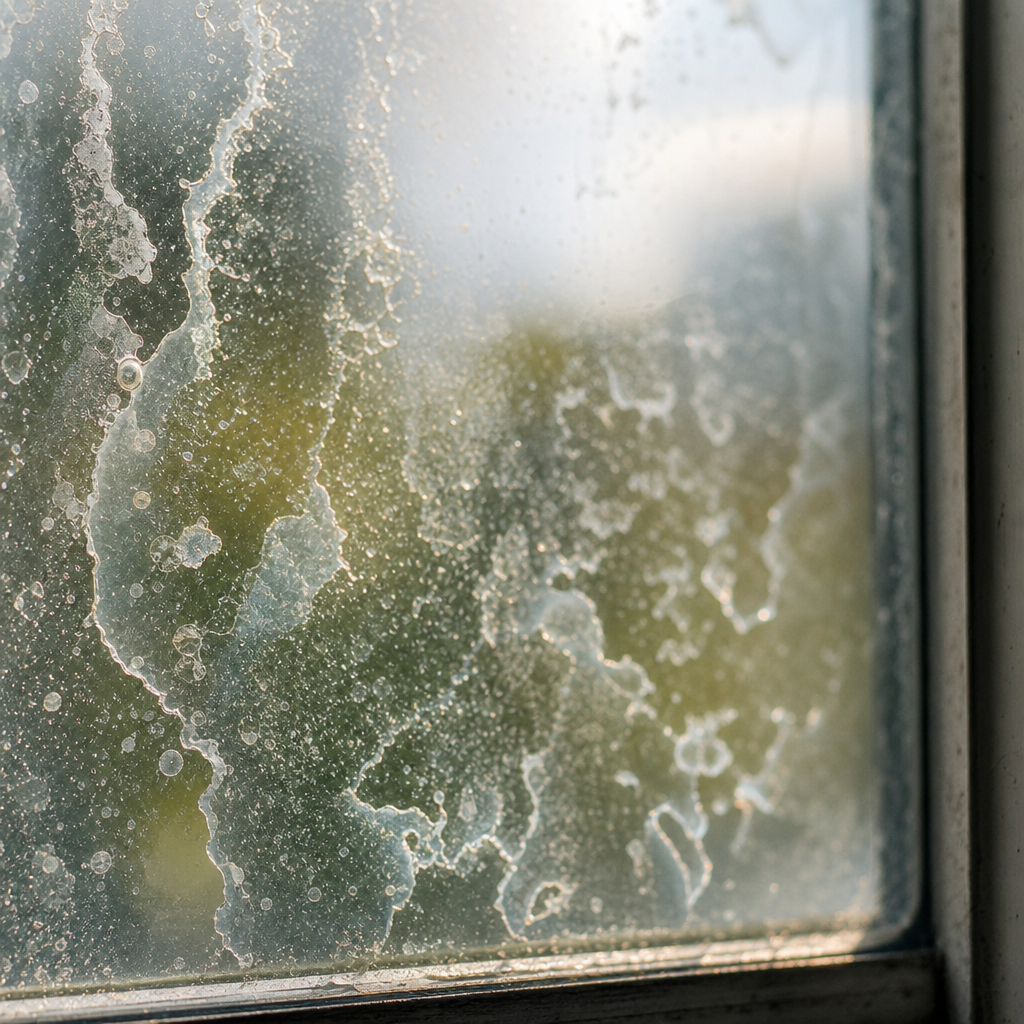
The damage happening to your windows right now is chemical, not just cosmetic. Rain carries dissolved minerals, pollutants, and acidic compounds from the atmosphere. When that water evaporates on your glass, those compounds remain behind and begin reacting with the silicon dioxide that makes up the glass surface itself.
Hard water deposits, specifically calcium and magnesium carbonates, are among the most destructive forces acting on residential windows. They are not sitting on top of the glass. They are bonding with it. Over one to two seasons without professional cleaning, these deposits etch microscopic pits into the surface that no amount of scrubbing will fully reverse.
Acid Rain and Industrial Fallout
Homes near roads, industrial areas, or construction zones face an additional chemical threat. Vehicle exhaust and construction dust combine with moisture to create weak acidic solutions that accelerate glass deterioration. In practice, this means urban and suburban homes need more frequent professional cleaning than rural properties.
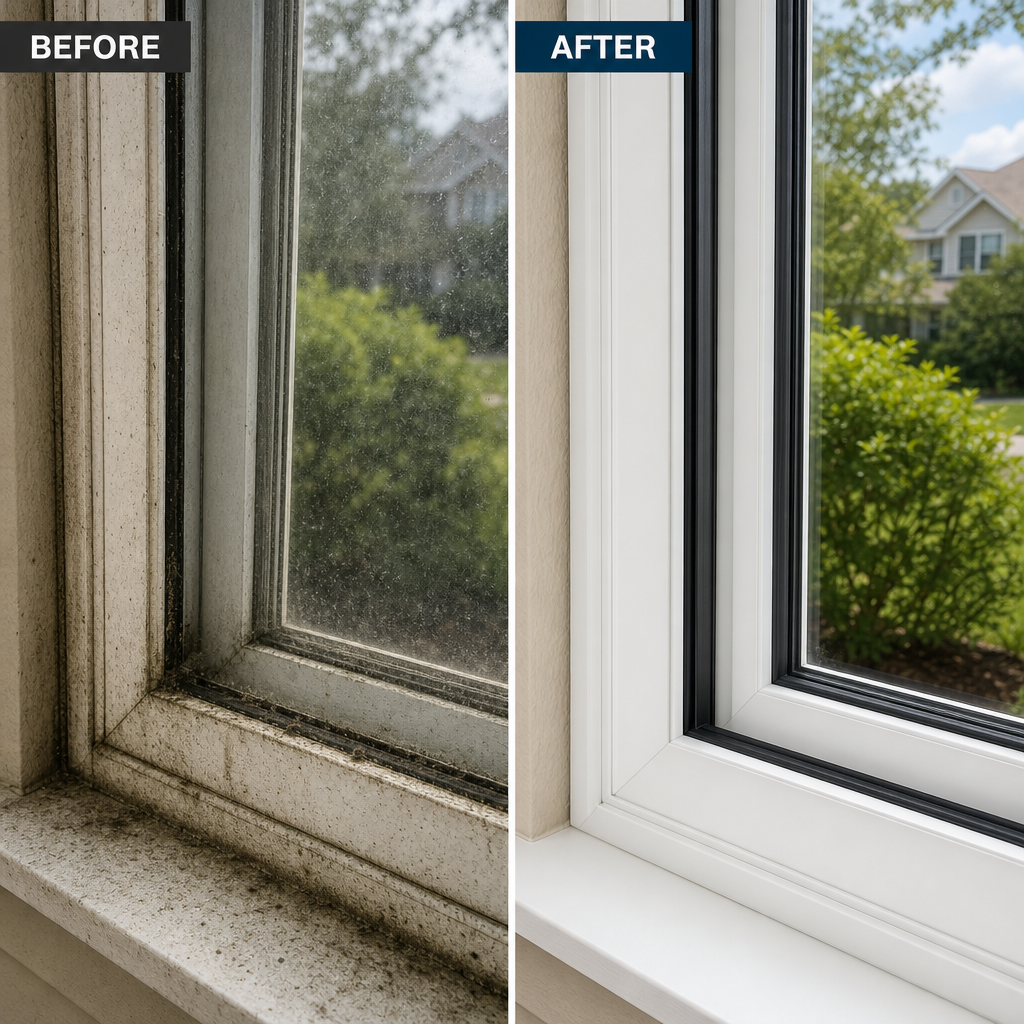
The frames are equally vulnerable. Wood frames that collect moisture inside dirt layers are prime candidates for rot. Aluminum frames exposed to oxidizing grime develop corrosion that weakens the structural connection between the frame and glass, eventually allowing movement that stresses the seal.
Pollen, Mold, and Biological Growth
Spring pollen is not just allergenic. It is slightly acidic and hygroscopic, meaning it absorbs moisture and stays wet against your glass longer than regular dust. Mold spores that land on window frames find organic material in dirt deposits to feed on. Left long enough, that biological growth works into frame joints and caulking, destroying the weatherproofing that keeps your home dry.
Pro tip: If your windows have developed a white haze that does not come off with standard glass cleaner, you likely have hard water etching rather than surface grime. This requires professional treatment with appropriate mineral-dissolving solutions, not more scrubbing.
Window Cleaning Benefits Beyond Curb Appeal
The most obvious benefit of clean windows is appearance. But that is genuinely the least important one when you are thinking about protecting your investment. The real window cleaning benefits are structural and financial.
“Preventive maintenance on building components costs approximately 12 to 18 cents per square foot annually, while deferred maintenance that results in replacement costs 4 to 8 times that amount.” – National Association of Home Builders research on residential maintenance cost modeling.
Energy Efficiency Gains
A dirty glass surface acts as a partial barrier to solar gain. In winter, that means less passive solar heating entering your home, which forces your furnace to compensate. The U.S. Department of Energy has documented that clean, clear windows in a south-facing orientation can meaningfully contribute to passive solar heating strategies. A film of grime defeats that entirely.
The data consistently shows that homes with regularly maintained windows have lower heating and cooling loads because the glass transmits light and heat more efficiently when clean. This is not a trivial difference for Canadian homeowners facing long winters.
Property Value and Inspection Outcomes
Real estate agents consistently cite exterior condition as a primary driver of buyer first impressions. Dirty, streaked, or hazy windows signal neglect even when the interior is immaculate. More importantly, home inspectors flag window seal failures, frame deterioration, and caulking breakdown, all of which are accelerated by lack of maintenance. A failed inspection item is always more expensive to address under buyer pressure than it would have been to prevent.
Property managers working with Performance Window Cleaning on multi-unit residential buildings have seen direct correlation between regular exterior cleaning schedules and reduced tenant complaint rates about drafts and moisture, both of which trace back to early window degradation that was not caught.
Pro tip: Schedule professional window cleaning 4 to 6 weeks before listing a home for sale. This gives any newly discovered seal issues time to be addressed before inspection, rather than becoming a negotiating liability.
How Often Should You Professionally Clean Your Windows
The answer depends on your exposure conditions, but the minimum threshold for protecting windows is twice per year. This is not a sales position. It is the practical minimum to interrupt the chemical processes described above before they become permanent.
Residential Frequency Guidelines
Standard residential homes in lower-traffic areas: twice per year, spring and fall. Homes near roads, construction, or with many trees overhanging the roofline: three to four times per year. The organic debris from trees, particularly tannins from leaves and sap from evergreens, is highly corrosive to frames and seals.
Interior window cleaning is often overlooked entirely. Cooking vapors, humidity from bathrooms, and airborne household dust create a film on interior glass that reduces light transmission and can trap moisture against the inner seal of double-pane units, accelerating seal breakdown from the inside.
Commercial Frequency Guidelines
Commercial properties face higher contamination loads from foot traffic, HVAC exhaust, and urban particulate. Monthly professional cleaning is standard for street-level retail and restaurant facades. Office buildings above street level typically schedule quarterly exterior cleaning at minimum.
Business owners who manage their own facilities through Performance Window Cleaning’s commercial cleaning programs consistently report that their window systems last longer between seal replacements compared to industry averages, which is directly attributable to consistent maintenance keeping contaminants from dwelling against the glass and frame materials.
Professional vs DIY Window Cleaning
DIY window cleaning is not harmful when done correctly. The problem is that most homeowners do not do it correctly, and the mistakes they make can accelerate the very damage they are trying to prevent.
| Approach | What It Handles Well | Where It Falls Short |
|---|---|---|
| DIY Cleaning with Squeegee and Solution | Light surface dust and fingerprints on accessible ground-floor windows | Hard water deposits, upper story access, frame and seal inspection, oxidation removal |
| Pressure Washing Glass Yourself | Fast removal of heavy loose debris from glass and frames | High risk of cracking glass, blowing out seals, and driving water behind frames if wrong pressure or angle is used |
| Professional Window Cleaning (Performance Window Cleaning) | Full exterior and interior cleaning, hard water treatment, frame cleaning, seal and frame inspection, safe upper-story access, customized scheduling | Requires scheduling, not instant; costs more per visit than DIY materials alone |
A common mistake is using newspaper or rough paper towels for DIY glass cleaning. Both create micro-scratches on the glass surface that accumulate over time and make the window appear hazy even after cleaning. Professional technicians use proper window cleaning tools with clean, appropriate squeegees and solutions that do not leave residue or cause surface abrasion.
The other critical gap in DIY cleaning is upper-story access. Attempting to clean second or third-floor windows from a ladder without proper training and equipment is a documented injury risk. This is not a soft disclaimer. Falls from ladders represent one of the leading causes of home improvement injuries. Professional technicians are trained and equipped for safe elevated access.

The Role of Gutters and Exterior Surfaces in Window Health
Window health does not exist in isolation. The condition of your gutters, eavestroughs, siding, and fascia boards directly affects how much damaging debris reaches your windows and frames. This is a system, not a collection of independent components.
Clogged Gutters Overflow onto Windows and Frames
When eavestroughs overflow because they are clogged with leaves and organic matter, that water cascades down your siding and across your window frames loaded with tannins, dirt, and debris. This is one of the most common sources of the dark streaking visible on window frames and the lower edges of glass on many homes.
Gutter cleaning and window cleaning are not separate services competing for your budget. They are complementary maintenance tasks that protect each other’s results. Performance Window Cleaning offers both services as part of integrated exterior maintenance programs precisely because doing one without the other leaves the system incomplete.
Siding Condition and Spider Activity
Dirty siding with algae, mold, or insect debris creates a reservoir of organic contamination that rain then washes across your window frames and glass. Spider webs attached to window frames trap debris, hold moisture, and their acidic silk contributes to localized frame degradation over time.
Pest removal and spider spraying around windows and eaves is an underappreciated window protection measure. Reducing insect activity around frames reduces the moisture and organic debris that accumulates in crevices, which directly extends the life of caulking, seals, and frame finishes.
Signs Your Windows Are Already Being Damaged
Some window damage is obvious. Most of it is not, until it has progressed to the point where repair has become replacement. Knowing what to look for during or after a professional cleaning visit allows you to act at the repair stage rather than the replacement stage.
Fogging Between Glass Panes
Condensation or fogging trapped between the panes of a double or triple-glazed window is a definitive sign that the gas seal has failed. The argon or krypton gas that provides insulation has escaped, replaced by humid air. This cannot be cleaned. It requires seal replacement or full unit replacement. The earlier you catch it, the more options you have.
Pitting and Permanent Haze on Glass
Run your finger across the glass surface. If you feel roughness where there should be none, or if the glass appears hazy in scattered light even after cleaning, mineral etching has already occurred. This is irreversible without professional polishing compounds, and severe etching requires glass replacement entirely.
Caulking Shrinkage and Frame Gaps
Caulking around window frames that has cracked, pulled away, or turned brown and brittle is allowing moisture infiltration behind the frame. This damages the rough opening, allows mold growth inside wall cavities, and creates thermal bridging that drives up your energy bill. Professional window cleaning technicians who are paying attention will flag these issues immediately, because they are working at close range with the frame materials during every visit.
The cost comparison is stark. Recaulking a window costs roughly 20 to 100 dollars per window depending on scope. Replacing a window unit that has allowed moisture damage into the surrounding wall structure can run 1,000 to 3,000 dollars or more per opening once framing repair is included. Regular professional maintenance is the mechanism that keeps you in the first category and out of the second.
Frequently Asked Questions
How long do windows last with regular professional cleaning?
Well-maintained windows in a residential setting typically last 20 to 25 years. Windows that are neglected and allowed to accumulate damaging mineral deposits and biological growth often fail in 12 to 15 years, particularly in terms of seal integrity and frame condition. Regular professional cleaning, combined with prompt caulking and seal maintenance, consistently pushes window lifespan toward the higher end of the manufacturer’s rated life expectancy.
Can dirty windows really increase my energy bills?
Yes, measurably so. Glass coated with a dirt film transmits less visible light and solar radiation. For homes that rely on passive solar gain in winter, this reduction in solar transmittance forces mechanical heating systems to compensate. Studies on building performance consistently show that clean, clear glazing outperforms dirty glazing in solar gain efficiency by a meaningful margin, particularly relevant in Canadian climates where every degree of passive heating matters.
Is professional window cleaning safe for all types of windows?
Professional window cleaning is safe for standard float glass, tempered glass, low-E coated glass, and most specialty glazing when the correct tools and solutions are used. This is where professional expertise matters. Abrasive tools or inappropriate chemical cleaners can damage low-E coatings, which are delicate metallic layers applied to improve energy efficiency. A trained technician from a company like Performance Window Cleaning identifies the glass type and adjusts their approach accordingly.
What is the difference between window cleaning and power washing windows?
Window cleaning involves squeegees, appropriate cleaning solutions, and hand tools designed specifically for glass and frame surfaces. Power washing uses high-pressure water, which is appropriate for siding, concrete, and decking but carries significant risk when applied directly to windows. High-pressure water can crack glass, blow out seals in double-pane units, and force water behind frames. Professional exterior cleaning companies use power washing for appropriate surfaces and traditional window cleaning methods for glass.
How do I protect my windows between professional cleaning visits?
The most effective steps are keeping gutters clean so overflow water does not run across frames, trimming vegetation that contacts or overhangs windows, rinsing windows with plain water after heavy pollen or dust events, and not allowing hard water from irrigation systems to spray repeatedly onto glass. These actions reduce the rate of contamination buildup between professional visits and extend the protective effect of each professional cleaning.
Does window cleaning in winter make sense in a Canadian climate?
Yes, with appropriate conditions. Professional window cleaning can be performed effectively in above-freezing temperatures, and winter grime, including road salt spray and exhaust deposits, is particularly corrosive. Allowing road salt residue to sit on glass and frames through an entire winter season causes measurably more damage than scheduling a cleaning during a mild winter window. Performance Window Cleaning’s flexible scheduling model is specifically designed to accommodate weather variability in Canadian conditions.
If you have noticed any of the damage signs described above, or if you have questions about how a regular exterior maintenance program could protect your specific property, share your experience below and let us know what challenges you are dealing with.
We would love your feedback and any insights you would share with others. What perspective would you add?
References
- U.S. Department of Energy official site covering home energy efficiency and window performance standards
- National Association of Home Builders research on residential maintenance costs and building component lifespans
- Forbes coverage of home improvement ROI, property maintenance value, and real estate market insights
- Statista data on home maintenance spending trends and residential property market statistics
- U.S. Environmental Protection Agency resources on acid rain, air quality, and their effects on building materials