
October is the month Fenwick homeowners quietly get ahead of winter. The Niagara Region’s first frost typically arrives around mid-October, and once freezing temperatures lock in, the dirt, pollen, insect residue, and tree sap that accumulated on your windows all summer hardens into a problem that no amount of spring cleaning fully undoes. Booking window cleaning in Fenwick before that first frost is not just a cosmetic decision. It is one of the most practical exterior maintenance moves a rural Ontario homeowner can make before the cold sets in. This article explains exactly why October is the right window, and what happens when you miss it.
Table of Contents
- Quick Takeaways
- Why October Is the Right Month for Fenwick Window Cleaning
- What Summer Leaves Behind on Your Glass
- How Freeze-Thaw Cycles Turn Dirt Into Damage
- The Eavestrough Cleaning Connection You Cannot Ignore
- Rural Ontario-Specific Factors That Make Fall Cleaning More Urgent
- Comparing Cleaning Timing: October vs. Spring vs. Summer
- What a Professional Fall Window Cleaning in Fenwick Actually Includes
- Frequently Asked Questions
- References
Quick Takeaways
| Key Insight | Explanation |
|---|---|
| First frost hits mid-October in the Niagara Region | Fenwick, located in the Town of Pelham within the Niagara Region, typically sees its first frost around mid-October. October cleaning slots fill up fast. |
| Summer grime bonds to glass in the cold | Pollen, insect residue, tree sap, and hard water spots become far harder to remove after repeated freeze-thaw cycles work them into the glass surface. |
| October light is genuinely better indoors | Clean windows before winter maximise the low-angle natural light you get from November through March, which matters more in a rural home surrounded by mature trees. |
| Eavestroughs and windows should be cleaned together in fall | Clogged eavestroughs overflow onto siding and window frames, depositing fresh grime immediately after a cleaning. Bundling both services in one visit prevents that. |
| Rural properties have heavier organic debris loads | Fenwick homes surrounded by orchards, fields, and mature hardwood trees collect significantly more sap, pollen, and crop dust than suburban properties. |
| Spider webs and insect nests concentrate on sills and frames | Fall is when spiders seek shelter in window frames. A professional cleaning removes webs, egg sacs, and debris from sills, tracks, and screens before they overwinter. |
| Booking early in October avoids scheduling conflicts | Most Fenwick homeowners realise they need cleaning at the same time. Calling in the first two weeks of October gives you the best chance at a convenient appointment. |
Why October Is the Right Month for Fenwick Window Cleaning
Fenwick sits in the Town of Pelham within the Niagara Region, roughly between Welland to the east and the Escarpment to the north. It is a compact rural community, surrounded by farms, orchards, and mature hardwood tree lines. That environment is beautiful in October. It is also the reason your windows are dirtier than you think.
The practical argument for October cleaning is simple. You still have mild enough temperatures for cleaning solution to work properly on the glass. You have not yet hit the period where morning frost makes scheduling unpredictable. And you are just past the peak of the tree canopy shedding pollen and summer dust, so the glass gets a clean that actually holds through the winter rather than collecting a fresh layer of debris the next afternoon.
Timing is the whole point. A November cleaning often runs into freezing overnight temperatures that affect how quickly water dries on the glass. An August cleaning gets you clean windows for about three weeks before the late-summer pollen and sap finish their cycle. October, specifically the first three weeks, hits the window between the end of the biological debris season and the start of freezing conditions.

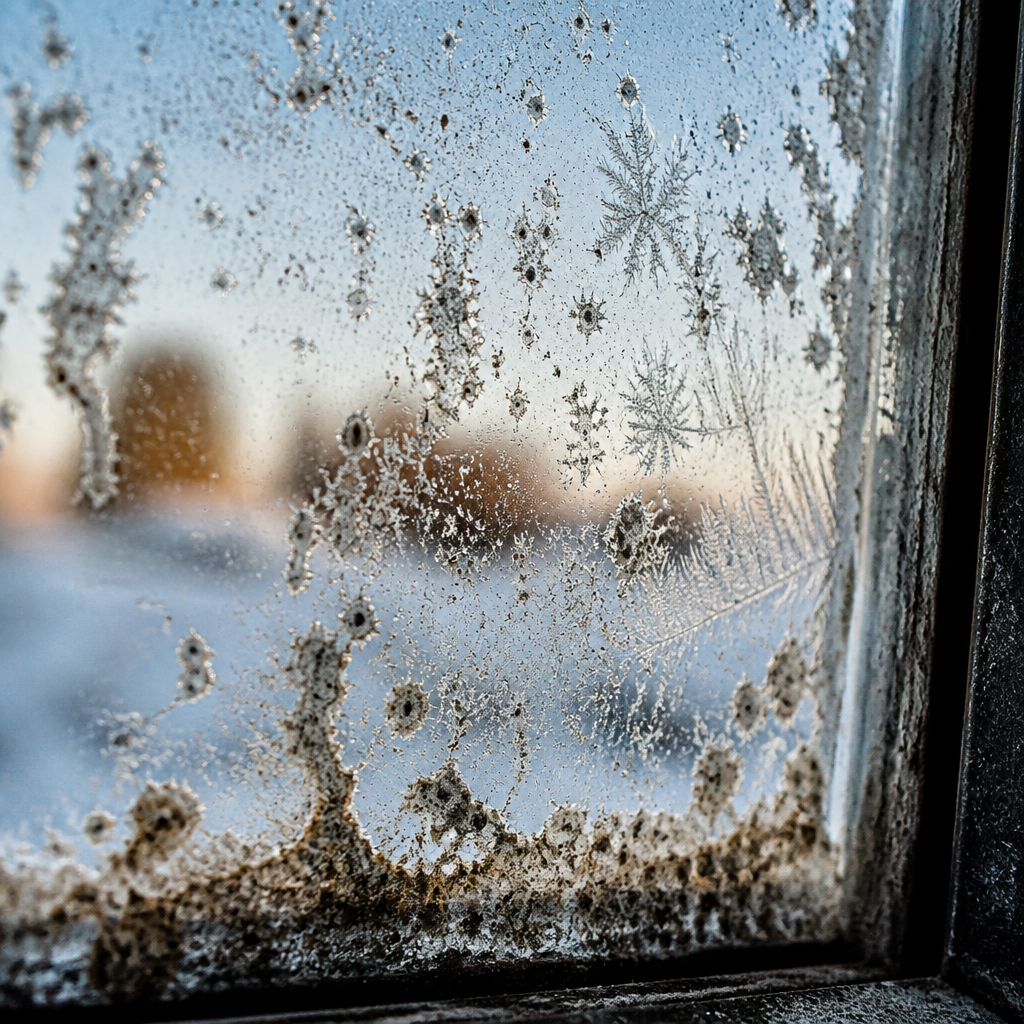
The best time to clean windows before winter is after the bulk of biological debris has settled and before freezing temperatures lock that debris permanently into the glass surface. In Southern Ontario, that window is October.
What Summer Leaves Behind on Your Glass
Most homeowners underestimate what accumulates on exterior glass over a full Ontario summer. The list is longer than it looks from the inside of the house, and each type of contaminant behaves differently once cold weather arrives.
Pollen, Sap, and Organic Residue
Fenwick and the surrounding Pelham area have a significant number of mature deciduous trees, orchards, and hedgerows. From April through August, these produce pollen, seed fluff, and sap that lands directly on glass and sills. Pollen is sticky and fine enough to embed into small surface scratches. Tree sap bonds with the sun’s heat and essentially cures against the glass during summer. By October, both require actual professional removal rather than a garden hose rinse.
Insect Residue and Spider Webs
Rural properties get heavier insect activity than suburban ones. Flies, wasps, and moths leave residue on glass, especially on south and west-facing windows that catch afternoon sun and warmth. Spiders are a particular issue in Fenwick because of the proximity to fields and woodlots. By September and October, spiders are actively seeking shelter in window frames, sill channels, and screen edges. A professional fall cleaning removes not just the webs, but the egg sacs that would hatch in spring.
Hard Water Spots and Mineral Deposits
Hard water spots are the most commonly underestimated problem. Sprinkler systems, garden hoses left running near the foundation, and rain splash from gravel driveways all deposit minerals onto window glass. Left through the winter, those mineral deposits etch into the surface through repeated freeze-thaw cycling. What starts as a water spot becomes a permanent haze that cannot be removed with standard cleaning alone.
Pro tip: Run your hand across the lower third of an exterior window. If it feels rough or gritty rather than smooth, you have mineral or organic buildup that needs professional cleaning before winter. The rougher the surface, the harder it becomes to clean in spring.
How Freeze-Thaw Cycles Turn Dirt Into Damage
Southern Ontario winters in the Niagara Region are defined less by deep cold and more by repeated freeze-thaw cycles. Temperatures rise above zero during the day and drop below at night, sometimes for weeks at a time. That cycle is hard on every exterior surface, and glass is not exempt.
When debris is sitting on the glass surface and that surface cycles through freezing and thawing, the debris gets worked progressively deeper into any micro-abrasion or coating imperfection in the glass. Pollen, mineral deposits, and sap residue that would have cleaned off in October become significantly harder to remove by April. In some cases, particularly with hard water mineral deposits on older single-pane glass, the etching becomes permanent.
There is also a caulking and frame angle. Dirt and organic debris that sits on window sills and in the tracks over winter holds moisture. That moisture freezes, expands, and can crack or lift caulking around the frame. Cleaning the sills and tracks before winter removes that moisture-holding debris and reduces the risk of frame damage that leads to drafts and heat loss.
Pro tip: When booking fall window cleaning, specifically ask for sills and tracks to be cleaned, not just the glass. Tracks that are packed with debris and dead insects are a leading cause of window seal degradation over multiple winters.
The Eavestrough Cleaning Connection You Cannot Ignore
Eavestrough cleaning and window cleaning sound like separate tasks. On a rural Fenwick property, they are not. They are two parts of the same fall maintenance cycle, and doing one without the other defeats part of the purpose.
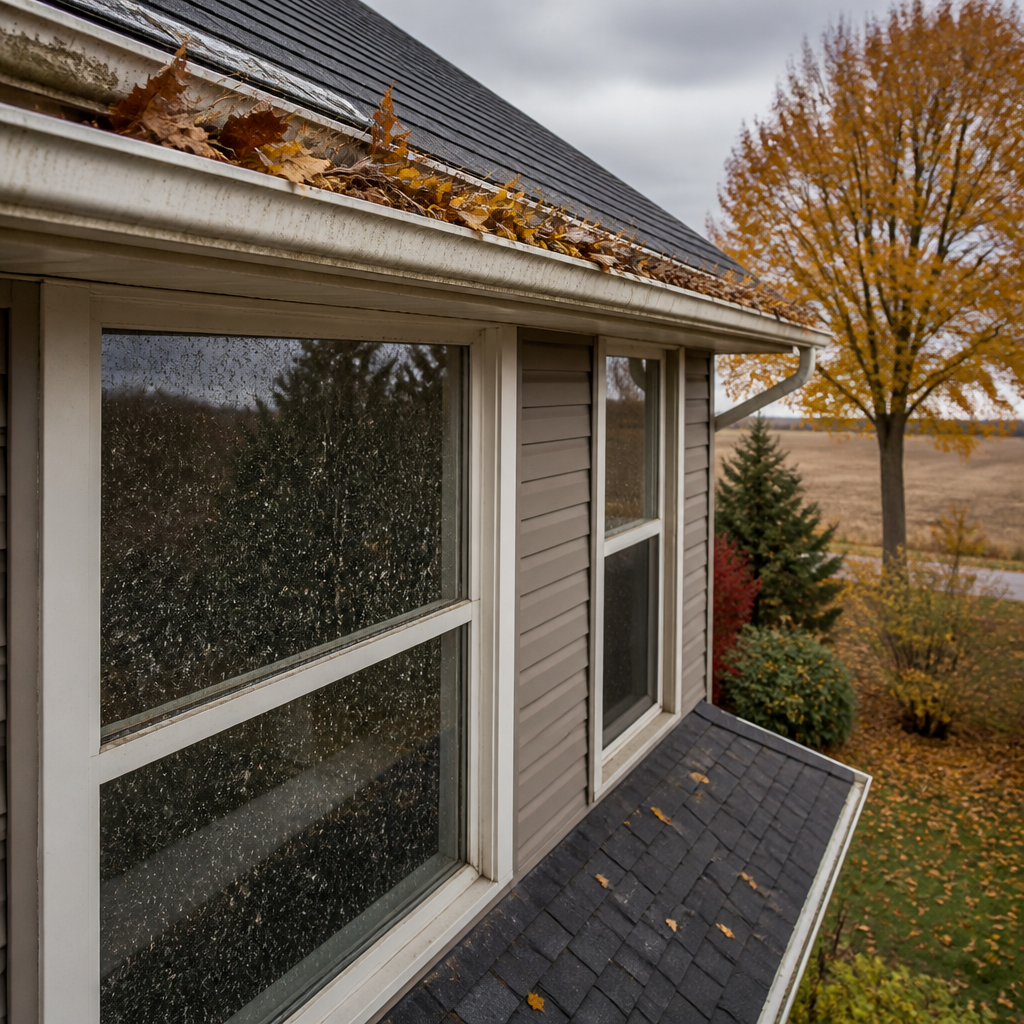
Here is the sequence that happens when eavestroughs are clogged heading into winter. Leaves, seed pods, and organic debris block the eavestrough. When rain falls or snow melts, water backs up and overflows over the edge of the eavestrough. That overflow hits the siding and runs directly down the exterior wall past the window frames. It carries all of the debris from the eavestrough with it, and it deposits that debris directly on window glass, sills, and frames.
Cleaning windows without cleaning eavestroughs means your windows will be recoated with eavestrough debris within the first significant rainfall. For properties with mature trees, that can happen within days of a professional window clean if the eavestroughs are not cleared at the same time.
Beyond the window-specific issue, clogged eavestroughs freeze in winter, forming ice dams. Ice dams force water up under roofing materials and into wall cavities. The damage from a single season of ice dams can far exceed the cost of a professional eavestrough cleaning. In the Niagara Region, where freeze-thaw cycles are frequent rather than a single hard freeze, ice dam risk is higher than in regions that simply stay cold from November through March.
Rural Ontario-Specific Factors That Make Fall Cleaning More Urgent
Homeowners in Fenwick are not in the same situation as a homeowner in a newer subdivision. The factors that make fall cleaning more urgent for rural Ontario properties are worth naming directly.
Proximity to Agricultural Land
Pelham’s Fenwick community is surrounded by active agricultural land and orchards. Harvest activity in September and October kicks up crop dust, chaff, and particulate matter that settles on every exterior surface. Windows on properties facing open fields or orchards collect a visible film of this material in fall. Unlike pollen, which has a defined season, harvest particulate continues accumulating through October.
Mature Tree Canopies
Rural Niagara properties typically have larger, older trees than suburban lots. Larger trees produce more debris, more sap, and more leaf fall. The leaf fall itself is not the main window problem, but the breakdown of leaves in sills and tracks produces tannins and organic acids that stain painted frames and degrade sill materials over time.
Gravel Driveways and Unpaved Surfaces
Many Fenwick properties have gravel driveways or unpaved areas adjacent to the home. Vehicles moving on gravel kick up dust and fine stone particles that coat lower-level windows and siding. This mineral-rich grit is one of the main contributors to the rough surface texture you feel on lower windows in rural homes. It also scratches glass if dragged across it during a DIY cleaning attempt.
Spider and Pest Activity Near Woodlots
Properties bordering woodlots, which is common in and around Fenwick, see significantly more spider activity than properties in open suburban settings. Spiders are not just a cosmetic issue. Their webs hold moisture against frames, and their egg sacs, if left through winter, mean you start spring with a new generation already established in your window hardware. A fall cleaning that removes webs, egg sacs, and the insects that attract spiders in the first place is preventative pest management as much as it is cleaning.
Comparing Cleaning Timing: October vs. Spring vs. Summer
| Timing | Key Advantages | Key Disadvantages |
|---|---|---|
| October (before first frost) | Removes full summer debris load before freeze-thaw cycles set it into glass. Maximises winter light. Eavestrough cleaning can be bundled. Mild temperatures allow proper cleaning chemistry. | Booking slots fill up quickly in first two weeks of October. Leaf fall may deposit some debris on sills within days if trees overhang the home. |
| Spring (April/May) | Removes winter road salt and snow mould. Prepares windows for maximum light during summer. Good pairing with power washing. | Must remove both summer residue that hardened all winter AND winter grime. Cleaning difficulty and time are higher. Pollen season starts immediately after, recoating windows. |
| Summer (July/August) | Good visibility on dirt. Easy scheduling. Results are highly visible. | Trees and insects are still active, recoating glass within weeks. Hard water from sprinkler season peaks in summer. Results do not last into fall. |
The honest answer is that twice-yearly cleaning, once in spring and once in October, is what properly maintains exterior glass on a rural Ontario home. But if you can only book once, October is the more protective of the two appointments. It prevents a winter’s worth of bonded grime rather than just removing it after the fact.
What a Professional Fall Window Cleaning in Fenwick Actually Includes
A professional fall window clean on a Fenwick residential property is not the same thing as wiping glass with a squeegee. The difference between a professional service and a DIY effort mostly comes down to what gets cleaned beyond the glass itself.
Interior and Exterior Glass
Both surfaces should be cleaned. Interior glass accumulates cooking vapour, dust, and fingerprints that reduce light transmission. Exterior glass carries the organic and mineral debris described throughout this article. Cleaning only the exterior leaves the interior film to diffuse light and create a haze effect that homeowners often attribute to dirty outside glass when the inside surface is actually the larger contributor.
Sills, Tracks, and Screens
Sills collect debris that holds moisture against the frame. Tracks fill with dead insects, dust, and debris that prevents the window from sealing fully when closed. Screens trap pollen, crop dust, and spider webs that block airflow and filter light year-round. All three should be cleaned as part of a fall service, not treated as extras. A window with clean glass but debris-packed tracks and mould-starting sills is only partially maintained.
Spider Web and Insect Removal
Fall is the most important time of year for spider web removal on rural properties. As temperatures drop, spiders migrate toward building exteriors and particularly toward window hardware, soffit edges, and the protected corners of frames. A professional cleaning that includes web and egg sac removal is preventative. Skipping it means those egg sacs hatch in spring, and the population resets.
Eavestrough Cleaning as a Bundle
Booking eavestrough cleaning at the same time as window cleaning prevents the overflow recontamination cycle described earlier. It also saves a separate site visit and often reduces the combined cost compared to two separate bookings. On a Fenwick property with mature tree coverage, this bundle is not optional if you want the window cleaning result to last more than a few rainfalls.
Frequently Asked Questions
Is it too cold to clean windows in October in Fenwick?
Early to mid-October in Fenwick and the Niagara Region typically sees daytime temperatures between 8°C and 15°C. Professional cleaning solutions are formulated to work in these temperatures. The risk of freezing during a cleaning is low in the first three weeks of October. Once you are into late October and overnight temperatures regularly drop below zero, scheduling becomes less predictable. Booking in the first two weeks of October avoids this issue entirely.
What happens if I skip fall window cleaning and just do it in spring?
Spring cleaning is still valuable, but it is harder work. Summer and fall debris that has gone through a full Niagara Region winter of freeze-thaw cycles bonds more strongly to glass. Hard water mineral deposits can etch into the surface during that period. You will spend more time and effort achieving the same result in April than you would have in October, and in some cases the mineral etching will have progressed to the point where it requires specialised glass restoration rather than standard cleaning.
Can I clean the exterior windows myself before winter?
You can clean the glass surface yourself if you have a safe way to reach all windows and the right tools. The areas where DIY falls short are sill cleaning, track cleaning, screen removal and washing, and spider web removal from high or awkward positions. Using gritty tap water and a cloth on rural glass also risks micro-scratching the surface if there is mineral or crop dust present. A professional service brings purified water systems and the right cleaning chemistry for each surface type, which matters particularly for older glass with coatings.
How often should Fenwick homeowners have windows professionally cleaned?
For a rural Fenwick property with mature trees or proximity to agricultural land, twice yearly is the practical standard. Once in spring after snowmelt and road salt season, and once in October before the first frost. Properties with fewer trees and minimal agricultural dust exposure might maintain results adequately with a single annual clean in October, provided the spring cleaning is done by the homeowner. The eavestrough should also be cleaned at a minimum once in late fall, after most leaf drop has occurred.
Does Performance Window Cleaning serve Fenwick directly?
Yes. Performance Window Cleaning is based in Fenwick, Ontario, at 1551 Maple St, and serves residential properties throughout the Niagara Region including Fenwick, St. Catharines, Niagara Falls, and Hamilton, as well as Oakville, Burlington, and Mississauga. Services include interior and exterior window cleaning, sill and track cleaning, screen cleaning, eavestrough and gutter cleaning, power washing, home detailing, and spider web and pest removal. Fall booking slots for October are limited, so scheduling early in the month is recommended.
Should I also book power washing in October?
October is a reasonable time for power washing driveways, decks, and walkways provided temperatures remain above freezing during and after the service. Concrete and interlocking stone surfaces accumulate a season’s worth of algae, moss, and organic staining through summer. Cleaning them before winter prevents that organic matter from freezing into the surface and staining more deeply. Decks in particular benefit from a fall power wash to remove the tannin staining from leaf fall before it cures over winter.
Have you noticed a difference in your home’s winter light levels after a fall window cleaning? Share what you found in the comments below.
References
- Ontario frost dates by city including Niagara Falls first fall frost information
- Why fall window cleaning matters before winter: contaminants and freeze-thaw effects on glass
- Best time of year to clean gutters in Canada and why fall eavestrough clearing prevents winter damage
- Fenwick, Ontario: community profile in the Town of Pelham, Niagara Region