
If your windows looked spotless in August, the first clear November afternoon may tell a different story. The sun sits lower and its light hits the glass at a flatter angle, which makes film, smears, and faint lines visible that were invisible all summer. Many homeowners in Hamilton blame the cleaner or the glass, but the marks were usually already there. Summer’s high, bright light simply hid them. This guide explains why window cleaning in Hamilton gets harder in November, what is actually causing the streaks, and how to fix them before winter sets in.
Table of Contents
- Quick Takeaways
- Why Low November Sun Shows Every Streak
- What Builds Up on Glass Between Summer and November
- Why Summer Methods Leave Marks in Fall
- Timing Your Cleaning Around Hamilton Weather
- Tools and Technique That Hold Up in Cold Weather
- Comparison of Approaches for November Glass
- Services That Pair Well With a Fall Window Clean
- Frequently Asked Questions
- References
Quick Takeaways
| Key Insight | Explanation |
|---|---|
| Low sun reveals film | In November the sun sits lower, so light reflects off the glass instead of passing straight through. Reflected light is what shows smears and haze. |
| Summer grime stays on the glass | Pollen and road dust that survived a summer rinse often only show up once the light changes. |
| Wipe runoff before it dries | Cold-day drips dry into lines. Work in small sections and wipe any running water right away. |
| Use less soap, not more | Concentrated dish soap leaves a residue that looks like streaking under low sun. Measure your solution and rinse well. |
| Change your rinse water often | Dirty water redeposits grime on the next pane. Swap it out every few windows. |
| Clean in shade, not in freezing cold | Direct sun dries solution too fast, and freezing temperatures can ice the frame before the glass is done. |
| Check the glass if streaks return | If a window still streaks after a proper clean, the cause may be a damaged coating, a failing seal, or mineral deposits that need a targeted approach. |
Every fall we see the same pattern. A homeowner books a clean in late summer, the windows look good for a few weeks, and then the first low-angle sunrise shows haze across the whole front of the house. The complaint is usually that the cleaning did not work. In most cases it worked, but it did not remove everything that had built up over the season.

Why Low November Sun Shows Every Streak
In summer, the sun is high for most of the day. Its light strikes the window mostly from above and passes through the glass, so a thin film of dust or soap residue is easy to miss. The glass looks clear because most of what you see is the light coming through, not the surface.
In November, the sun stays lower in the sky. Its light arrives at a shallow angle, and a larger share of it bounces off the outer surface instead of passing through. That reflection carries the image of every smear, haze, and squeegee line directly to your eye.
The angle of the light
Try a simple test on a clear November day. Stand inside at mid-morning, then again in mid-afternoon, and look across the glass toward the light. The same pane that looked clean at noon can show a grey film in the afternoon because the sun has shifted. This is not new dirt. It is the same layer that was always there, now visible.
The effect is strongest on west and south-facing glass in the afternoon, and on east-facing glass in the morning. You can use this to plan your own checks, since the panes that show streaks first are usually the ones that catch the most direct low light.
What you are actually seeing
Most of the marks we are called to fix are a mix of three things: a thin film of airborne dust, mineral traces left after water dried on the glass, and residue from soap or cleaning solution that was not fully removed. Each one catches light differently, which is why a window can look fine from one angle and terrible from another.
Our rule is simple. If a streak only appears at certain times of day, the problem is almost always residue or film, not the glass itself. A proper clean with a clean blade and fresh rinse water will usually solve it.
What Builds Up on Glass Between Summer and November
A window does not get dirty evenly. Over a few months, different materials settle on different parts of the house, and each one leaves its own kind of mark. Understanding what builds up helps you know what to target on the day of the clean.
Summer pollen and road dust
Warm, humid months are when pollen and fine dust bond most easily to glass. A light rinse with a hose can move loose particles, but it often leaves behind a thin film that sticks to the surface. Windows facing busy roads tend to collect a darker grime that needs a proper solution and a blade to remove.
In practice, this film is the first thing that shows up under low November light. It is also the reason a quick hose-down in September rarely gives you the clean you want before the season changes.
Fall leaves, sap, and damp debris
Wet leaves stuck to the frame or the sill release tannins that stain the paint and streak the glass below them. Tree sap can drip onto lower panes and dry into a sticky film that resists plain water. Both problems get worse in October and November, when leaves are wet for longer stretches of the day.
Before any squeegee touches the glass, we clear the sills, the tracks, and the corners. Skipping that step means you push wet debris across the surface, and you end up with a fresh set of lines.
Sprinkler overspray and hard water
Lower panes near irrigation or downspouts pick up mineral deposits that dry into spots and bands. Hard water leaves these marks even after a careful clean, because the minerals are left behind as the water evaporates. Once they build up, they catch low light very clearly.
Light cleaning will not remove mineral spotting. A targeted treatment on the affected area, followed by a thorough rinse, is what gets the glass clear again. If the spots keep returning, check whether sprinklers are hitting the house.
Why Summer Methods Leave Marks in Fall
Many people clean their windows the same way all year. That habit works in summer because the conditions are forgiving. In November, the same method can leave marks that were not there before, because the glass is cold, the light is harsh, and the margin for error is smaller.
Too much dish soap
Dish soap is the most common cause of streaking we see on homeowner cleans. A few drops in a bucket can leave a film that dries on the glass and catches light. More soap does not mean cleaner glass. It means more residue to rinse away, and in cold weather rinsing is harder.
Use a measured solution, mix only what you need, and rinse each pane with clean water before you squeegee. If the water foams when you wipe the glass, you have too much soap in the mix.
Squeegeeing with a dirty blade
A squeegee blade picks up grit and soap with every pass. Once it is dirty, it drags those particles across the next section and leaves thin lines. In summer, these lines often disappear in the heat. In November, they stay visible because the cooler air dries the glass more slowly and the light shows every mark.
Wipe the blade with a clean cloth after every pass. Keep a second cloth in your pocket for the edges, and replace the cloth when it starts to feel gritty.
Cleaning glass that is in direct sun
Working on a sunny face of the house in the early afternoon is a common mistake. Solution dries before you can squeegee it, and the minerals and soap lock into the surface as streaks. Even on a cool November day, direct sun on the glass has the same effect.
Cold weather does not make glass harder to clean. It makes the last pass of the blade more important, and it punishes any shortcut you took earlier in the job.
Timing Your Cleaning Around Hamilton Weather
Timing matters more than most people expect. A general guide to window cleaning notes that cool, clear weather tends to produce less streaking, while heat can dry solution before it can be removed. That principle holds in Hamilton, where autumn days can swing from mild and bright to damp and grey within a week.
Plan your clean around the forecast, not the calendar. A dry, mild day with light cloud is ideal. A bright, windless afternoon in direct sun is the worst case, even when the air feels pleasant.
Cool days beat hot afternoons
Morning cleans on a cool day give you the most control. The glass is not yet warmed by the sun, solution stays wet long enough to rinse, and you can finish one side of the house before the light shifts. Afternoon cleans on the shaded side of the house work almost as well.
If you have to clean on a warm day, start early and work on the shaded faces first. Keep sections small so the solution never has time to dry on the glass.
Watch for overnight freezing
Cleaning when temperatures are about to drop below freezing is a mistake. Water that runs down the glass can freeze on the frame or sill, and a thin layer of ice on the glass can turn into streaks when it melts. Check the overnight low before booking or starting a DIY clean, and wait for a warmer window if the forecast shows a hard freeze.
Pro tip: Note the time of day when your windows look best and worst over one week in November. The panes that show streaks at certain hours tell you exactly which faces of the house need extra attention on the day of the clean.
Tools and Technique That Hold Up in Cold Weather
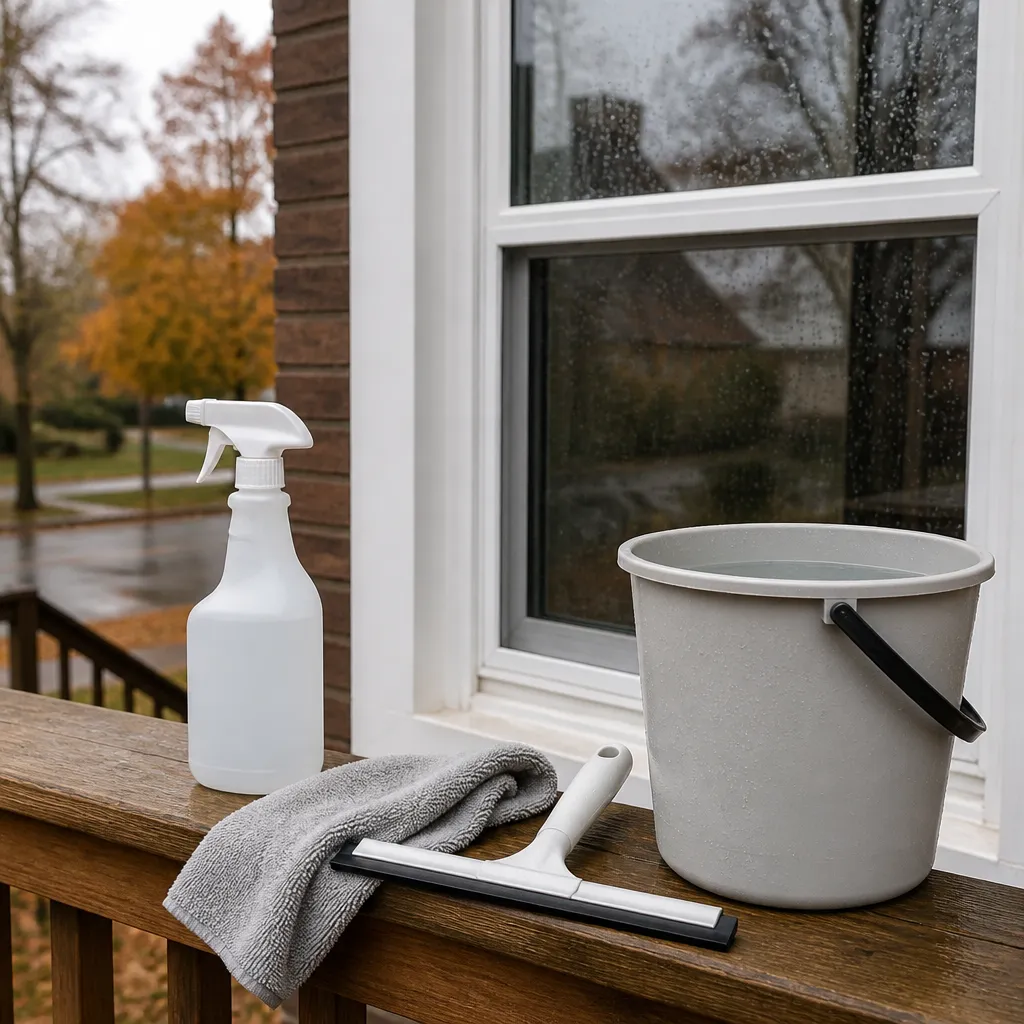
The right tools make the biggest difference in November. Cold weather slows drying, which gives you more time to make mistakes, and it makes residue harder to remove. A good setup prevents most of the problems described above.
Squeegee blades and microfiber
Use a squeegee with a fresh, undamaged rubber blade. A nicked or hardened blade leaves lines that look like streaks under low sun. Replace the blade when it starts to skip or leave a wet edge behind.
Pair the squeegee with clean microfiber cloths. Microfiber absorbs water well and leaves less lint than paper towels or old cotton rags. Lint is a common source of streaks that appear only after the glass has dried.
Water quality and rinse habits
Water quality affects the final result. Hard tap water leaves mineral traces on glass as it dries, while distilled water leaves almost nothing behind. For exterior work where you cannot easily change the water source, rinse thoroughly and finish with a clean, damp cloth on the edges.
Change your rinse water often. Once it turns grey, it is putting grime back onto the glass. A good habit is to swap the bucket every few windows, especially on the south and west faces where dust collects most quickly.
Some homeowners swear by a vinegar and water mix, and it can handle light film. On heavy November grime, we prefer a proper solution and a clean blade, because vinegar alone does not always lift the residue that low sun exposes.
Pro tip: Keep one dry microfiber cloth just for the frames and corners. Wiping the glass with the same cloth you used on the sills spreads grit across the pane, and it is one of the fastest ways to create streaks on a cold day.
Comparison of Approaches for November Glass
There are several ways to clean windows before winter, and each one suits different conditions. The table below compares three common approaches and where each one tends to fall short when the light turns low and the air gets cold.
| Approach | Best For | Where It Falls Short |
|---|---|---|
| Vinegar and water with paper towels | Light film on ground-floor glass that is easy to reach | Paper towels leave lint, and vinegar may not lift heavy residue or mineral spotting on lower panes |
| Dish soap bucket with sponge and chamois | Quick touch-ups on interior glass where access is simple | Soap residue is hard to rinse in cold weather, and a chamois can hold grit that causes lines on exterior glass |
| Pro squeegee service with distilled water and a pole | Full exterior cleans on multi-storey homes where film and mineral spotting have built up | Requires booking ahead, and the result depends on the crew scheduling the job on a suitable day |
In our experience, the approach matters less than the sequence. Any method will streak if the glass is dirty, the blade is worn, or the rinse water is grey. The three approaches above only work well when those basics are covered.
Services That Pair Well With a Fall Window Clean
Window cleaning is most effective when the rest of the exterior is clean too. Gutters, siding, driveways, and entrances all shed grime onto the glass, so a window clean done in isolation often looks disappointing within weeks. We see better results when the work is planned in a sensible order.
Gutter and eavestrough cleaning before the first freeze
Clogged gutters overflow during fall rain and run water down the siding and across the windows below. That water carries leaf tannins and grit, and it dries into streaks on the lower panes. Clearing gutters and eavestroughs before the first hard freeze prevents that runoff from undoing a fresh window clean.
We recommend clearing the eavestroughs first, then cleaning the windows, so any debris that falls during the job does not land on clean glass.
Power washing driveways, decks, and walkways
Power washing a driveway or deck next to the house can splash grime onto fresh glass. The fine spray carries dirt across the lower panes and leaves a film that shows up under low sun. Doing the power washing first, then the windows, avoids that problem.
This is especially important for homes with dark stone walkways or decks that have weathered over the summer. Clean the hard surfaces, rinse them fully, and then move to the glass.

Spider and web removal around frames
Spider webs and egg sacs collect in the corners of frames, screens, and sills through the fall. A squeegee passed over a web smears the silk across the glass, and the sticky strands can hold grit that causes lines. Remove webs and treat the corners before the glass is cleaned.
We also handle tick and mosquito control as part of our exterior work, which helps keep the areas around windows and entrances more comfortable in the warmer months. For full details on the services we offer across the region, visit Performance Window Cleaning. We serve Hamilton, Oakville, Burlington, Mississauga, Niagara Falls, St. Catharines, and Fenwick.
Frequently Asked Questions
Why do my windows look streaky only in November?
The sun is lower in November, so its light reflects off the glass rather than passing straight through. Film and residue that were hidden by high summer light become visible at that angle, even if the windows were cleaned recently.
Is it better to clean windows in fall or wait until spring?
Fall is a good time to clean, especially before winter, because it removes summer film and fall debris that can stain the glass and frames. Waiting until spring means carrying that grime through the coldest months, when it is harder to remove.
Can I use dish soap to clean my windows before winter?
You can, but use only a small amount and rinse thoroughly. Too much soap leaves a residue that looks like streaks under low sun, and it is harder to rinse in cold weather.
Why do streaks come back a day or two after I clean?
Returning streaks usually come from mineral deposits, sprinkler overspray, or rinse water that was not changed often enough. Check whether irrigation is hitting the glass, and make sure your final rinse is clean and fresh.
Should I clean windows on a cold day?
A cool, dry day is ideal, but avoid working when temperatures are about to drop below freezing. Water can freeze on the frame or glass and leave marks when it thaws, so check the overnight forecast before you start.
Have you noticed streaks appearing on your windows only when the fall sun hits them? Share what you have seen, what you tried, and what worked for your home in the comments or by reaching out to us directly.
References
- Guide to choosing the best season and time of day for window cleaning
- Step-by-step guide to cleaning windows for a streak-free finish