
Ask most homeowners what’s on their fall home maintenance checklist, and you’ll hear gutters, furnace filters, weather stripping. Window screen cleaning fall rarely makes the list. That’s a mistake. Over the course of a full Ontario summer, your window screens collect pollen, dead insects, spider webs, and a season’s worth of airborne grime. Heading into winter with dirty screens locked in place, or tossed unwashed into storage, guarantees you’ll be fighting that buildup all over again come spring. It doesn’t have to work that way.
Table of Contents
- Why Fall Is the Right Time to Clean Your Window Screens
- Quick Takeaways
- What Builds Up on Screens Over a Full Ontario Summer
- Step-by-Step: How to Clean Window Screens Properly
- DIY vs. Professional Window Screen Cleaning: Honest Comparison
- Signs Your Screens Need Replacing, Not Just Cleaning
- How Clean Screens Fit Into Full Fall Exterior Maintenance
- Frequently Asked Questions
- References
Why Fall Is the Right Time to Clean Your Window Screens
Fall is not just a convenient time to clean window screens. It is the strategically correct time. Cleaning in fall means you’re removing the full summer’s accumulation before it sits compressed against the mesh all winter. It also means you can inspect each screen while there’s still enough warmth and daylight to do something about what you find.
Storing dirty screens causes real, preventable damage. The acidity from pollen, salt residue, and insect debris actively degrades mesh fibers over the months they sit unused. Cleaning before storage removes this corrosive layer and meaningfully extends the life of your screens. That’s not a small thing when quality fiberglass screens can last well over a decade with proper care.
There’s also an indoor air quality angle that most homeowners overlook entirely. Screens that are clogged with pollen and fine particles don’t filter incoming air. They become a source of it, releasing trapped allergens every time a window is opened or a breeze passes through. Fall cleaning breaks that cycle before it starts again in spring.
Quick Takeaways
| Key Insight | Explanation |
|---|---|
| Fall is the best time to clean window screens | It removes a full summer’s pollen, bugs, and debris before screens go into winter storage, preventing corrosive buildup on the mesh. |
| Dirty screens reduce airflow noticeably | Clogged mesh restricts ventilation. Clean screens allow fresh air to pass through freely, which matters when you first open windows in spring. |
| Never use high-pressure washing on screens | High pressure stretches or dislodges the mesh from the frame. A garden hose on a low setting is the correct tool for rinsing. |
| Vacuum before you wet the screen | Applying water to dry debris turns it into mud, making it harder to remove. Dry vacuuming first makes the wash far more effective. |
| Inspect every screen while it’s wet and clean | Wet mesh makes small tears and holes much easier to see. Fall is the right time to catch damage before spring reveals it through bugs indoors. |
| Clean screens also mean cleaner window glass | Dirty screens transfer grime to the glass every time rain hits them. Keeping screens clean is part of keeping windows clear. |
| Professional cleaning catches what homeowners miss | Frames, tracks, and corners accumulate compacted dirt that casual cleaning skips. A thorough professional service covers all of it at once. |
What Builds Up on Screens Over a Full Ontario Summer
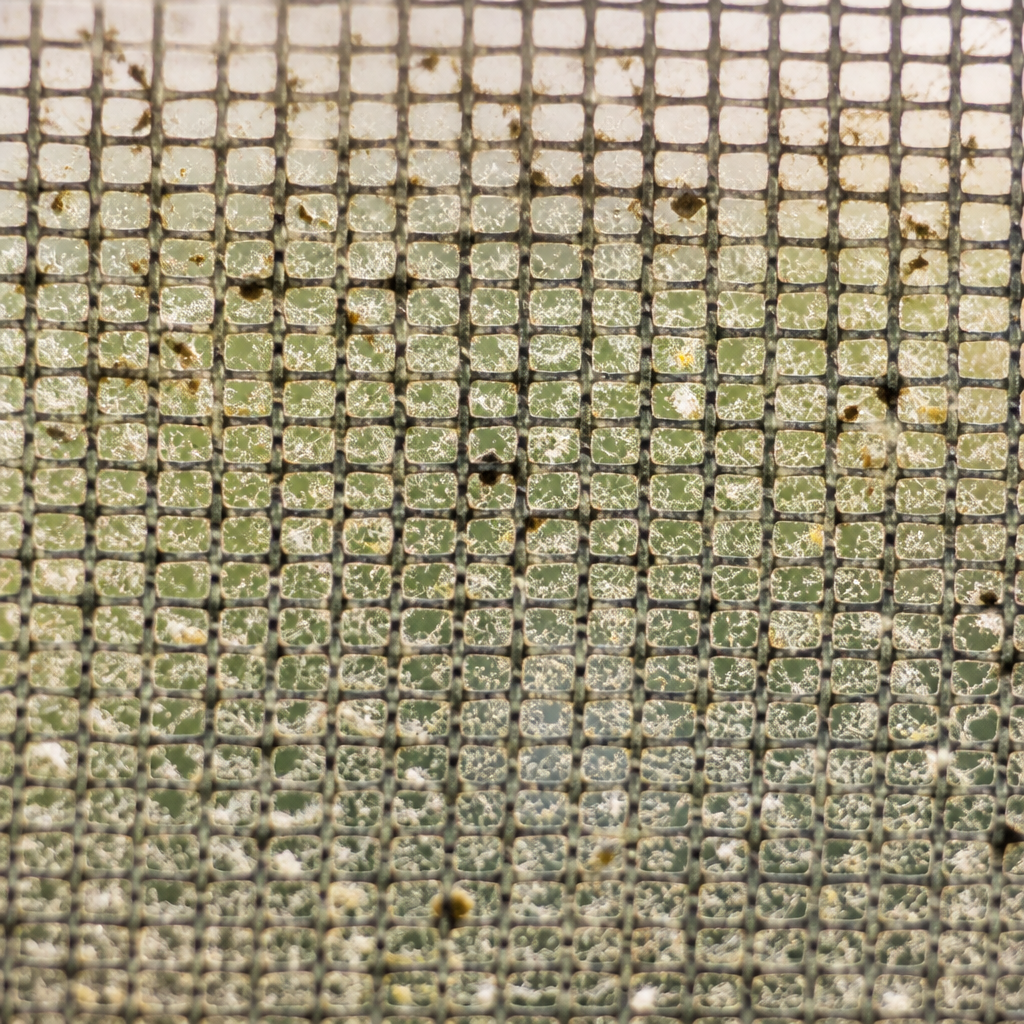
An Ontario summer is hard on window screens. From late April through September, screens are doing constant duty catching whatever the air carries: tree pollen in spring, cottonwood fluff in early summer, late-season ragweed, and insects in every stage of their lives. By the time October arrives, most screens are carrying a dense layer of mixed organic debris that’s been baked in by the sun and then rehydrated by rain, repeatedly.
Spider webs are a specific problem that compounds over time. Spiders build across screens precisely because the mesh catches small insects, making it a ready feeding ground. A single summer can leave multiple generations of web structure across a screen, especially on south and west-facing windows that receive more light and warmth. These webs trap additional debris and are genuinely unpleasant to deal with if they’re left until they’re old and fragile.
Bug residue and the acids in insect matter actively degrade screen mesh over time. This is not cosmetic. Salt, pollen, and other bio-matter deposited over summer create a corrosive layer that, left through winter, shortens the lifespan of both fiberglass and aluminum mesh. Removing it in fall is a maintenance decision, not just a cleaning one.
Clean screens aren’t a luxury, they’re protective maintenance. Leaving summer grime on mesh through winter is the fastest way to shorten a screen’s useful life and compromise the window system around it.
Pro tip: Pay close attention to screens on windows that face a garden or wooded area. These catch significantly more pollen, insects, and web material than screens on other sides of the house, and often need a more thorough scrub in fall than a quick rinse provides.

Step-by-Step: How to Clean Window Screens Properly
The right method depends on how dirty the screens are and whether you’re cleaning them in place or after removal. For fall cleaning, full removal and a thorough wash is almost always the better choice. It lets you clean both sides properly, inspect the frame, and dry the screen completely before storage or reinstallation.
Step 1: Vacuum Both Sides Before Any Water
Use a vacuum with a brush attachment to remove loose dirt, pollen, dead insects, and spider webs from both sides of the screen and frame before any water touches it. This step is the one most homeowners skip, and it matters. Applying water to dry debris turns it into mud that gets pushed deeper into the mesh and is harder to remove. Dry vacuuming first makes everything that follows more effective.
Step 2: Rinse with a Low-Pressure Hose
Use a garden hose on its lowest pressure setting to rinse both sides of the screen. The goal is to loosen and soften remaining grime, not blast it away. High-pressure rinsing stretches the mesh or pushes it out of the frame, which is damage that can’t be undone without a full re-screen. Keep the nozzle at a distance and let water do the gentle work.
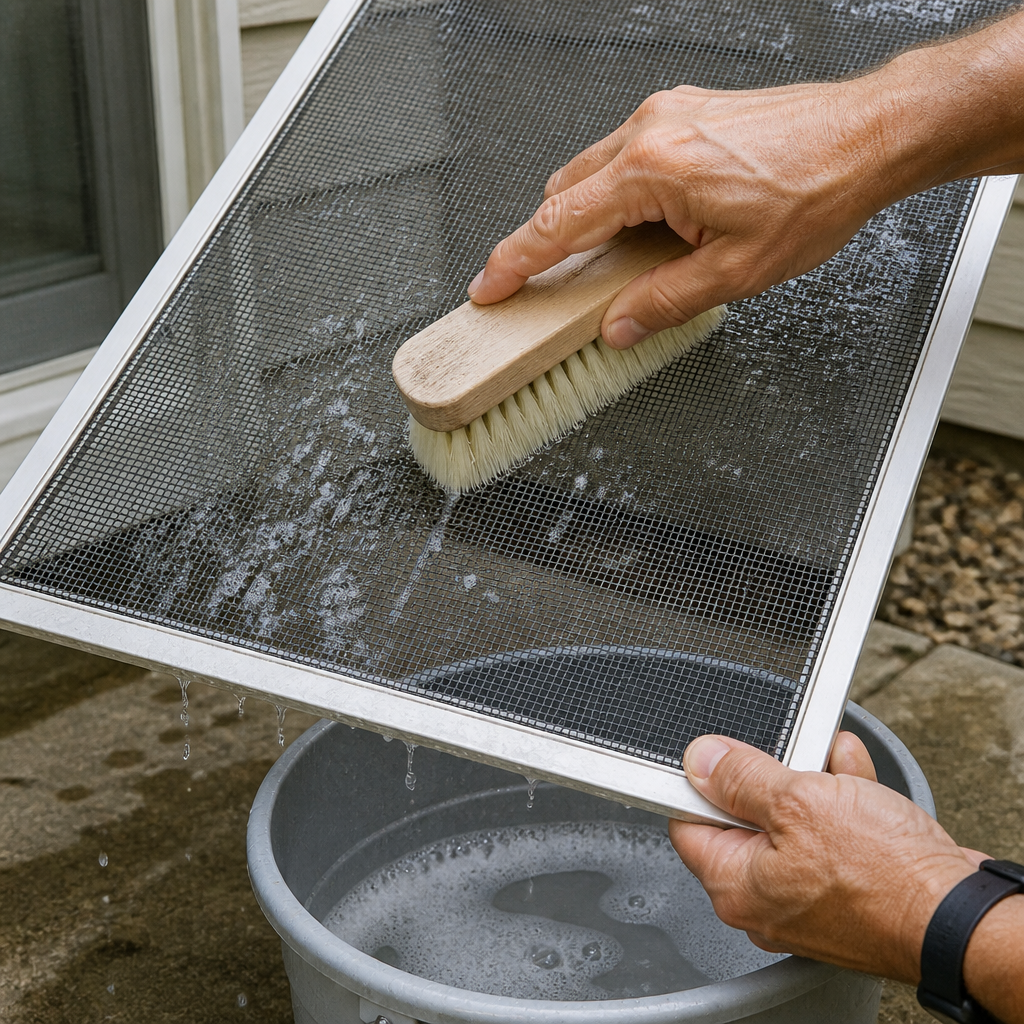
Step 3: Scrub with Mild Soap and a Soft Brush
Mix a small amount of mild dish soap into a bucket of warm water. A solution of equal parts white vinegar and warm water is also effective, particularly if you’re dealing with mold or mineral deposits. Use a soft-bristle brush or sponge and scrub in gentle circular motions, working from top to bottom. Give extra attention to frame corners, where compacted dirt tends to collect and is easy to miss.
Step 4: Rinse Thoroughly and Dry Completely
Give each screen a final full rinse to remove all soap residue, then allow it to dry completely before storage or reinstallation. Storing a damp screen promotes mold growth on the frame and in any crevices. Lean screens against a sunny wall or lay them flat on a clean surface to dry, and turn them once to ensure both sides dry fully.
Step 5: Inspect While the Screen Is Wet and Clean
A wet, backlit screen shows small tears, holes, and stretched mesh far more clearly than a dry one. Fall is the right time to find this damage, while there’s still enough of the season left to act on it. Any screen with visible tears should be marked for repair or replacement before the next window-opening season.
Pro tip: Label each screen as you remove it so you know exactly which window it came from. Screens are not interchangeable. A screen reinstalled in the wrong frame often fits poorly, leaves gaps, and won’t seat properly in the track, which is exactly the kind of gap that lets insects and spiders slip inside.
DIY vs. Professional Window Screen Cleaning: Honest Comparison
Most homeowners can handle light screen cleaning on their own with basic tools. The question is whether that light cleaning is actually what their screens need after a full Ontario summer. In many cases, it isn’t.
| Approach | Best For | Limitations |
|---|---|---|
| DIY in-place cleaning | Light dust and routine maintenance between professional cleans. Works well for accessible ground-floor screens. | Hard to reach both sides of the screen properly. Corners and frames get skipped. No deep wash of accumulated summer grime. |
| DIY full removal and wash | Homeowners with time, suitable outdoor space, and screens in good condition that are easy to remove and handle safely. | Screens can be damaged during removal or handling if done incorrectly. Time-consuming across a full house. Damage often goes undetected without trained eyes. |
| Professional window screen cleaning | Full fall exterior maintenance. Homes with many windows, upper-floor screens, or screens that haven’t been properly cleaned in more than one season. | Higher cost than doing it yourself. Requires scheduling in advance, particularly in fall when demand for exterior home services is high. |
Professional cleaners bring commercial-grade tools and a practiced eye for the details that matter: frame condition, track buildup, signs of screen mesh deterioration, and the corners and edges that casual cleaning never touches. For homeowners in Oakville, Burlington, Hamilton, or St. Catharines trying to knock out their full fall exterior checklist in one go, having a professional handle screens as part of a comprehensive window cleaning visit is almost always the more thorough and time-efficient option.
Signs Your Screens Need Replacing, Not Just Cleaning
Fall cleaning is also the right time to decide which screens are worth cleaning and which ones have reached the end of their useful life. Not every screen deserves another season.
Look for visible tears, holes, or stretched sections in the mesh. A tear larger than a couple of centimetres will let insects through regardless of how clean the screen is. Stretched mesh, where the material has sagged or bowed away from the frame, also creates gaps that bugs will find.
Check the frame itself. Bent aluminum frames rarely seat properly in tracks after being straightened. Frames with significant rust, corrosion, or cracked corners are also compromised. A clean screen in a bad frame is a screen that won’t seal properly against the window, which defeats the entire purpose of having it.
Damaged screens create a specific pest problem heading into winter. Spiders, stink bugs, and other insects actively seek entry points as temperatures drop. A screen with even a small tear or a loose edge gives them a pathway that a solid, well-maintained screen would close off. Finding and addressing that damage in fall, before the cold sets in, is far preferable to discovering it in spring through an indoor insect problem.
Pro tip: If more than two or three of your screens need replacing at once, that’s a sign the whole set was installed or last replaced around the same time. It’s worth having a professional assess all of them during a fall cleaning visit rather than replacing them piecemeal over multiple seasons.
How Clean Screens Fit Into Full Fall Exterior Maintenance
Window screen cleaning doesn’t happen in isolation. It fits into a broader fall exterior maintenance routine that, done properly, protects your home’s appearance and function heading into an Ontario winter. The screens, the glass, the tracks, the sills, and the window frames are all part of the same system. Cleaning one without addressing the others leaves obvious gaps.
A complete fall window service that covers interior and exterior glass, sills, tracks, and screens gives you a genuinely clean result rather than a partial one. Dirty tracks trap water and debris that freeze in winter, creating pressure on the frame. Dirty sills channel grime back onto freshly cleaned glass every time it rains.
Screens also interact directly with your gutters and eavestroughs. Debris blown off dirty screens lands in gutters and accelerates the clogging that causes overflow and water damage. Doing both in the same fall visit makes practical sense and keeps your full exterior in properly maintained condition heading into the cold months.
For homeowners who want to go further, home exterior detailing and power washing of driveways, walkways, and decks rounds out a full fall reset before winter sets in. And if your screens are trailing spider webs, a dedicated bug and spider web removal service addresses the source of the problem, not just the symptom.
Serving Oakville, Burlington, Mississauga, Hamilton, Niagara Falls, St. Catharines, Fenwick, and Edmonton in Ontario, Performance Window Cleaning handles all of this as part of a coordinated fall exterior cleaning service that most homeowners find far more effective than trying to tackle each piece separately across several weekends.
Frequently Asked Questions
How often should I clean my window screens in Ontario?
Twice a year is the standard for most Ontario homes. Once in spring, to clear off winter salt residue and early pollen, and once in fall, to remove the full summer’s accumulation before storage or the closed-window season. Homes near wooded areas, gardens, or high-traffic roads may benefit from an additional mid-summer cleaning due to heavier pollen and dust loads.
Can I clean window screens without removing them?
Yes, though the results are noticeably less thorough. In-place cleaning using a vacuum with a brush attachment followed by a gentle wipe-down with a damp cloth handles routine maintenance between full washes. For fall cleaning after a full season of use, removing the screens and washing both sides properly gives a far better result and makes inspection for damage much easier.
Is it safe to use a pressure washer on window screens?
No. High-pressure washing is one of the most reliable ways to damage window screens. The force stretches fiberglass mesh and can dislodge the mesh from its frame entirely. If you want to use a hose, set it to the lowest pressure spray setting and keep the nozzle at a generous distance. Mild soap and a soft brush do the real cleaning work. Pressure is not a substitute for scrubbing.
What cleaning solution works best for dirty window screens?
A mild dish soap mixed into a bucket of warm water works well for most screens. For screens dealing with mold, mildew, or mineral deposits, an equal-parts solution of white vinegar and warm water is effective and won’t damage the mesh. Avoid harsh chemical cleaners, abrasive scrubbing pads, and anything with bleach, which can degrade both fiberglass mesh and aluminum frames over time.
When should I replace a window screen rather than cleaning it?
Replace a screen when you find visible tears or holes that would let insects through, stretched or sagging mesh that no longer sits flush in the frame, or a bent or corroded frame that no longer seats properly in its track. Fall cleaning is the ideal time to make this call because you have time to act on it before the next window-opening season and you can see damage clearly on a wet, clean screen held up to daylight.
Should window screens be removed and stored for winter in Ontario?
It depends on the screen type and the window system, but removing and storing screens over winter is generally recommended. Stored screens are protected from ice buildup, physical damage from snow, and the freeze-thaw cycles that stress frames and mesh. More importantly, screens that come out of storage clean and inspected are ready to install immediately in spring without requiring another full cleaning round.
Have you cleaned your window screens this fall, or found unexpected damage when you finally pulled them out? Share what you found, your experience might help another Ontario homeowner catch the same issue before spring reveals it the hard way.
References
- Complete guide to cleaning window screens: methods, timing, and lifespan tips
- How and when to clean window screens, including fall and spring best practices
- Why and how to clean window screens, including impact on airflow and screen lifespan
- Whether to remove or leave window screens in place before winter
- Professional vs. DIY window screen cleaning: what the difference means for results