
Every fall, homeowners in Oakville, Burlington, Hamilton, and St. Catharines ask us the same question: why does one spot near the window feel cold even after the caulking is fresh? The answer is often at the bottom of the frame. A window track packed with grit, a sill full of dead insects, or a clogged weep hole can stop a sash from closing fully, and that gap is exactly where a draft gets in. Window track cleaning in Ontario is the cheapest draft fix most houses never get, and it takes less time than people expect.
Table of Contents
- Quick Takeaways
- Why Tracks and Sills Matter More in Winter
- How Air Gets Past a Dirty Track
- Interior Sill Cleaning That Actually Works
- Cleaning Window Tracks Step by Step
- Tools and Methods Compared
- Winter Prep Schedule for Ontario Homes
- Mistakes That Undo the Work
- Frequently Asked Questions
- References
Quick Takeaways
| Key Insight | Explanation |
|---|---|
| Vacuum the track before any liquid touches it | Dry grit turns into a grinding paste when wet, and that paste smears into the weather seal and dries there. |
| Clear weep holes as a separate job | A blocked weep hole holds water in the track, and that water can freeze and push the sash out of alignment. |
| Test the seal with a strip of paper | Close the sash on a strip of paper. If it slides out with no resistance, the seal is not compressing and air is passing through. |
| Spend extra time on sill corners and track ends | Debris collects at the ends of the track and in the sill corners, which are the points where cold air most often enters. |
| Dry the track completely before winter | Moisture left in a track can freeze overnight and lock a sliding sash in place or leave it slightly open. |
| Use steam only on hardened buildup | Steam lifts baked-on residue, but over-wetting can soak sill wood and drywall edges, so use it sparingly. |
| Book the job before the first hard freeze | Cleaning in early November lets you spot a failing seal while there is still time to replace the weatherstripping. |
Why Tracks and Sills Matter More in Winter
Most homeowners clean the glass and forget the bottom of the window. That makes sense, since the track and sill are out of sight and rarely cause a visible problem during the warm months. In winter, though, they become the place where a sealed window stops being sealed. A sliding sash rides in a channel, and any grit, dust, or dead insect in that channel can hold the sash slightly off its closed position.

Where the seal actually lives
Most sliding windows rely on a combination of brush pile, flexible fins, and compression weatherstripping along the sash edges. Those pieces only work when the sash sits square in the track and presses against them. When the track is full of debris, the sash rides on top of the grit instead of settling into its groove, and the seal never gets the pressure it was designed for.
In practice, the bottom edge of the sash is where the seal does most of its work. A gap of a few millimetres there is enough to feel on a windy January morning, even though nothing looks obviously wrong from the room.
What a neglected track does over one winter
Our crews see the same pattern across Mississauga, Burlington, and Hamilton. The glass is clean, the frame looks fine from the street, and the bottom track holds a crust of pollen, soil tracked in from the yard, and flakes of old paint. By mid-winter the owner notices a cold draft along the bottom of the window, yet the caulking looks sound and the weatherstripping seems intact.
A draft at the bottom of a window is usually a sealing problem, not an insulation problem. The glass and frame are doing their job, but the leak happens where the moving parts meet. That is why cleaning the track often reduces drafts more than adding a window film or a curtain liner, which only treat the symptom.
How Air Gets Past a Dirty Track
Air takes the easiest path, and a window track gives it several. Debris changes how the sash sits, how the seal compresses, and how water drains from the channel. Each of those problems alone is small. Together, they turn a tight window into a steady leak.
Weep holes that stop draining
Weep holes are small openings in the track that let water escape to the outside. When they clog with dirt or insect debris, water pools in the channel instead of draining. In cold weather, that pooled water freezes, and the ice can push the sash out of line. The result is a gap at the meeting rail that was not there in October.
Bissell’s guidance on tracks also notes that steam is useful when weep holes are blocked by buildup, which tells you these openings need attention as a separate job. Clear them with a thin brush or a cotton swab, then check that water runs through when you rinse the track.
Pro tip: After clearing the weep holes, pour a small amount of water into the track from the sash side. If it drains out the outside within a few seconds, the path is open. If it sits, keep clearing.
Compressed seals and grit under the sash
Grit under a sash does more damage than most people realize. Sand and grit act like sandpaper on the brush pile and fins, slowly wearing them flat. Once a seal is worn, it stops pressing back against the sash, and a draft can form even when the window appears closed.
A quick way to check is to close the sash on a strip of paper and try to pull it out. If it slides free with no resistance, the seal is not compressing at that point. Mark the location, clean the track thoroughly, and recheck. If the paper still slides out after cleaning, the weatherstripping itself likely needs replacing.
Interior Sill Cleaning That Actually Works
Interior sills collect a different kind of mess. Dust settles there from the room, pet hair ends up in the corners, and condensation can leave a film that holds dirt. A sill that looks clean can still have debris hidden in the joints where the sill meets the frame, and those joints are where cold air often finds a path.
Vacuum first with a crevice tool
Start with a dry vacuum and a crevice attachment before you touch anything with liquid. Run the tool along the full length of the sill, then along the track, and finish at the ends where the track meets the frame. Bissell’s guidance treats a regular crevice vacuum pass as the most useful routine habit for tracks and sills, and our experience matches that. A monthly pass during heating season stops most buildup from becoming a problem.
Corners, joints, and the cut sponge technique
Corners and joints need a small brush and a bit of technique. A thin brush set, the kind sold for cleaning tracks, reaches the spots a vacuum misses. A sponge cut to fit the width of the sill can also get into the groove without pushing debris deeper. The cut sponge method, described in a guide on cleaning filthy window tracks and sills, works well because it gives you a clean edge to work with.
A clean sill over a dirty track still lets air in. Treat the two as one job, not two separate chores.
When steam is the right call
Steam is for buildup that has hardened and will not lift with a brush. Old grease from a kitchen-adjacent window, stuck-on paint, and years of grime all respond well to a short burst of steam. The mistake people make is holding the steamer in one spot too long. Keep the nozzle moving, keep the sill dry-ish afterward, and wipe the wood or painted surface promptly.
Steam is not a good first choice for every sill. Wood sills and drywall edges can soak up moisture, which causes swelling or staining, so use it sparingly and dry the area right after.
Cleaning Window Tracks Step by Step
The order matters more than the products. Most failed track cleanings skip the dry stage, then wet a layer of grit, and end up with a smeared track that feels slick but still holds debris in the corners. The sequence below is the one we use on every job, whether we are working in Oakville, Fenwick, or St. Catharines.

Dry removal before any liquid
Remove loose debris with a vacuum and a stiff brush, working from the far end of the track toward the sash. Collect the debris as you go instead of pushing it along the track. This step matters because wet grit becomes paste, and paste is far harder to remove from the brush pile of a weatherstrip.
Wet cleaning without flooding the frame
Once the dry debris is gone, dampen a microfibre cloth with a mild cleaner or plain water. Wrap it around a brush or a flat tool, then wipe the track in one direction. Avoid soaking the cloth, because excess water runs into the sill joints and along the frame. A damp track is the goal, not a wet one.
Pro tip: Work from the sash side toward the outside of the track, and finish with a dry cloth. Water left standing in a track is the fastest way to start freezing problems in November.
Checking the seal before you finish
Before you call the job done, run the paper test again. Close the sash on a strip of paper along each section of the track, including the corners and the meeting rail. Any section where the paper slides out easily needs a closer look. Note it for the fall maintenance list, since the seal may need adjusting or replacing before the coldest weeks.
Tools and Methods Compared
Three approaches cover most track and sill jobs. Each has a clear best use and a clear drawback. Choosing the wrong one usually leads to either wasted time or damage to a seal or sill.
| Method | Best For | Main Drawback |
|---|---|---|
| Crevice vacuum attachment | Routine dust and loose debris every few weeks during heating season | Does not remove hardened residue or water-based grime |
| Brush set with a cut sponge | Corners, joints, and the full length of the track after dry vacuuming | Slow on long runs, and a worn sponge can leave fibres behind |
| Handheld steam cleaner | Hardened buildup, old paint, and grime that resists a brush | Adds moisture to wood and drywall, so it must be used briefly and followed by drying |
In practice, most homeowners need the first two methods, and the third only once or twice a year. A vacuum keeps the track from building up, and the brush and sponge handle the corners that the vacuum misses. Steam is the rescue tool for the track that has been ignored for a long time, and it should not be your default.
Winter Prep Schedule for Ontario Homes
If you are reading this in early November, you still have time to get ahead of the cold. Ontario winters move quickly from mild to hard frost, and any track that is damp or blocked at that point will hold its problem until spring. A short schedule keeps the job from piling up.
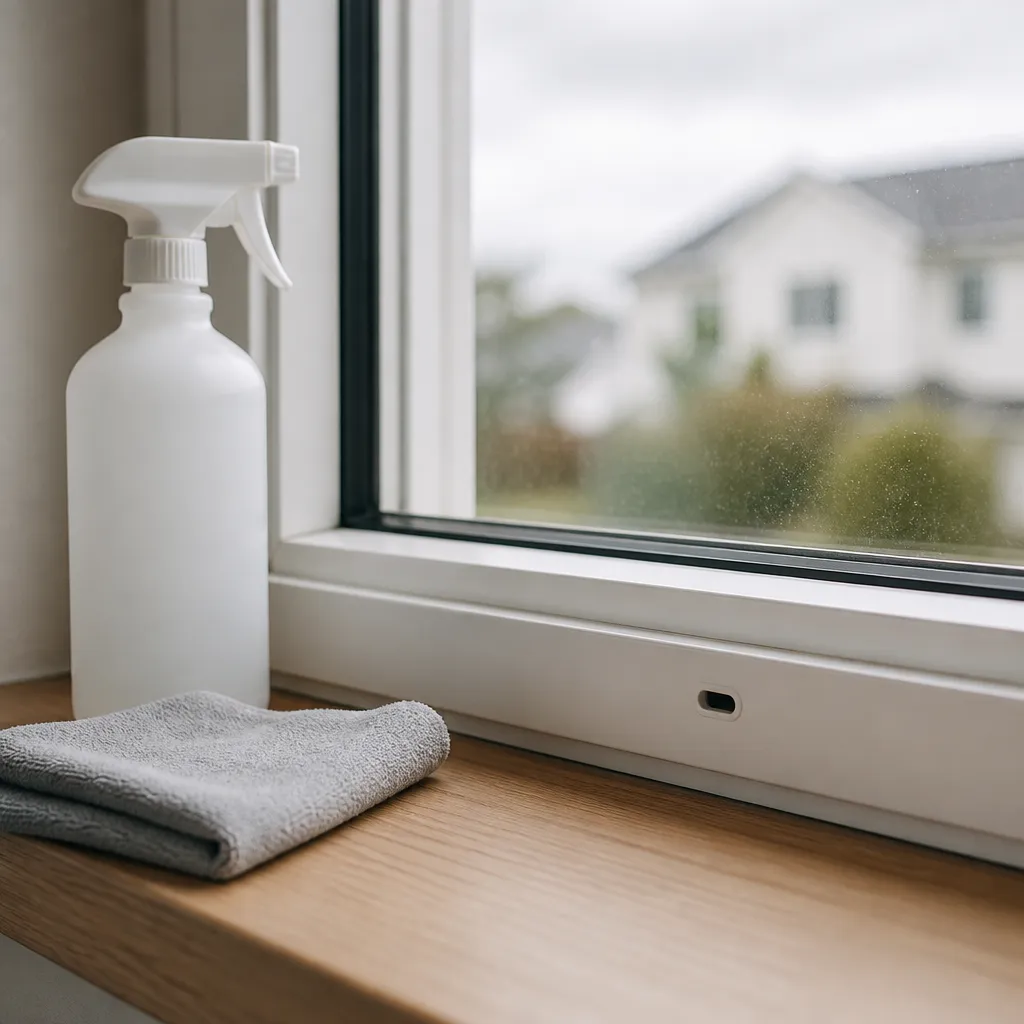
Early November: clean and test
Do the full dry-then-wet clean on every sliding window in the house, starting with the ones that face prevailing winds. Then run the paper test on each sash. Any window that fails the test should be flagged before the first hard frost, because a seal that fails in November is easy to adjust, while one that fails in January means a cold room and a frozen track.
Mid-winter: quick checks only
Once the heating season is underway, skip the deep clean and focus on quick checks. A monthly vacuum pass and a glance at the weep holes will catch most problems. If a sash starts to stick or the draft returns, check for ice or moisture in the track before forcing the window.
Spring: a full reset
When the weather warms, clean the tracks again to remove the winter residue of salt, grit, and road dust. Check weatherstripping for cracks or flattening, and replace anything that no longer springs back. Doing this in spring means the seals enter the next heating season in good shape.
Mistakes That Undo the Work
Most track problems come back because of a few predictable habits. These are the mistakes we see most often when a homeowner calls us after a failed attempt, and they are worth avoiding even if you only clean once a year.
Spraying cleaner directly into the track
Spraying a cleaner straight into the track pushes it into the weep holes, the sill joints, and the space behind the seal. The liquid then dries with the grit it has loosened, and you end up with a layer that is harder to remove. Spray the cloth or brush instead, and keep the amount small.
Skipping the sill underneath the sash
Many people clean the track and leave the sill. Dust and water collect on the sill and seep into the joint where the sill meets the frame. A drafty joint there can feel identical to a seal problem, so it is worth cleaning and drying the sill as part of every track job.
Forcing a stuck sash
A sash that suddenly sticks in cold weather is often holding ice or grit in the track. Forcing it can crack the glass, bend the track, or tear the seal. Stop, check the track for moisture or debris, let the sash warm slightly if needed, and then move it gently.
Pro tip: Keep a small, dedicated brush and cloth for tracks only. Using the same cloth on kitchen surfaces or the glass transfers grease and dust into the very channel you are trying to keep clean.
Frequently Asked Questions
How often should I clean window tracks in Ontario?
Vacuum the tracks every few weeks during the heating season, and do a full wet clean at least twice a year, once in early fall and once in spring. Homes near busy roads, unpaved driveways, or heavy tree cover will need more frequent attention because they collect more grit.
Can cleaning window tracks really stop a draft?
Yes, when the draft comes from the sash not sitting properly in the track. Clearing grit and blocked weep holes lets the sash seat fully and lets the seal compress. If the draft remains after a thorough clean and the paper test still slides out, the weatherstripping likely needs replacing.
Is steam safe for window sills?
Steam is safe for many sills in short bursts, but it can damage wood and drywall edges if you hold it in one place. Use it only on hardened buildup, keep the nozzle moving, and dry the surface right away. If the sill is already soft or stained, leave steam alone and have the area assessed.
What should I use to clean the track without damaging the seal?
Start dry, then use a mild cleaner or plain water on a microfibre cloth. Avoid harsh solvents that can dry out rubber seals, and avoid soaking the track. The goal is to remove grit without leaving liquid behind.
Why does my window still feel cold after cleaning the track?
The track may be only one part of the leak. Check the sash locks, the meeting rail, and the caulking around the frame. Cleaning often reveals whether the seal is the main problem, which helps you decide if the next step is adjustment, replacement, or a call to a professional.
Do you clean window tracks and sills during the winter months?
We can, and we recommend booking early in the fall. Cleaning in deep winter means working around frost and ice, which makes it harder to dry the track properly. If you are in Oakville, Burlington, Mississauga, Hamilton, Niagara Falls, Fenwick, or St. Catharines, you can learn more about our window cleaning services at Performance Window Cleaning.
Have you found a track or sill fix that changed how your windows feel in winter? Share what worked for you, or what stubborn grit you still cannot get out, and we will help you sort it out.