
You brush down the spider webs from your eaves on Saturday morning. By Wednesday, they are back. You do it again. They come back again. If this cycle sounds familiar, you are not doing anything wrong – you are just solving the wrong problem. Spider web removal with a broom is a cosmetic fix. It cleans up what you see, but it does nothing about the food supply, the shelter, or the entry points that convinced the spiders to settle on your home in the first place. This article breaks down exactly why webs return and what it actually takes to stop them.
Table of Contents
- Quick Takeaways
- Why Spider Webs Keep Coming Back
- The Four Conditions That Invite Spiders to Your Exterior
- Where Spiders Build on Your Home and Why
- Spider Spray Exterior: What Works and What Does Not
- DIY vs. Professional Pest Removal Home Comparison
- How Exterior Cleaning Fits Into Spider Control
- Frequently Asked Questions
- References
Quick Takeaways
| Key Insight | Explanation |
|---|---|
| Sweeping webs is not spider control | Removing a web destroys only the spider’s temporary hunting structure. As long as insects and shelter remain, the spider rebuilds within days. |
| Outdoor lighting is a major driver | Bright white bulbs attract flying insects after dark. Spiders build webs near those lights to intercept the easy meal, causing heavy web buildup around eaves, entries, and light fixtures. |
| Eaves, soffits, and overhangs are prime real estate for spiders | These sheltered spots protect webs from wind and rain, making them a favourite location for orb-weaving spiders and a common source of ongoing infestations. |
| Clogged gutters create a spider habitat | Decomposing debris in gutters and eavestroughs breeds the insects spiders feed on. Clean gutters reduce the food source and the webbing that follows. |
| A single egg sac can contain hundreds of viable eggs | Removing visible webs but leaving egg sacs in place means the next generation of spiders is already in position to rebuild when conditions are right. |
| Professional residual treatments outlast store-bought sprays | Professional-grade exterior treatments can remain effective for up to 60 days, while consumer contact sprays offer little residual protection once dry. |
| Reducing insect populations is the root fix | Spiders are obligate carnivores. Remove their prey and your home becomes far less attractive to them, regardless of how many times you have swept webs away. |
Why Spider Webs Keep Coming Back
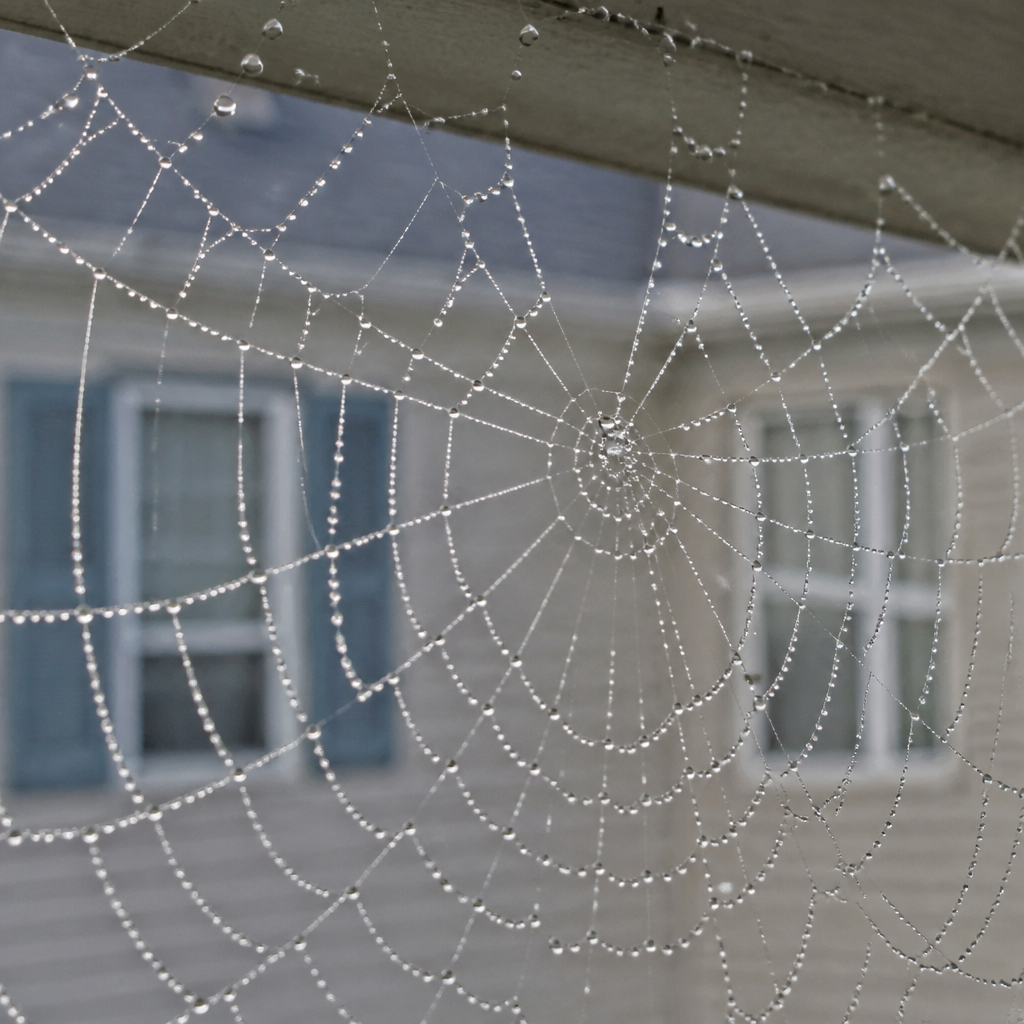
A spider web is not a home – it is a tool. Spiders spin webs to trap insects, which are their only food source. Every time you remove a web, you are taking away their dinner plate, not their reason for being there. As long as insects are flying around your eaves, windows, and entry lights, the spider will rebuild, usually within 24 to 48 hours, in the same spot or nearby.
The frustrating cycle most homeowners experience is not bad luck. If spider webs return quickly, it usually means your home or yard is giving spiders exactly what they need: food, shelter, and the right environment. Until all three of those conditions change, no amount of broom work will solve the problem.
Spiders keep coming back after webs are removed because web sweeping only destroys their temporary hunting structures, not their primary harborages or underlying food sources. If your property has active insect vectors, attractive lighting, or unsealed exterior entry points, spiders will continuously rebuild.
Chasing returning spiders with a regular broom creates a frustrating, never-ending cycle of web removal and instant rebuilding. Permanent results require targeting the root conditions, not just the visible webs.
The Four Conditions That Invite Spiders to Your Exterior
Understanding why your home is a desirable address for spiders is the first step toward real, lasting spider web removal. There are four conditions that matter most, and your home likely has at least two of them working against you right now.
Outdoor Lighting That Attracts Insects
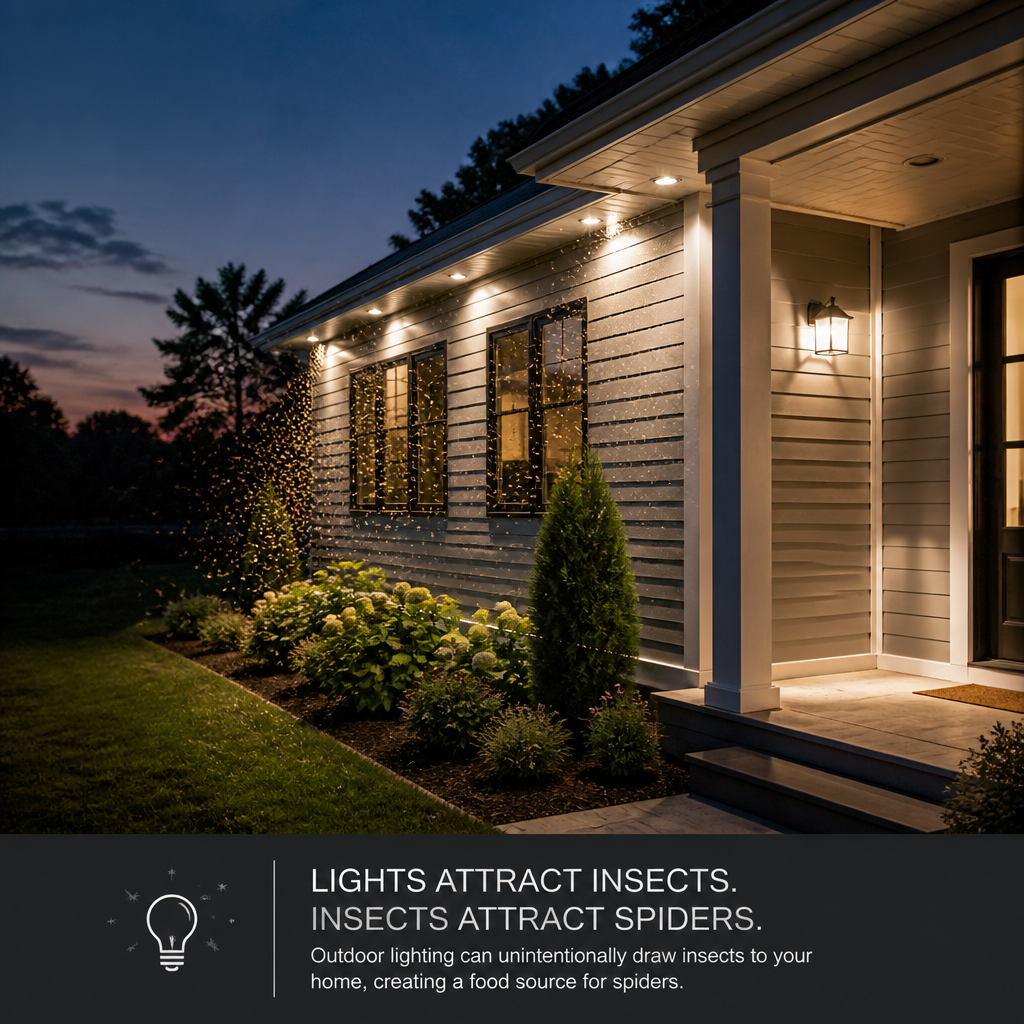
Outdoor lighting is one of the strongest indirect spider attractants on any property. Porch lights, landscape lighting, security lights, and decorative fixtures attract flying insects – moths, beetles, gnats, and others – that congregate around the light source after dark. Spiders build webs near these lights to intercept the insects.
Outside the home, spiders commonly build webs near light fixtures, eaves, railings, and siding where flying insects gather after dark. Porch lights with bright bulbs often attract larger insect populations, giving spiders a steady food source.
Pro tip: Replace white bulbs with warm-colored or yellow-toned bulbs, which attract fewer insects. This one change reduces the insect concentration near your entries and, over time, reduces spider activity around those same spots.
Debris in Gutters and Eavestroughs
Clogged gutters are more than a drainage problem. Decomposing leaves and organic matter in eavestroughs create breeding conditions for the flies, midges, and gnats that spiders prey on. Fixing the web problem without cleaning the gutters is like patching a leak without turning off the water.
Unsealed Entry Points and Gaps
Common structural pathways spiders use to enter a home include unsealed weep holes in brick siding, clear paths through crawlspace vents, and hollow spaces behind exterior window trim. These same gaps that let spiders in also let in the insects they eat. Sealing them addresses both problems simultaneously.
Undisturbed Shelter in Eaves and Overhangs
Not all spiders spin webs in obvious places. Many species build nests in eaves, under siding, or within cracks in patios and decks. Any sheltered, undisturbed surface gives spiders protection from wind, rain, and predators. The more your home offers these zones, the more persistent the problem will be.
Where Spiders Build on Your Home and Why
Knowing where to look changes how you approach spider web removal. Most homeowners focus on what is eye-level and visible. Spiders prefer what is out of reach and overlooked.
Eaves, soffits, and overhangs are where orb-weaving spiders frequently build webs. Garage corners and sheds are common areas for both web-building and egg sacs. Fence lines and play structures are often overlooked hiding spots that support spider activity.
A homeowner might first notice webs near the porch light. They knock them down, but the webs come back. Then spiders appear near the garage, webbing around the side gate, and small insects collecting around the patio at night. That is when you realize it is not just one web – it is a pattern.
The critical issue with exterior webbing that is left unchecked is escalation. When exterior spider activity is allowed to keep building, spiders can move closer to cracks, weep holes, door thresholds, garage gaps, and window frames. From there, homeowners may start seeing spiders inside the garage, laundry room, bathroom, or hallway corners.
Pro tip: Pay close attention to the area directly around your outdoor light fixtures and along the roofline where the soffit meets the wall. These two zones account for a disproportionate share of web activity on most homes. If you are doing a DIY sweep, start there and work your way down.
Spider Spray Exterior: What Works and What Does Not
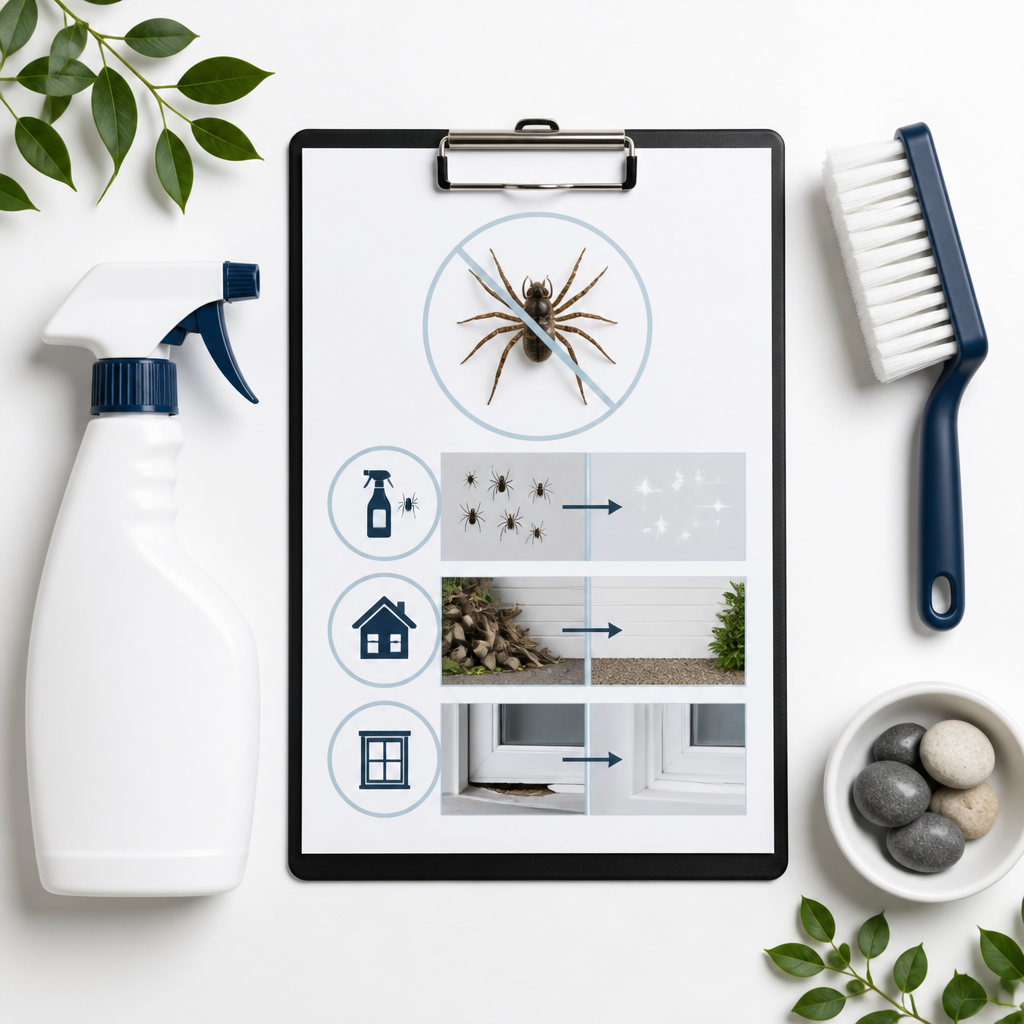
The store is full of spider sprays. Most homeowners have tried at least one. Here is an honest look at what consumer and professional products actually do, and why one delivers lasting results while the other mostly wastes your time.
What Consumer Sprays Do
Contact sprays kill the spider in front of you. That is genuinely useful if the spider is visible and accessible. But a can of spider spray may deal with an individual spider, but eliminating the spider standing in front of you does not necessarily address why it was there. The food source, web location, shelter, cracks, lighting, and surrounding habitat may all remain unchanged.
Most over-the-counter formulas also have very short residual protection. Some offer a week of effectiveness in sheltered spots, but direct sunlight and weather degrade them quickly on any exposed exterior surface. You are essentially spraying and repeating, indefinitely.
What Professional Exterior Spider Spray Delivers
Professional residual treatment can remain effective for up to 60 days. Professional treatment is especially useful when paired with prevention steps, because maintaining the property reduces favourable conditions while targeted treatment addresses the areas where spiders continue to establish themselves.
Professional-grade treatments are also formulated to adhere to brick, wood, and stone in ways that consumer sprays are not. They reach into the micro-crevices around window trim and under soffits where spiders actually hide, not just the open surfaces where webs are visible.
Physical web and egg sac removal is also part of any serious treatment. A single female spider can produce an egg sac containing hundreds of viable eggs. Leaving egg sacs behind while treating the perimeter means you are already preparing for the next infestation.
DIY vs. Professional Pest Removal Home Comparison
Before you decide which approach fits your situation, it helps to see the differences laid out plainly. This comparison covers the three most common approaches homeowners use for pest removal home spider problems.
| Approach | What It Addresses | How Long Results Last |
|---|---|---|
| Manual web sweeping (broom or brush) | Visible webs only. Does not affect spiders, egg sacs, insects, or harborage zones. | Days. Webs typically return within 24-72 hours if conditions are unchanged. |
| Consumer contact spider spray | Kills spiders on direct contact. Minimal residual effect outdoors due to sunlight and weather degradation. | Up to one week in sheltered spots, far less on exposed exterior surfaces. |
| Professional exterior spider spray plus web removal service | Physical removal of webs and egg sacs, residual perimeter treatment on all key harborage zones, and root-cause assessment of insect activity and entry points. | Up to 60 days per treatment. Quarterly or bi-monthly programs maintain the barrier before it breaks down naturally. |
In practice, manual sweeping has its place as part of a maintenance routine, but only when it is combined with a residual treatment program. On its own, it is purely cosmetic.
How Exterior Cleaning Fits Into Spider Control
One of the most overlooked connections in spider web removal is the relationship between the cleanliness of your exterior and the conditions that attract pests. A thorough exterior cleaning does more than improve curb appeal – it directly reduces the environment spiders depend on.
Gutter and Eavestrough Cleaning
Gutters full of organic debris are a breeding ground for the insects spiders feed on. Regular gutter cleaning removes that habitat. It also removes the webs, debris, and potential egg sacs that accumulate in the eavestroughs themselves. Homeowners who clean their gutters twice a year typically see noticeably fewer spider problems along the roofline compared to those who neglect them.
Soffit, Eave, and Siding Washing
Hand-washing of siding, eaves, and soffits removes the accumulated dirt and organic buildup that insects feed on and spiders shelter in. A pressure-washed or hand-washed exterior is physically less hospitable to web-building because the surfaces are smoother and more exposed, and the food-attracting residue is gone.
Window Cleaning as Part of the System
Window frames and screens are a very common spider harborage point, particularly around unsealed gaps and corners. Professional window cleaning that includes attention to frames and reveals helps eliminate those micro-shelters. When exterior spider spray treatment is booked alongside window and gutter cleaning, you address the web problem, the harborage, and the food-breeding zones in one visit.
Performance Window Cleaning has offered professional spider removal and exterior spray services alongside gutter cleaning and exterior washing since 2008. The approach works because it treats the whole exterior system, not just the visible webs. If you are managing a residential property or a commercial building in the Greater Toronto Area, requesting a customized package that combines these services is a far more cost-effective strategy than cycling through repeated single-service calls.
Pro tip: Book your spider spray treatment at the same time as your spring gutter cleaning. You get both services done in one visit, and you address the insect breeding conditions and the perimeter barrier before peak spider activity season.
Frequently Asked Questions
Why do spider webs keep coming back after I sweep them away?
Sweeping removes the web but not the spider, its egg sacs, or the insects it feeds on. As long as the conditions that attracted the spider remain – insects, shelter, and undisturbed surfaces – the spider will rebuild, usually within a day or two. Lasting results require reducing the insect population and applying a residual barrier treatment to the exterior.
What is the most effective spider spray for the exterior of a home?
Professional-grade residual treatments applied by trained technicians outperform any consumer product for exterior spider control. They bond to exterior surfaces including brick, wood, and stone, reach into cracks and overhangs where spiders actually harbour, and can remain effective for up to 60 days. Consumer contact sprays are useful for immediate spot treatment but degrade quickly on outdoor surfaces exposed to sunlight and weather.
Does gutter cleaning actually help with spider webs?
Yes, significantly. Clogged gutters and eavestroughs full of decomposing organic matter breed exactly the flies and gnats that spiders prey on. Cleaning gutters twice a year removes that breeding habitat, which reduces insect populations along your roofline and, in turn, reduces the spider activity that follows those insects. Gutter cleaning is one of the most underrated parts of a complete pest removal home strategy.
Are spider webs on the exterior of my home a sign of a bigger pest problem?
Often, yes. Spiders do not establish themselves on an exterior unless there is a reliable food supply nearby. Heavy web activity around eaves, windows, and entry points is a reliable indicator that flying insects are present in significant numbers, either breeding in nearby gutters, being attracted by outdoor lighting, or entering through gaps in the structure. The spiders are a symptom. The insect activity is the underlying cause.
How often should I have my home treated for exterior spider control?
For most residential properties, a professional exterior spider spray treatment every two to three months maintains an effective barrier. Quarterly programs are the practical minimum, and bi-monthly service during peak warm-weather months provides the most consistent results. A single treatment per season is rarely enough because residual products naturally break down over time, especially on exposed south-facing or wind-exposed surfaces.
Can power washing remove spider webs and help prevent them from coming back?
Power washing and soft washing are effective at removing existing webs, egg sacs, and the organic buildup that supports insect activity on your siding, eaves, and soffits. On their own, they do not prevent spiders from returning, but as part of a complete exterior maintenance program that includes residual spray treatment, they meaningfully reduce the conditions spiders depend on. The cleaner the surface, the less hospitable it is as a harborage zone.
Is it safe to have spider spray applied on the exterior if I have children or pets?
Professional exterior spider treatments are applied to perimeter zones, eaves, and foundation lines, not to play surfaces or areas of direct regular contact. Reputable service providers use formulations appropriate for residential settings and will advise on re-entry timing after treatment. Always ask your provider about the specific products being used and their safety profile for your household.
Have you tried sweeping spider webs only to find them back within the week? Share what has and has not worked on your home in the comments below – your experience might save someone else the same headache.
References
- Why exterior spider webs keep returning and what drives spiders back to the same spots
- Why spiders rebuild after web removal and how to address the root harborage conditions
- Complete guide to keeping spiders off your home’s exterior, including residual treatment timelines
- How outdoor lighting attracts insects and drives spider web activity near eaves and entries
- Five outdoor spider control techniques that target eaves, soffits, and harborage zones