
Most people think a window is clean if it looks clear from across the room. Stand close, catch it in direct sunlight, and you will usually find a different story: streaks running diagonally across the glass, a hazy film of dried minerals, or grimy buildup sitting right in the corners of the frame. Achieving a genuine professional window cleaning standard means the glass passes every test, not just the casual glance. Since 2008, Performance Window Cleaning has served homeowners and businesses across Oakville and the surrounding GTA with a set of non-negotiable practices that separate a truly clean window from one that merely looks acceptable. This article breaks down exactly what those practices are and why they matter.
Table of Contents
- Quick Takeaways
- Why Most Windows Are Never Truly Clean
- The Performance Standard: What It Actually Means
- Tools and Solutions That Make the Difference
- The Three-Point Inspection Every Window Must Pass
- Streak-Free Windows GTA: Why Local Conditions Matter
- Window Cleaning Quality Oakville: Comparing the Approaches
- Frequently Asked Questions
- References
Quick Takeaways
| Key Insight | Explanation |
|---|---|
| Streaks come from residue, not dirt | Most post-clean streaks are dried soap or mineral deposits left behind when water evaporates, not leftover dirt. The solution is controlling what goes on the glass, not scrubbing harder. |
| Tap water is a common culprit in the GTA | Municipal water in the Greater Toronto Area carries dissolved minerals that leave visible spots when they dry on glass. Professional services use deionized or purified water to prevent this entirely. |
| Tools must match the window type | A professional-grade rubber-blade squeegee works perfectly on large flat panes, while a water-fed pole system is safer and more effective for upper-storey windows and hard-to-reach glass. |
| Frames, sills, and tracks are part of the job | A window that has clean glass but dirty sills and clogged tracks is not clean by a professional standard. Debris in tracks re-contaminates the glass on the next rainfall. |
| Hard water stains can become permanent | Mineral deposits that sit on glass long enough will etch the surface. Once etched, the damage requires specialist restoration. Regular professional cleaning prevents this entirely. |
| Timing and weather affect the result | Cleaning in direct hot sun causes cleaning solution to dry before it can be removed, leaving residue. Professional crews schedule and adjust timing to avoid this. |
| Interior and exterior are two separate surfaces | Interior glass attracts cooking grease, dust, and fingerprints. Exterior glass collects pollen, pollution, and oxidization. Each surface requires a different approach to achieve a uniform result. |
Why Most Windows Are Never Truly Clean
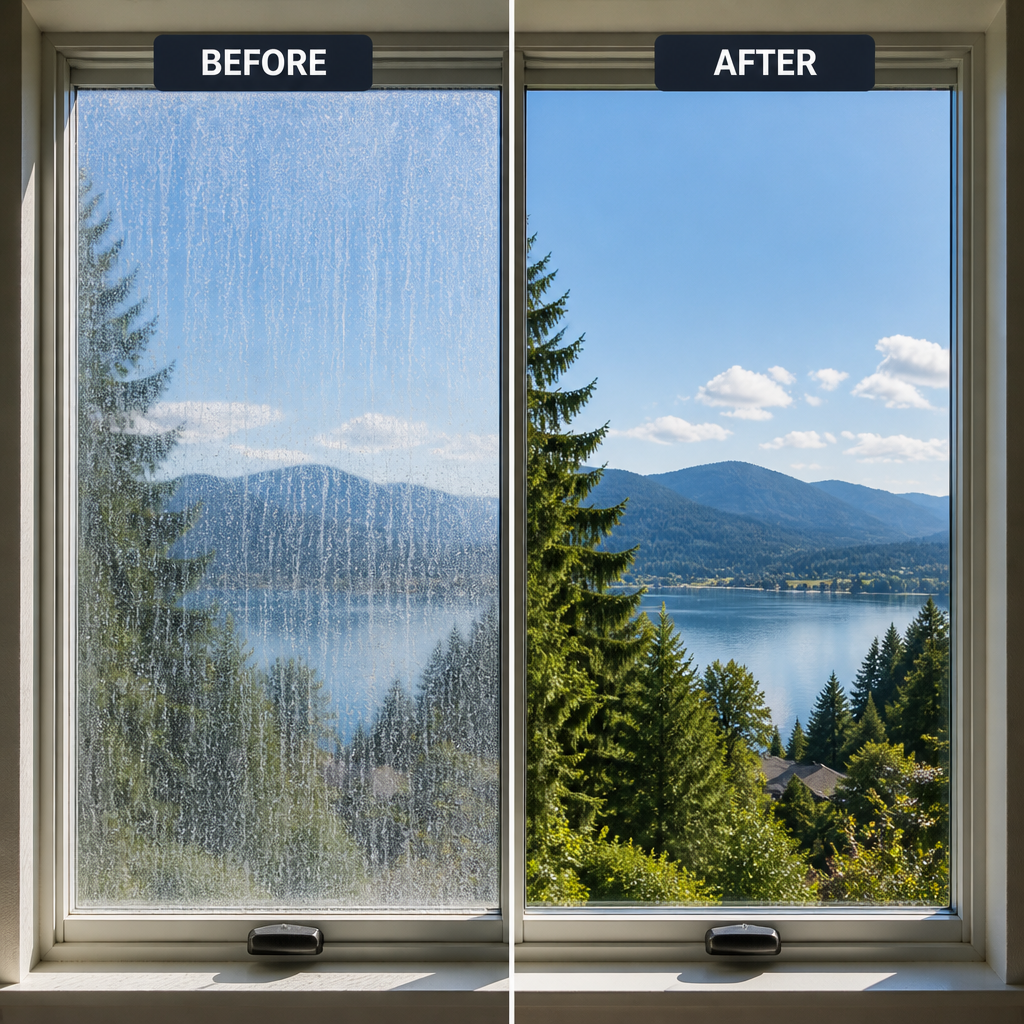
The gap between a wiped window and a genuinely clean one comes down to chemistry. Most streaks are just residue left behind on the glass after the water evaporates. That residue comes from two main sources: excess soap in the cleaning mix, or dissolved minerals present in ordinary tap water. When the water dries, those minerals stay on the glass as a white or hazy film. Wiping harder does not help. It usually spreads the residue further across the pane.
A common mistake homeowners make is using too much cleaning product. More soap does not mean more clean. It means more foam, more residue, and more streaking. Professional window cleaners use very low concentrations of cleaning solution precisely because the goal is to leave nothing behind when the water is removed.
The second problem is incomplete coverage. Wiping the center of the pane and leaving the edges, corners, and frame untouched is the standard approach for DIY cleaning. It is also why windows look grimy again after the first rain: dirt sitting at the edges wicks back across the glass almost immediately. A proper professional clean treats the entire surface, including the frame perimeter, sill, and track.
The Performance Standard: What It Actually Means
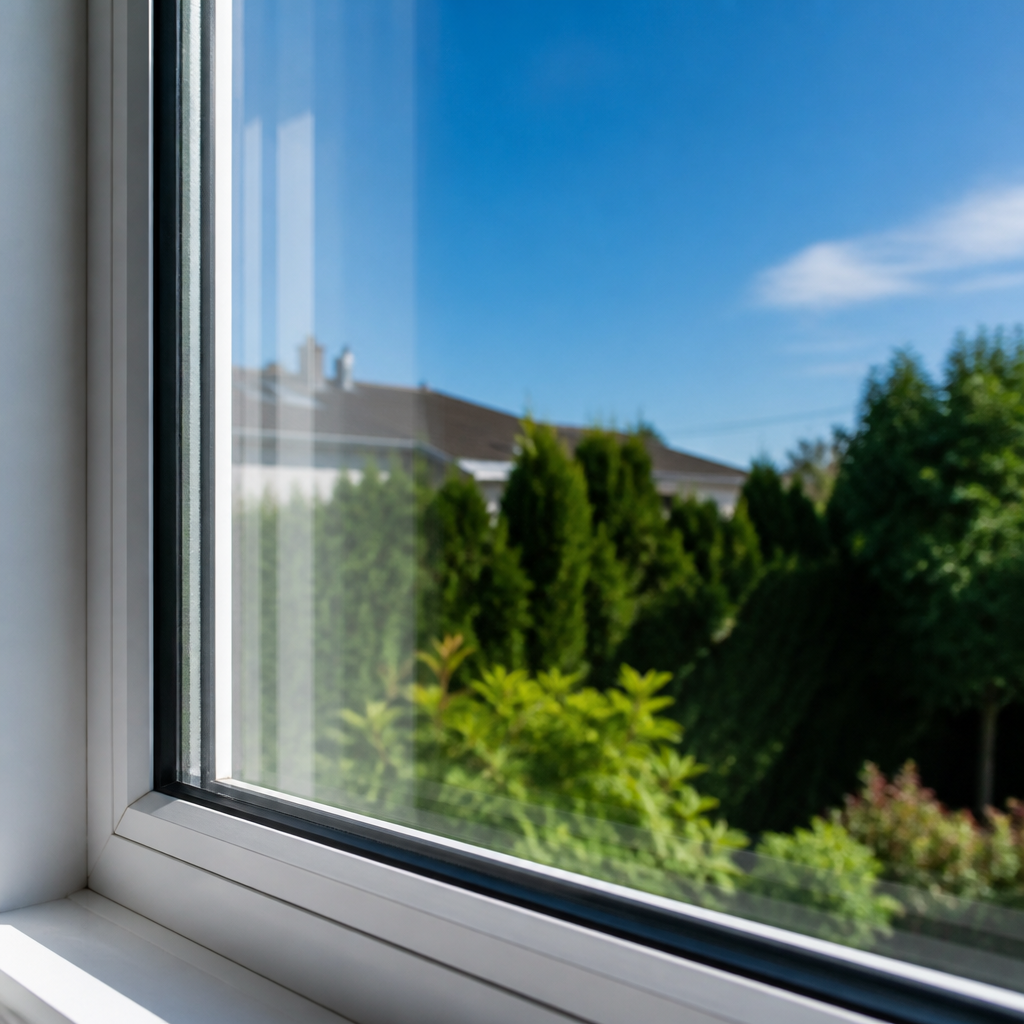
At Performance Window Cleaning, a window is not finished until it passes a direct-light inspection. That means holding the glass up to natural or angled light after cleaning and looking for any remaining film, streak, or missed spot. If something shows up, it gets addressed before the crew moves on. This is not a complicated quality system. It is a discipline that most quick-service providers simply skip because it takes extra time.
What Gets Cleaned Beyond the Glass
The glass itself is only one surface in the window assembly. A complete clean also covers the window sill, which collects dust, insect debris, and mold; the track, where dead insects, grit, and old caulk collect and cause the window to slide poorly; and the screen, which acts as a filter for airborne particles and, when dirty, deposits that material directly onto the glass the next time it rains. Skipping any of these surfaces defeats the purpose of cleaning the glass.
For exterior work, spider webs attached to the frame and corners are removed as part of the standard process. In areas around Oakville and Mississauga where spiders are active from spring through fall, this matters more than it sounds. A web left in the corner of a frame will be re-populated within days and will catch debris that streaks down the glass with every rainfall.
Interior vs. Exterior: Different Problems, Different Approach
Interior glass and exterior glass are not the same cleaning problem. Interior surfaces collect cooking grease, fingerprints, and dust. These contaminants are oily and require a degreasing agent in the solution to release them from the glass properly. Exterior surfaces deal with pollen film, hard water deposits from sprinklers and rain, oxidization from UV exposure, and in some cases, pollution residue from traffic on nearby roads.
Treating both surfaces with the same solution and technique is a shortcut that produces a mediocre result. A professional service identifies what each surface has on it and selects the appropriate approach before applying anything to the glass.
A clean window is not about effort. It is about understanding what is on the glass and removing it without leaving anything behind in its place.
Tools and Solutions That Make the Difference
Professional window cleaners combine precise chemistry, quality tools, and disciplined technique to deliver spotless glass. The equipment a cleaner brings to a job is a direct indicator of the result they can deliver. Worn rubber blades on a squeegee leave streaks no matter how skilled the operator. Microfibre cloths that have been contaminated with cleaning product residue transfer that residue directly onto the glass.
The Squeegee Method
The traditional squeegee technique is the backbone of professional window cleaning and has been for good reason. A high-quality squeegee physically pulls both the cleaning solution and the dissolved dirt off the glass in a single smooth stroke, leaving nothing behind to dry and cause streaks. The blade must be fresh and seated properly in the channel. Overlapping each stroke slightly ensures no area is missed and all solution is removed from the pane.
The technique matters as much as the tool. Professionals maintain consistent angle and pressure across the entire stroke, wipe the blade clean between passes, and detail the edges with a clean, lint-free cloth. Skipping the edge detail is what produces the line of residue that appears at the border of an otherwise clean pane.
Pure Water-Fed Pole Systems
For upper-storey windows and hard-to-reach glass, the water-fed pole system is the professional standard. This system uses water that has been filtered through a deionization process to remove all dissolved minerals and impurities. Because the water contains zero dissolved solids, it dries completely clear without leaving any residue on the glass. The window is scrubbed with a brush head at the top of the telescoping pole, then rinsed thoroughly, and the water is simply allowed to air dry.
The advantage over traditional ladder-based cleaning is significant. The pure water system is safer, faster on upper floors, and delivers a spot-free result that holds up well between cleaning cycles. Purified water also acts as a solvent for mineral deposits, drawing them off the glass surface more effectively than a soap-and-water mix.
Pro tip: If a window service is quoting you a price for upper-storey exterior cleaning but not mentioning a water-fed system, ask how they are accessing those windows and what solution they are using. Ladder-and-squeegee on second-storey glass is both a safety risk and a compromise in quality.

The Three-Point Inspection Every Window Must Pass
A professional standard is not defined by how cleaning is done. It is defined by what the result looks like under scrutiny. Every window cleaned by Performance Window Cleaning is assessed against three specific checks before the job on that window is considered done.
The first check is the direct-light test. Angled natural light reveals streaks, haze, and missed areas that are invisible head-on. A window that looks clean straight-on but shows a streak diagonal across the pane in raking light has not been cleaned to a professional standard.
The second check is the edge and corner review. Residue accumulates at the border where the blade cannot quite reach, and at the bottom corners where solution pools. These spots must be detailed with a clean cloth. Leaving them produces the characteristic white line that appears at the edge of windows cleaned by less careful operators.
The third check is the frame and sill. Drips of solution on the sill that are not wiped away will dry into white marks on painted or stone surfaces. A professional crew does not leave cleaning product on surfaces it was not meant for.
Pro tip: When evaluating any window cleaning service, stand to one side of a cleaned window and look across the glass at a shallow angle after the crew is done. A truly clean pane will be optically clear from that angle. Anything else is a result that has not met the professional standard.
Streak-Free Windows GTA: Why Local Conditions Matter
Achieving genuinely streak-free windows in the GTA is not the same challenge it is in every market. The Greater Toronto Area has a specific set of environmental conditions that professional crews must account for. Cottonwood deposits in late spring coat glass and screens with a fine fibrous film that requires physical removal before any wet cleaning begins. Pollen seasons in Oakville, Mississauga, and Burlington are heavy, leaving a dusty yellow coat on south-facing and west-facing glass. Air quality near major roadways and the QEW corridor means exterior glass picks up a sooty particulate film that, once combined with moisture, bonds to the glass surface.
Hard water is another GTA-specific factor. Municipal water in the region carries dissolved calcium and magnesium. Sprinkler systems that hit window glass deposit these minerals directly, and if they are allowed to build up over multiple seasons, the deposits will etch into the glass surface. At that stage, ordinary cleaning cannot reverse the damage. Professional restoration tools are required, and in severe cases, the glass may need to be replaced entirely.
Seasonal timing also plays a significant role. Cleaning windows in direct afternoon sun during a July heat wave causes the cleaning solution to evaporate before it can be properly removed. Experienced crews schedule exterior cleaning for cooler parts of the day or work in shaded sections first to prevent this entirely.
Window Cleaning Quality Oakville: Comparing the Approaches
Not every window cleaning service operates to the same standard. The table below compares the three main approaches a homeowner or property manager in Oakville might encounter when sourcing a window cleaning service.
| Approach | What You Get | Where It Falls Short |
|---|---|---|
| DIY with household products | Low cost, immediate availability, works adequately on light indoor dust on low-storey windows | Tap water minerals cause streaking, no safe access to upper floors, frame and track cleaning is typically skipped, results degrade quickly |
| Budget or generalist cleaning service | Lower price point, some tools better than household options, reasonable for basic clean on accessible windows | Often uses tap water, no pure water system for upper floors, inspection steps skipped to maintain speed, frames and sills may not be included |
| Performance Window Cleaning standard | Purified water system for exterior upper floors, professional-grade squeegee technique for ground-level glass, full frame and sill detail, direct-light inspection on every window, pest and web removal included | Higher investment than budget services, requires scheduling rather than immediate same-day availability |
The difference in result between a budget clean and a professional-standard clean is most visible on second-storey and gable-end windows that are rarely cleaned. Mineral deposits and oxidization that have built up over multiple seasons require proper equipment and technique to remove without damaging the glass. A professional service handles this in a single visit. A budget service often cannot address it at all.
For property managers and real estate agents preparing a home for listing in Oakville or the surrounding Halton Region, this distinction is especially important. Clean windows have a direct effect on how a home photographs and how it reads to buyers walking through. Hazy or streaked glass makes an otherwise well-maintained home look neglected.
Performance Window Cleaning also provides gutter and eavestrough cleaning, power washing, and spider spraying services, which means exterior maintenance can be coordinated in a single visit rather than managing multiple contractors. For homeowners in Oakville and across the GTA who want consistent results without the scheduling complexity, this matters practically.
Frequently Asked Questions
How often should windows be professionally cleaned in the GTA?
For most residential properties in Oakville and the surrounding GTA, twice per year is the practical minimum. A spring clean removes the winter grime, road salt residue, and early pollen buildup. A fall clean clears the season’s accumulated deposits before winter sets in. Properties near busy roads, construction zones, or with extensive landscaping that deposits organic material on glass may benefit from three cleanings per year.
What is the difference between a streak and a hard water stain?
A streak is typically a thin line of soap residue or mineral-laden water that dried on the glass during or after cleaning. It sits on the surface and can usually be removed with a proper professional clean. A hard water stain is a mineral deposit that has bonded directly to the glass over repeated wet-dry cycles. Hard water stains appear as white or cloudy patches and resist standard cleaning. Severe hard water stains can etch into the glass surface and require specialist restoration rather than ordinary cleaning.
Does it matter if it rains shortly after my windows are cleaned?
Pure, clean rainwater landing on properly cleaned glass does not leave significant marks. What leaves marks is water that picks up dust, pollen, or minerals from other surfaces before hitting the glass, such as runoff from a dirty roof, splashing from soil, or sprinkler water carrying dissolved minerals. A professional clean removes the existing film that causes rainwater to bead and streak. After a proper clean, light rainfall typically rinses off without leaving residue.
Why do my windows look clean but feel slightly hazy in certain light?
That haze is almost always a mineral film from tap water or a thin layer of dried soap residue. It is invisible at certain angles but becomes obvious in raking or direct sunlight. It can also come from cleaning products applied inside the home, such as furniture polish or spray cleaners, that off-gas and deposit a thin film on nearby glass over time. A professional clean using purified water and proper detailing of the glass edges resolves this completely.
Are screens cleaned as part of a window cleaning service?
At the professional standard level, screens should be removed, rinsed, and replaced as part of the service. A dirty screen sitting in front of a freshly cleaned window will deposit debris back onto the glass with the next rainfall, undoing the clean within days. At Performance Window Cleaning, screens are part of the process rather than an add-on. If you are evaluating another service, confirm explicitly whether screen cleaning is included or quoted separately.
Can window cleaning damage window frames or seals?
Done correctly, professional window cleaning causes no damage to frames, seals, or coatings. The risk comes from using the wrong chemical products on the wrong surfaces, applying excessive pressure to the rubber seal around double-pane windows, or using abrasive tools on coated or tinted glass. A qualified professional identifies the window type and any coatings before selecting tools and solutions. If a service is not asking about your window type before starting work, that is a warning sign.
Have you noticed a difference in quality between window cleaning services you have used, or do you have a question about what to look for when hiring a professional cleaner in your area? Share your experience in the comments below.
References
- How professional squeegee and pure-water methods deliver streak-free window results
- Tools, solutions, and techniques professional window cleaners use for spotless glass
- How hard water deposits form on glass and how professionals remove them
- Water-fed pole pure water systems compared to traditional squeegee window cleaning
- Why hard water stains become permanent and when professional restoration is needed