
Most Niagara Falls homeowners blame dirty glass on rain, pollen, or the neighbour’s trees. Often the real culprit is the air itself. Lake-effect weather pushes moisture into homes and onto exterior surfaces for much of the year, and that humidity turns ordinary dust into a film that clings to window glass, sills, and screens. If you are searching for window cleaning Niagara Falls because your glass looks hazy even after a rinse, the problem is usually timing and method, not effort. This guide explains how humidity changes glass through the seasons and what to schedule in each one.
Table of Contents
- Quick Takeaways
- Why Lake-Effect Humidity Hits Glass Differently
- Condensation and Film on Interior Glass
- Road Salt, Lake Spray and Hard Water Spotting
- Mould and Frame Damage on Exterior Surfaces
- Gutters and Eavestroughs in a Humid Climate
- Choosing a Cleaning Approach
- Spider Webs, Ticks and Mosquitoes Near Glass
- Year-Round Cleaning Calendar
- Frequently Asked Questions
- References
Quick Takeaways
| Key Insight | Explanation |
|---|---|
| Rinse exterior glass after long humid spells, not just wipe it | Damp air lets dust and pollen bind to a film on the glass, so a dry wipe smears it into a haze. |
| Clean interior glass on a dry afternoon | Condensation forms on cold panes when indoor air is moist, and wiping fogged glass leaves streaks. |
| Remove road salt film before the first hard freeze | Salt pulls moisture from the air, so the film stays damp longer and dulls the glass by spring. |
| Check sash corners and screen frames each spring | Mould starts in the grooves and corners where water sits, and those spots show staining first. |
| Clear eavestroughs before the wet season | Clogged troughs overflow down the wall and streak the windows below. |
| Book spider spraying once a year | Webs collect dust and moisture around frames, making clean glass look dirty within days. |
Why Lake-Effect Humidity Hits Glass Differently
Lake-effect weather forms when air masses interact with the water of a nearby lake, and the result is shifting humidity, temperature, and precipitation that reach well inland. For a homeowner, that means your windows can spend more hours damp than they would in a drier climate. The grime on them is not just dust. It is dust mixed with moisture that never fully dries.

Why Damp Glass Holds Dirt
When a pane stays wet for hours, dust and pollen settle into a thin film that a dry cloth smears rather than lifts. A quick spray and wipe in the afternoon often leaves a haze you can see from the street. The fix is to rinse the glass thoroughly and squeegee it while the water is still moving, not to scrub harder.
What Humid Weeks Do to Exterior Surfaces
Humid air slows drying on frames, sills, and screens, so grime turns into staining instead of washing off with the next rain. Surfaces that sit in shade from trees or face away from the sun stay damp the longest. In practice, those are the first places we see dark staining in the spring.
Glass rarely gets dirty all at once. It gets dirty when moisture keeps grime from drying off.
Condensation and Film on Interior Glass
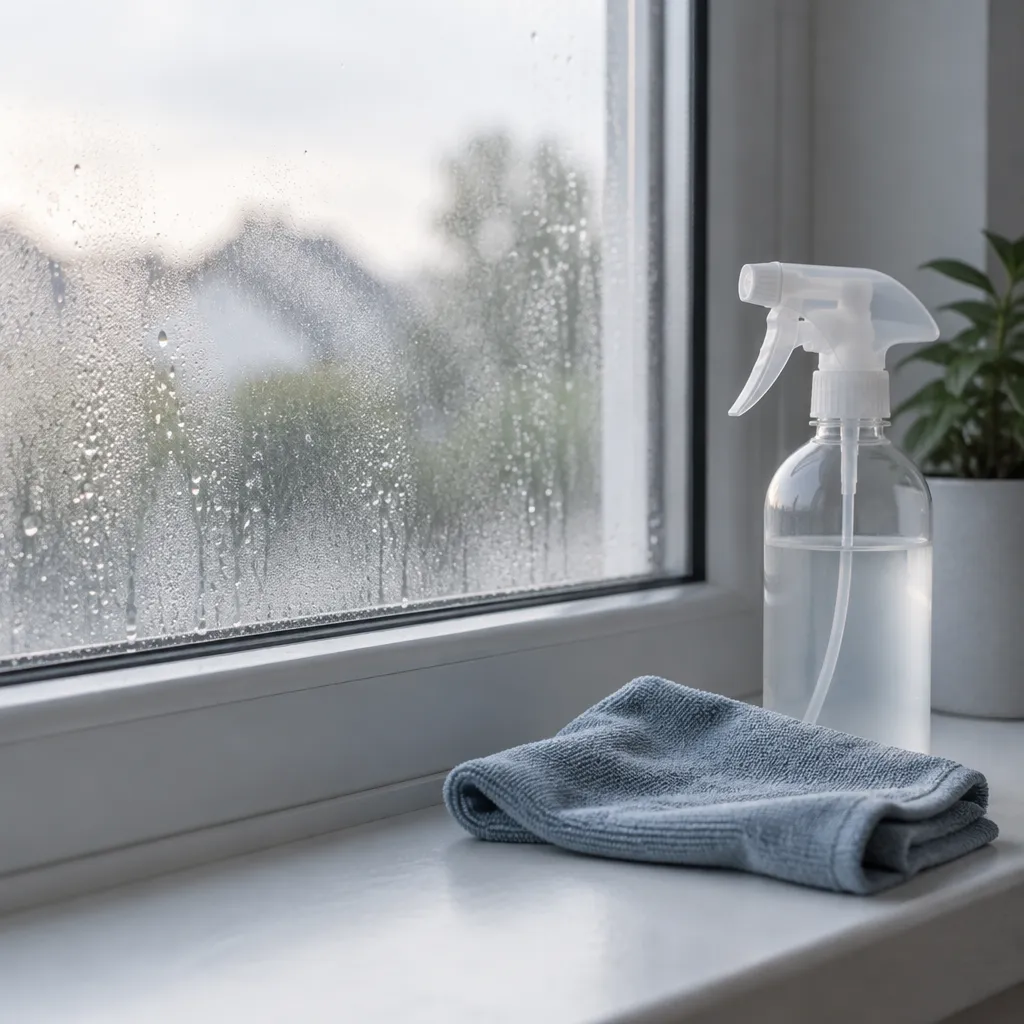
Interior glass fogs during lake-effect seasons when warm, moist indoor air meets a cold pane. Guidance written for Great Lakes homes describes the same pattern, where rapid temperature swings lead to condensation and moisture buildup inside the house. Once that water evaporates, it leaves behind the minerals and household film you end up wiping.
Why Morning Condensation Leaves Streaks
Fogged glass wiped while it is still wet spreads residue into long streaks. The water carries dust and film with it, and the streaks dry into the glass as it warms. Wait until the fog has cleared, then clean with a microfibre cloth and a mild glass cleaner.
Pro tip: Clean interior glass on a dry afternoon, not right after a shower or a big cooking session, when indoor humidity is at its peak.
Where Interior Moisture Shows Up on the Frame
Watch the sash corners, the bottom of the window track, and the sill edge where water pools. Small dark spots in those places are the first sign of mould, and they grow fastest where a sash stays damp through the cold months. Wipe them with a mild detergent, dry the area fully, and avoid bleach-heavy mixes that can discolour painted wood and vinyl.
Road Salt, Lake Spray and Hard Water Spotting
Road salt splashes up from the curb onto the lower panes and sills, and in lake-influenced areas salt-laden moisture can settle on outdoor surfaces as well. Salt is hygroscopic, which means it draws moisture from the air and keeps glass damp longer than it should be. That combination turns a light film into a chalky haze that dulls the glass by spring.
How Salt Film Dulls Glass
Salt residue catches the light at an angle, which is why a window can look cloudy only in low sun. Because the film stays damp, dust sticks to it and the haze gets worse. A pane that looks clean in September can read as dull by the first hard cold snap, even though nothing physical has happened to the glass.
Hard Water Spots from Sprinklers and Rain
Sprinkler overspray and rainwater that dries in the sun leave mineral spots on glass, siding, and the lower edges of screens. If those spots sit long enough, they can etch into the surface, so a quick wipe will not remove them. Rinse the surface, then dry it with a squeegee so no water evaporates into spots.
Pro tip: Aim sprinkler heads away from glass and siding during the warm months. Overspray on windows is one of the most common causes of mineral spotting we see on Niagara homes.
Mould and Frame Damage on Exterior Surfaces
Exterior frames stay damp longer during humid weeks, and that gives mould and mildew a foothold on wood trim, painted sashes, and screen frames. Mould rarely starts on the glass itself. It starts in the seams, the drip edges, and the grooves where water sits after rain.
Where Mould Starts on Window Frames and Screens
Check the bottom rails, the corners of screen frames, and the joint where caulking meets brick or siding. Dark streaks in these spots usually mean moisture has been sitting there for weeks. Clean them with a soft brush and a mild solution, then let them dry completely before you reinstall screens. Our pre-winter home detailing guide covers how to wash the siding and trim around windows without damaging them.
When Frame Damage Is Not a Cleaning Problem
If the wood feels soft when you press it, or the paint lifts in sheets, cleaning will not restore the frame. Washing can remove growth, but it cannot repair rot underneath. Book an assessment with a qualified contractor before you spend time on cosmetic washing.
Gutters and Eavestroughs in a Humid Climate
Eavestroughs are the first line of defence against the water that keeps your windows damp. When they clog with leaves and shingle grit, water overflows onto the fascia, runs down the siding, and streaks the windows below. A clean eavestrough is one of the cheapest ways to keep constant moisture off your glass.
Why Overflow Streaks the Glass Below
Overflow usually comes off one corner or one low section, which is why a single window may stay streaked while the rest look fine. The water carries grit down the wall, and the streak lines up with the drip path. Clearing the trough and checking the downspout outlet often stops the streak from coming back. Our eavestrough prep guide walks through the same checks.
What Gutter Cleaning Includes and How Long It Takes
Gutter cleaning takes 1-3 hours with 1-3 cleaners, depending on the square footage and height of the home. Our home detailing package also includes debris removal from eavestroughs and eavestrough whitening, so one visit can cover the troughs and the siding below. Pricing is by estimate, so request a free quote before you book.
Choosing a Cleaning Approach
Most homeowners in lake-influenced areas choose between a DIY hose-and-squeegee routine, scheduled professional window cleaning, and a full exterior package. The table compares what each one handles well and where it falls short.
| Approach | Best For | Trade-off |
|---|---|---|
| DIY hose and squeegee | Light dust on ground-floor glass between visits | Misses sills, tracks and screens, and ladder work carries real risk |
| Scheduled professional window cleaning | Interior and exterior glass, sills, tracks and screens, taking 30 minutes to 3 hours | Priced by estimate, so a quote comes first |
| Power washing and home detailing | Siding, stone, stucco, eavestroughs and hard surfaces, taking 1 to 5 hours | Needs gentle pressure on vinyl and painted surfaces |
Where DIY Cleaning Falls Short
A hose and squeegee handles loose dust on ground-floor glass well enough. It does not reach sills, tracks, or screens thoroughly, and it rarely removes the film that builds up over a humid summer. Ladder work on wet ground is a genuine safety risk, so a professional visit makes more sense for anything above ground level.
Booking a Scheduled Exterior Clean
Window cleaning takes 30 minutes to 3 hours, depending on the size of the home, and it is priced by estimate. Our visiting hours run 9:00 AM to 5:00 PM Monday to Friday, with weekends by appointment. Call 1-905-401-3793 or use the quote form on our site to book.
Pro tip: Ask for sills, tracks, and screens to be included in the quote. Those are the areas humidity affects most, and they are easy to leave out of a basic glass-only visit.
Spider Webs, Ticks and Mosquitoes Near Glass
Warm, damp weather keeps insects and spiders active around light fixtures, window frames, and screens. Webs catch dust and moisture, which makes glass look dirtier than it is. Removing webs each time you wash is wasted effort unless you also deal with the insects that build them.

Why Spider Spraying Works Best Once a Year
Our home detailing package includes spider spray, and we recommend doing it once a year. Spraying before the humid months leaves frames and corners clear without turning routine window cleaning into pest treatment. Bug extermination service can leave a property free of cobwebs and more resistant to new ones.
Tick and Mosquito Control Around the Home
Shaded beds, damp mulch, and tall grass near the foundation give ticks and mosquitoes the cover they need. Trim those areas back, keep standing water out of the yard, and talk to a licensed provider about treatment. Our bug control service is licensed for pest removal, so we can assess the property before recommending any treatment.
Year-Round Cleaning Calendar
Plan exterior cleaning around the weather, not the calendar. Book for dry stretches, rinse glass after humid weeks, and schedule the bigger jobs before the wet season. A simple calendar keeps damage from building up between visits.
Spring: Clear Salt, Pollen and Winter Film
Spring is the time to remove winter residue. Wash exterior glass, sills, and screens once the ground is dry enough for a ladder, then check the eavestroughs for debris. Our visiting hours are 9:00 AM to 5:00 PM Monday to Friday, so a weekday slot is the easiest way to get a spring pass on the calendar.
Summer and Fall: Keep Humidity Off the Frames
During humid summers, rinse exterior glass after long wet spells and watch the frame corners for early staining. In the fall, clean the eavestroughs and book spider spraying before the first hard cold. Requests for special services or schedule changes can be made simply by letting us know.
Pro tip: Photograph the sill corners in spring and again in fall. Comparing the two is the quickest way to tell whether humidity is building up faster than your cleaning routine can keep up.
Frequently Asked Questions
How often should windows be cleaned with lake-effect humidity?
For most Niagara Falls homes, we recommend at least two exterior cleaning visits a year, one in spring and one in fall, plus an extra rinse after long humid spells if the glass looks hazy. Eavestrough cleaning and spider spraying can be added to the same schedule.
Why does my glass look hazy again a few days after cleaning?
Haze usually returns because the film was not fully removed, or because damp air keeps dust and pollen sticking to the glass. Rinse thoroughly, squeegee the surface, and avoid cleaning in direct sun, which dries water into spots.
Can I clean windows on a humid day?
You can, but the glass will take longer to dry and streaks are more likely. Work in the early afternoon when the surface is warm, and do not wipe fogged glass.
Is pressure washing safe for siding and window frames?
Pressure washing is safe only when pressure and nozzle choice match the surface. Vinyl siding and painted wood need gentle pressure, so window frames and siding are usually better handled by hand washing. Driveways, decks, and walkways are better candidates for power washing.
How much does window cleaning cost in Niagara Falls?
Window cleaning, gutter cleaning, home detailing, and power washing are all priced by estimate, so the cost depends on the size and height of your home. Call 1-905-401-3793 or use the quote form to get a free estimate.
Does eavestrough cleaning really affect my windows?
Yes. When eavestroughs overflow, water runs down the wall and streaks the glass below. Clearing the troughs and checking downspouts keeps that water off your windows and frames.
What has your glass looked like after a humid stretch in Niagara Falls, and what did you do about it?